
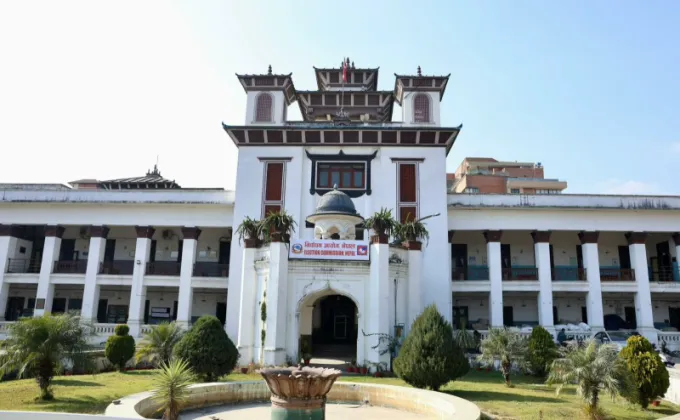
The Election Commission and the National Identity Card and Registration Department signed a memorandum of understanding in Kathmandu on Thursday, October 29, 2026, to update and verify Nepal's voter roll. Under the agreement, the Commission will draw on data from the department's Information System for Registration of Vital Events and Social Security Management, with the stated aim of making the voter list more accurate, reliable and organised. The two institutions have committed to working together to ease and systematise the updating and verification of voter details, formalising cooperation between the country's election management body and the custodian of its civil registration records.
Tapping vital events data for a cleaner voter roll
The Information System for Registration of Vital Events and Social Security Management is the department's nationwide digital platform for recording the life events that citizens must register, including births, deaths, marriages, divorces and changes of residence, along with social security information. Because these registrations track the population as it changes, the database offers the Election Commission a continuously refreshed source of information on who is coming of age, who has passed away and where people have moved.
That information speaks directly to the core tasks of maintaining a voter list:
- Adding new voters. Birth records make it possible to identify citizens approaching the voting age so they can be brought onto the roll in good time.
- Removing ineligible names. Death registrations allow the names of deceased voters to be taken off the list promptly, rather than remaining on it indefinitely.
- Correcting and updating details. Marriage, divorce and migration records help keep addresses and personal particulars current, reducing the risk of duplicate or misplaced entries.
Nagarik News reported that the voter list will be updated using personal incident registration details held by the department, while Khabarhub likewise described the memorandum as an instrument for updating the roll. Both outlets framed the shared objective in the same terms: a voter list that is accurate, reliable and organised.
A formal framework for cooperation
The memorandum gives the two bodies an institutional basis for joint work on voter roll management. In practical terms, the Election Commission and the department are to cooperate in ways that ease and systematise the updating and verification of voter details, with the department's vital events and social security system serving as the underlying data source for that exercise.
For the Commission, the agreement provides a structured channel to a rich, official dataset relevant to roll maintenance, replacing the need to treat voter list revision as a standalone exercise disconnected from the state's civil records. For the department, the memorandum positions its registration system as a working foundation for a core constitutional function. RatoPati reported the pact was signed specifically to facilitate the updating of the voter list, underscoring that the arrangement is operational in intent rather than merely symbolic.
The timing and setting of the signing, in the capital on October 29, also carry administrative weight: agreements of this kind between a constitutional body and a government department typically define how data will flow between them and on what terms, which is precisely what the two institutions have now put in writing.
Why voter roll accuracy matters
The voter list is the foundation on which every election rests. When it is complete and current, eligible citizens can be confident their names will appear and that they can vote without obstruction. When it is flawed, the consequences range from legitimate voters being turned away at polling stations to more serious questions about the integrity of the results. Duplicate entries, the names of deceased voters and outdated addresses are among the most common weaknesses found in electoral rolls, and they are also the problems that civil registration data is best placed to resolve.
Electoral authorities in many countries have moved in a similar direction, linking voter databases to civil registration systems so that lists stay current between elections rather than depending solely on periodic revision drives. By connecting the voter roll to the vital events registry, Nepal's Election Commission is aligning itself with that broader shift toward data-driven election administration.
The memorandum signed on October 29, 2026 sets out what both institutions have described as a shared commitment: updating and verifying voter details together, using the most complete records the state possesses. With the framework now in place, the task ahead for the Commission and the department is to translate the agreement into a voter list that citizens can trust when they go to the polls.


