
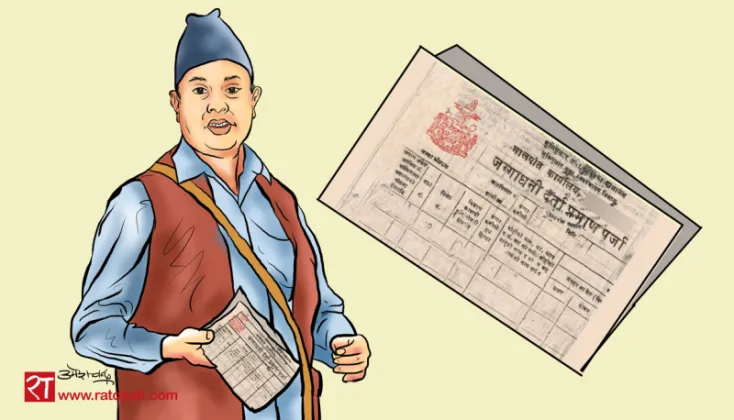
Eight landless families in Dang district have received legal recognition of the land they live on. The District Land Problem Resolution Committee, Dang, handed over land ownership certificates, widely known as lalpurja, to the eight families on Saturday, ending their status as households without formal title to their plots. The committee said the beneficiaries come from three different local units in the southern and western parts of the district, with the distribution covering families now resident in Gadhawa Rural Municipality, Lamahi Municipality and Rapti Rural Municipality.
Certificates Handed Over on Saturday
The handover took place on Saturday, with the committee confirming the ward-level details of each recipient family. According to the committee, the distribution was as follows:
- Five families from the former Gobardiya VDC, ward 6 'kha', which now falls under Gadhawa Rural Municipality, ward 3.
- Two families from the former Sonpur VDC, ward 5 'ka', now part of Lamahi Municipality, ward 3.
- One family from the former Lalmariya VDC, ward 3 'ta', now within Rapti Rural Municipality, ward 1.
The details of the handover were carried by local outlets including Ratopati, Pradesh Khabar and Rajdhani Daily. Taken together, the distribution shows the committee reaching into both rural municipalities and an urban municipality within Dang, rather than concentrating on a single settlement.
Old VDC Names, New Local Units
The references to former village development committees reflect Nepal's administrative restructuring, in which VDCs were merged into municipalities and rural municipalities under the local-level reorganisation that followed the 2017 local elections. Land records and certificates in Nepal frequently still cite the old VDC name and ward number alongside the new local unit, which is why the committee identified the beneficiaries through both the former and current addresses. For these eight families, land recorded under the former Gobardiya, Sonpur and Lalmariya VDCs is now administered by Gadhawa Rural Municipality, Lamahi Municipality and Rapti Rural Municipality respectively.
Why the Lalpurja Matters
A land ownership certificate is the primary legal document proving ownership of land in Nepal. For a household that lacks one, the consequences touch nearly every part of daily life. Without a lalpurja, a family generally cannot sell, mortgage or formally register its land, and it can struggle to use the plot as collateral when seeking loans from banks or cooperatives. Ownership papers are also commonly demanded when households apply for various public services, confirm their residence for local records, or claim entitlements tied to their landholding.
Receiving the certificate therefore converts what may have been long, informal occupation into recognised, legally documented ownership. For landless families, many of whom occupy or cultivate land for years or even generations without formal papers, the lalpurja provides security against ownership disputes and gives them a document they can pass on to their children. In rural districts such as Dang, where land remains the principal productive asset for most households, that single piece of paper can change a family's economic standing.
From Occupation to Legal Title
The significance of Saturday's handover lies precisely in this transition from de facto to de jure ownership. The five families in Gadhawa Rural Municipality, the two in Lamahi Municipality and the one in Rapti Rural Municipality can now deal with their land as recognised proprietors, whether that means cultivating it with greater confidence, using it in formal financial transactions, or including it in inheritance arrangements. Each certificate also brings the corresponding plot fully into the local land administration system, where it can be mapped, taxed and recorded in the owner's name.
Part of a Long-Running Land Question
Landlessness has been one of Nepal's most persistent social and economic challenges, with families classified as landless or landless dwellers often waiting years for ownership certificates. District Land Problem Resolution Committees exist across the country to examine the cases of such families and to facilitate the distribution of lalpurja to those found eligible, and the Dang committee's Saturday handover is part of that continuing mandate at the district level.
Dang, situated in Lumbini Province, is among the districts where questions of land ownership carry particular weight, given the importance of agriculture to household livelihoods across its plains and valleys. Distributions of ownership certificates to landless families are closely watched locally, since they determine who holds formal rights over some of the district's most valuable resources. The committee's identification of beneficiaries across three separate local units in this latest round reflects the spread of such cases beyond any single ward or settlement.
For the eight families concerned, the handover on Saturday marks the point at which their wait for formal recognition ended. What were previously plots occupied without title are now legally theirs, recorded in their names through the certificate the committee distributed. The handover also signals the committee's continued engagement with land ownership problems in the district, as it works through the cases of landless families who remain in line for similar recognition.


