
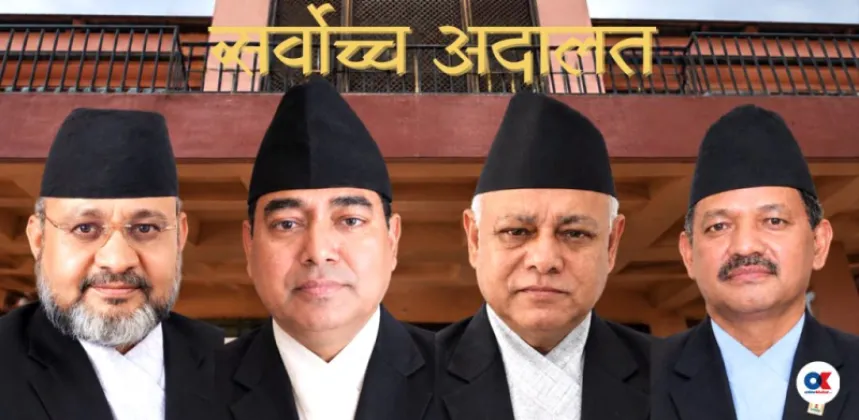
Eight complaints have been filed against the four individuals nominated for appointment as justices of Nepal's Supreme Court, according to reports published from Kathmandu on Saturday, November 1. The complaints are now before the Parliamentary Hearing Committee, which formally opened the way for public objections when it issued a notice inviting complaints against the nominees on October 26. All eight complaints were registered by last Friday, well ahead of the filing deadline of Wednesday, November 5, and the number of complaints may increase further before that deadline passes.
Complaints Registered Ahead of the Deadline
The window for filing objections opened barely a week ago, but complaints against the proposed justices have accumulated quickly. According to reports by Online Khabar and Ratopati, the Parliamentary Hearing Committee had invited complaints against the four nominees on October 26. By last Friday, eight complaints had been formally registered with the committee.
The reports published so far have not detailed the identities of the complainants or the specific allegations contained in the filings, and the committee has not indicated how it intends to treat the complaints as its proceedings move forward. The key dates in the process so far are as follows:
- October 26: The Parliamentary Hearing Committee issues a notice inviting complaints against the four Supreme Court justice nominees.
- Last Friday: All eight complaints are registered with the committee.
- November 5: The deadline for filing complaints expires, closing the window for any further objections.
The reports note that the number of complaints may increase before the deadline, meaning the panel could have more than eight filings to consider once the window closes.
Background: Nepal's Parliamentary Hearing Process
From public notice to endorsement
In Nepal, appointments to the Supreme Court and other senior constitutional positions do not take effect immediately upon nomination. Under the country's established procedure, such nominations are subject to a parliamentary hearing conducted by the Parliamentary Hearing Committee, a cross-party panel of federal lawmakers. When a nomination comes before the committee, it publishes a notice inviting members of the public to lodge complaints against the nominee within a specified period.
This mechanism is designed to give citizens, legal practitioners and civil society a formal channel through which concerns about a candidate's qualifications, conduct or suitability can be raised before an appointment to the country's top court is finalized. The public notice issued on October 26 for the four Supreme Court nominees follows that same pattern, giving complainants roughly ten days in which to come forward.
How complaints are handled
Once complaints are submitted, the committee screens them and can take up relevant issues during the hearing stage. A nominee who clears the hearing and receives the committee's endorsement moves on toward formal appointment. If the panel declines to endorse a nomination, the appointment process can be thrown into uncertainty.
Because the current complaints concern four nominees to the country's apex court at the same time, the manner in which the committee evaluates the filings will shape how smoothly all four appointments proceed. Each of the four candidates will now be considered against the backdrop of the concerns that have been formally placed on the committee's record.
What Happens After November 5
With the deadline set for Wednesday, November 5, the immediate next step is for the complaint period to run its course. After the window closes, the committee will be in a position to assess the eight, or possibly more, complaints filed against the four nominees. Any issues the panel finds relevant can be examined as part of the hearing process, including through questions put to the nominees themselves. The committee's eventual decision on the nominations will determine whether the four individuals advance toward appointment as Supreme Court justices.
The reports did not specify when the hearings themselves would be held, but the committee's work on the nominations is expected to gather pace once the complaint deadline passes. Attention will also fall on whether additional complainants come forward in the final days of the filing window, which could further enlarge the list of concerns the panel must weigh.
The stakes are considerable. The Supreme Court sits at the top of Nepal's judicial system, and appointments to the bench are closely followed by the legal community and the public alike. The fact that eight complaints were filed against all four nominees within roughly a week of the notice means the upcoming hearings will be conducted against a backdrop of formal public objections rather than as routine confirmations.
For now, the eight complaints stand as the first formal test of the nominations. The days leading up to the November 5 deadline will show whether the tally grows further, after which focus will shift to how the Parliamentary Hearing Committee evaluates the concerns raised against the four individuals proposed to sit on the Supreme Court.


