
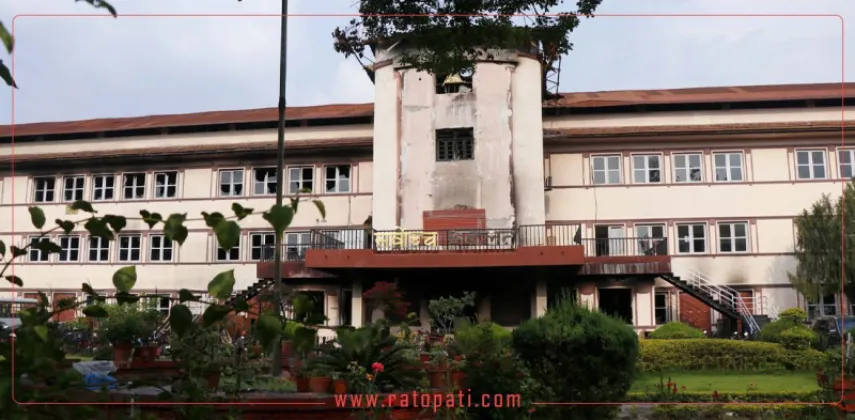
Eight complaints have been filed with the Parliamentary Hearing Committee against the four judges proposed for appointment as justices of the Supreme Court. The complaints were received by Friday, meeting the deadline set after the committee issued a public notice on Kartik 9 inviting objections to the proposed justices. The filings place the four nominees under formal public scrutiny before the parliamentary hearing process can move toward a conclusion.
The nominations trace back to Asoj 20, when the Judicial Council, the constitutional body that screens and recommends candidates for the senior judiciary, recommended four High Court judges for elevation to the Supreme Court. Under Nepal's appointment practice, such recommendations are subject to a parliamentary hearing, during which the proposed names are publicised and citizens are given an opportunity to lodge complaints before the appointments can proceed.
A busy window for complainants
The Parliamentary Hearing Committee opened the complaint window through a notice published on Kartik 9. The notice asked anyone with grievances against the four proposed justices to submit them within the stipulated deadline. By the time the window closed on Friday, eight complaints had been registered at the committee.
Neither the reports nor the committee have disclosed the identities of the complainants or the substance of the allegations. What is established is the scale: eight complaints directed at four nominees, a level of engagement that obliges the committee to examine the grievances in detail rather than treating the hearings as a formality.
The key facts at a glance:
- Eight complaints filed against four proposed Supreme Court justices.
- Complaints received by the Parliamentary Hearing Committee by Friday.
- The committee's notice calling for complaints was published on Kartik 9.
- The Judicial Council recommended the four High Court judges at its Asoj 20 meeting.
- The names now await the committee's hearing and decision.
The Asoj 20 recommendation and its path
The recommendation of the four High Court judges was made at the Judicial Council's meeting on Asoj 20. The council, headed by the Chief Justice, is the body tasked with evaluating the qualifications and conduct of judges and recommending candidates for appointment to the higher courts. Its decision to elevate four sitting High Court judges to the Supreme Court set the current process in motion.
After such a recommendation, the proposed names move to the Parliamentary Hearing Committee. In line with the country's hearing framework, the committee publishes the names and calls for complaints from the public. The call for complaints is the point at which the public can formally enter the appointment process, allowing concerns about a candidate's integrity, competence and conduct to be raised before the appointment is finalised. Only after the hearing stage is complete can the appointments proceed to their formal conclusion.
Deliberation before decision
With the complaints now on file, the committee's task shifts from routine confirmation to scrutiny. Under the established process, the committee can review the complaints, ask the complainants to substantiate their claims and give the proposed justices an opportunity to respond to the allegations raised against them.
The committee's eventual determination carries real weight. If it finds the complaints unsubstantiated, the names can be sent forward and the appointments can advance. If it decides otherwise, the recommendations can be held back, effectively stalling the appointments. The eight complaints therefore make the committee's forthcoming deliberations consequential for all four nominees.
What comes next
The committee has not announced when it will take up the complaints or hold hearings for the four nominees, and no public comment has been made on how the grievances will be weighed. Until the hearing process concludes, the four High Court judges remain in an intermediate position: recommended by the Judicial Council, published for hearing, and now facing questions that must be resolved before they can be appointed to the Supreme Court bench.
The Supreme Court is the country's highest judicial authority and the final interpreter of the constitution and federal laws. Appointments to its bench are among the most significant decisions in Nepal's justice system, which is why the hearing process, including the right of citizens to file complaints, forms part of the path to the judges' seats.
For now, the immediate next step rests with the Parliamentary Hearing Committee, which must assess the eight complaints and decide how, and when, the hearings for the four proposed justices will proceed. The outcome will determine whether the recommended judges move smoothly onto the apex court bench or whether their appointments are delayed pending further clarification.
Further details are available in the original reports published by RatoPati and Nepal Lead.


