
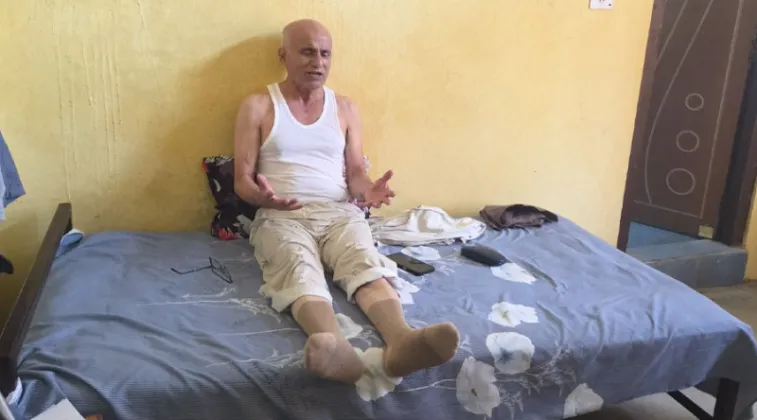
Nepal's Ministry of Education and Sports has said that the agreements signed with Prof Dr Govinda KC at various times are in the process of being implemented, and that a taskforce has been formed to carry those commitments forward. In a statement, the ministry said legal and institutional reforms are being prioritised to improve the quality of medical education, expand access to it and resolve problems that have persisted in the sector. The ministry also used the announcement to acknowledge the contribution Dr KC has made to reforming medical education in Nepal, as reported by Online Khabar and Rato Pati.
Taskforce formed to implement the agreements
According to the statement, the ministry has constituted a taskforce with the specific mandate of implementing the agreements concluded with Prof Dr Govinda KC at different times. The announcement, carried by Online Khabar, positions the taskforce as the mechanism through which the understandings reached with Dr KC are to be translated into concrete action rather than left unattended.
The ministry's wording indicated that the taskforce's remit covers the full range of agreements signed with Dr KC at various times, rather than any single understanding. By publicising the taskforce, the ministry has presented the implementation of those commitments as an active, ongoing process within the ministry. Details of the taskforce's composition and timetable were not included in the reported remarks, which focused instead on the broader reform agenda it is meant to advance.
Legal and institutional reforms at the centre
Alongside the taskforce, the ministry said legal and institutional reforms are being prioritised in the medical education sector. According to the statement, these reforms are directed at three broad objectives:
- Improving the quality of medical education
- Expanding access to medical education
- Resolving problems in the sector
The ministry's framing places its reform agenda squarely on the questions that have defined debate over medical education in Nepal: how well medical colleges and programmes serve students and patients, how widely the door to medical studies opens, and how difficulties within the sector are settled. By identifying quality, access and problem-solving as the goals of its legal and institutional work, the ministry has effectively set out the yardsticks against which the implementation of the agreements with Dr KC can be measured.
Progress highlighted: the Act, the Commission and scholarships
The statement also set out steps the ministry presented as already achieved. Among the milestones it highlighted are:
- The enactment of the National Medical Education Act
- The establishment of the Medical Education Commission
- The management of scholarships
The ministry pointed to the National Medical Education Act and the Medical Education Commission as the legal and institutional pillars of the reform process, reflecting the two tracks, legislative and organisational, that its statement said are being prioritised. Together, they represent the structural changes that have flowed from the reform agenda to which the agreements with Dr KC are tied.
Scholarship management, meanwhile, connects directly to the ministry's stated goal of expanding access to medical education. By listing it among its achievements, the ministry signalled that widening opportunity for students is treated as an integral part of the reforms rather than a separate concern. Taken as a whole, the three milestones were presented by the ministry as evidence that the reform drive is already producing results on the ground.
Ministry acknowledges Dr KC's contribution
A notable element of the statement was its tone toward Dr KC himself. The ministry acknowledged his contribution to the reform of medical education, describing it in terms reported by Rato Pati as significant. The acknowledgment came alongside the ministry's assurance that the agreements signed with him are being carried out.
Dr KC's name is attached to the agreements that the newly formed taskforce is mandated to implement, and the ministry's statement linked his role in reform to the progress it listed, from the National Medical Education Act to the Medical Education Commission and scholarship management. In tying the two together, the ministry framed the taskforce's work as the continuation of a reform effort to which Dr KC has contributed.
The ministry, for its part, has presented the combination of the taskforce, the prioritised legal and institutional reforms and the completed milestones as proof that the commitments made to Dr KC are being honoured. With the statement now public, the taskforce's task is to turn that assurance into completed implementation across the full set of agreements signed at various times, and to deliver the improvements in quality, access and problem resolution that the ministry says remain its priority for the medical education sector.


