
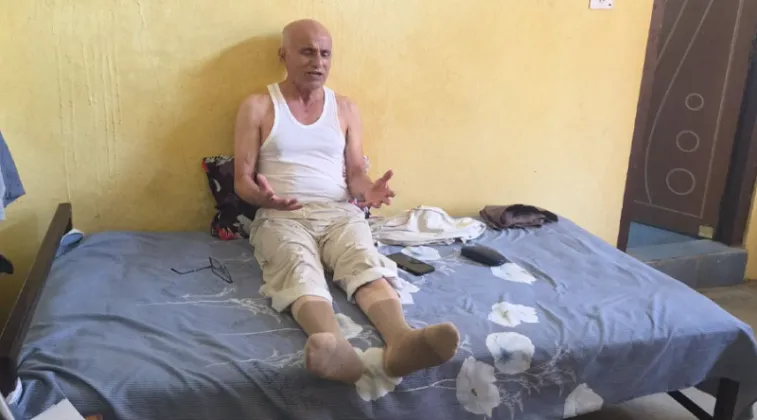
Dr Govinda KC, one of Nepal's most prominent campaigners for medical education reform, has been admitted to hospital in Ilam after his health deteriorated on the third day of a fast-unto-death hunger strike. The veteran doctor, who is now on the 25th hunger strike of his campaign, began refusing food at 5 pm on Thursday, October 29, at the Narayan Temple in Ilam, after accusing the government of failing to address his demands despite an extended deadline. His hospitalisation came as concern grew over the physical toll of a protest he has framed as a last resort against official inaction.
Health deteriorates on day three
On Saturday, the third day since the fast began, KC's condition worsened to the point that medical intervention became necessary. A medical team from Ilam Hospital, led by the hospital's medical superintendent, Dr Amitabh Thakur, took him to the hospital for treatment, as Onlinekhabar reported.
A fast-unto-death places escalating strain on the body, and the risks grow with each successive day without food. Doctors monitoring such protests typically step in when a participant's condition begins to slip, which makes a third-day hospitalisation a significant marker of how quickly the situation has developed. Further details about his condition after admission were not immediately available.
The timing is also notable. KC began his fast at 5 pm on Thursday, meaning that by the time he was moved to Ilam Hospital on Saturday he had spent roughly two full days and part of a third without food.
Key facts at a glance
- Who: Dr Govinda KC, medical education reform campaigner
- What: 25th hunger strike, staged as a fast-unto-death, with hospitalisation on day three
- When: Fast began at 5 pm on Thursday, October 29, and he was hospitalised on Saturday
- Where: Narayan Temple, Ilam, with treatment at Ilam Hospital
- Why: He accused the government of failing to address his demands despite an extended deadline
A 25th fast launched after a deadline lapsed
KC opened the protest at the Narayan Temple in Ilam, a hill town in Nepal's east that sits far from the capital, where much of the country's policy debate usually plays out. The choice of venue takes the 25th hunger strike of his campaign outside the centres of political power and has already drawn attention to a demonstration unfolding in the hills rather than in Kathmandu.
In launching the strike, KC accused the government of failing to act on his demands even though the deadline for doing so had been extended. That charge points to earlier negotiations in which additional time was granted, only for the revised deadline to pass without the response he was seeking. It was against that backdrop that he moved to the fast-unto-death format, the most severe form of hunger protest, in which a participant refuses food until demands are met.
Years of pressure through fasting
Hunger strikes have been the defining method of KC's long campaign for reform of Nepal's medical education sector. The count now stands at 25, a figure that underscores both his persistence and the recurring nature of the disputes that have driven him back to the same form of protest again and again. Each fast-unto-death he has announced over the years has turned national attention to questions of how medical education in the country is run, regulated and reformed.
The specific demands behind the 25th strike were not immediately detailed in early reporting, but his position was clear from the moment the fast began: the government, in his assessment, had failed to deliver on commitments tied to an extended deadline. The accusation he levelled on Thursday was that the state had once again let the clock run out without acting on the reform agenda he has championed.
What to watch next
With KC now under hospital care, attention in the coming days will focus on two fronts. The first is medical: how his condition develops and what his treating team at Ilam Hospital, led by Dr Amitabh Thakur, advises about the fast itself. It was not immediately clear how the fast-unto-death would proceed now that he is receiving treatment.
The second is political. The reference to an extended deadline suggests that channels of communication between KC and the government were already open before the fast began on Thursday. Whether officials respond quickly enough to satisfy his demands, and whether that response comes before his health deteriorates further, will shape both the trajectory of the 25th hunger strike and the broader medical education reform campaign he has led for years.


