
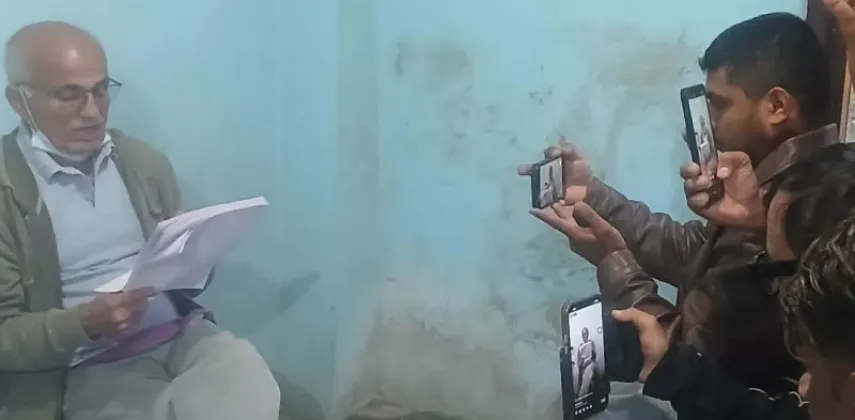
Dr Govinda KC, Nepal's most prominent campaigner for reform in medical education, launched his 25th hunger strike in Ilam on Thursday evening, after the government failed to address his demands within the extended deadline of his ultimatum. The satyagraha began at 5 pm at the Narayansthan temple in Ilam Municipality-6, according to Ratopati. The veteran activist had put the authorities on notice over a series of contested decisions in the medical education sector, and with no concrete response forthcoming when his deadline lapsed, he made good on his promise to return to fasting.
An ultimatum that went unanswered
The fresh hunger strike is the outcome of a deadline that came and went without action. KC had issued an ultimatum to the government over decisions taken by the Medical Education Commission, giving the authorities a set period to respond. That deadline was subsequently extended, but the government did not move to address the grievances he raised. Once the extended period expired, Nagarik News reported that KC travelled to Ilam to sit on the hunger strike.
The move ends whatever grace period had been granted and restarts a form of protest that has repeatedly pushed medical education issues to the top of the national agenda. It also relocates the confrontation. Rather than press his case from the federal capital where such decisions are made, KC has chosen a temple courtyard in the eastern hills as the site of his 25th satyagraha.
The demands on the table
KC's demands, as outlined in reports of the strike, fall into four broad areas:
- Scrapping the Medical Education Commission decisions on Shahid Dasharath Chand Health Sciences University. The Commission approved MBBS and nursing programmes at the Geta-based university in Kailali district without the minimum infrastructure and academic staff that such courses require. KC wants those decisions revoked.
- Reversing seat increases at various medical colleges. The Commission also approved increases in student intake at a number of institutions, and these decisions, too, are on the list he wants scrapped.
- Broader reform of medical education and health services. Beyond the specific approvals, he is pressing for structural reforms in how the country trains doctors and nurses and how health services are delivered.
- A medical college in Ilam. The campaigner is also calling for the establishment of a medical college in Ilam, the district now hosting his fast.
The demand concerning the Geta-based university goes directly to the question of standards. Minimum physical infrastructure and qualified academic staff are the baseline requirements for institutions entrusted with training the country's future doctors and nurses. The fact that approvals were granted in their absence is precisely what KC is seeking to reverse, and his demand to roll back the seat increases follows the same logic of tightening oversight over how medical education capacity is expanded.
Why Ilam
The choice of venue is closely tied to the platform itself. By calling for a medical college in Ilam, KC links his national reform agenda to the district where he has now begun his fast, and the Narayansthan temple in Ilam Municipality-6 gives the protest a concrete local anchor. Gorkhapatra Online reported that the hunger strike got under way on Thursday evening.
Staging the satyagraha in the eastern hills also places the spotlight on the state of health services outside the major urban centres at the same time as it applies pressure on decision-makers in Kathmandu. The combination of a national grievance and a local demand gives the 25th strike a distinct geographic dimension that earlier rounds of his campaign did not carry in the same way.
A record of 25 fasts
That this is the 25th satyagraha says much about both the campaigner and the issue. Few figures in Nepal's public life have returned to hunger strike as often as KC, and that repeated recourse to fasting reflects how frequently disputes over medical education have resurfaced without lasting resolution. Each satyagraha has kept public attention fixed on questions of standards, regulation and access in the health sector, and the latest iteration signals that the grievances at the heart of his campaign remain unaddressed in his view.
The road ahead
Attention now turns to how the government responds. The Medical Education Commission decisions that provoked the strike remain in place, and the wider reforms KC seeks, including the proposed medical college in Ilam, remain pending. Whether the authorities move to annul the contested approvals and engage on the broader reform agenda will shape how the latest satyagraha unfolds. For now, the veteran campaigner has begun his fast on temple grounds in Ilam, and a new round of pressure on Nepal's medical education establishment has formally begun.


