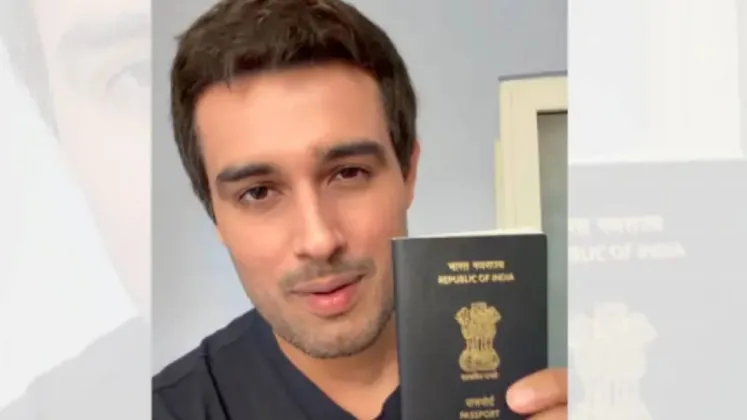
Indian YouTuber Dhruv Rathee said on Sunday, immediately after being released from custody, that he had been abducted rather than arrested, accusing the Modi government of taking him from inside his home. In a public appeal following his release, Rathee said police had not formally arrested him and claimed he was not even allowed to put on his slippers before he was taken away.
Rathee’s account of being taken from home
Rathee’s central claim was that his removal from home did not follow the process of a formal arrest. He described what happened as an abduction, saying police took him from inside his residence and did not allow him time to put on his slippers. His remarks were made immediately after he was freed from custody, according to reports of his statement.
The distinction he drew between abduction and arrest was central to his public appeal. Rathee did not simply describe being held and later released; he challenged the way he said he had been taken into custody. His account presents the incident as an action carried out without a formal arrest, while accusing the government led by Prime Minister Narendra Modi of responsibility.
The details in the available account are limited to Rathee’s allegations and the circumstances he described. They do not establish independently how he was taken, what authority was cited, or what reason officials may have given for holding him. His description should therefore be understood as his claim about the incident, rather than as an independently verified finding.
Public appeal made after release
Rathee made his statement after being released on Sunday. The timing placed his allegations at the centre of the first public account covered in the reports: he spoke as soon as he was free from custody and appealed publicly over what he said had happened. His reference to being unable to put on his slippers underscored his claim that he was taken abruptly from his home.
The reports identify Rathee as an Indian YouTuber but do not provide further details about the circumstances surrounding his custody. They do not specify how long he was held, where he was taken, or what prompted the incident. Nor does the available information include an official response from police or the government to his accusation. Those points remain unaddressed in the account of his statement.
Rathee’s allegation is serious, but the information available so far does not provide an account from the authorities or independent confirmation of his description. His remarks establish what he said after release: that police had not formally arrested him, that he was taken from inside his home, and that he was not given time to put on his slippers. Further information would be needed to clarify the circumstances and establish how officials characterize the incident.
What remains unclear
The immediate focus is now on the competing questions raised by Rathee’s account: whether officials formally recorded an arrest, what legal basis they relied on for taking him into custody, and how the authorities respond to his accusation that the Modi government was responsible. The reports do not answer those questions, and no explanation from officials is included in the material available for this report.
Rathee’s release ended his period in custody, but his public appeal has shifted attention to how he says that custody began. Until additional details or an official response are available, the episode remains defined by his account of being taken from his home and his insistence that the incident was an abduction, not a formal arrest.