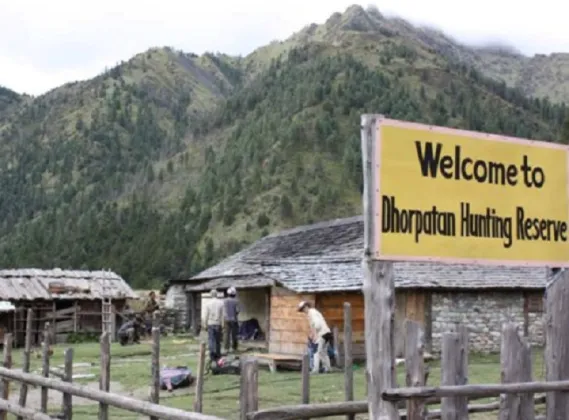
Dhorpatan Hunting Reserve in Baglung is preparing to count blue sheep, locally known as naur, and Himalayan tahr, or jharal, as the second four-month period of the current fiscal year begins. Technical staff and reserve employees are being mobilised across all seven hunting blocks for the survey, which the reserve conducts every five years to determine hunting quotas.
Five-year count to inform quotas
The planned count is part of the reserve’s regular five-year cycle. Its purpose is to establish information about the two species that can be used in determining hunting quotas. The reserve is preparing to carry out the work across all seven blocks, rather than limiting the count to a single area.
The survey concerns blue sheep and Himalayan tahr, two species identified in the reserve’s hunting programme. The count is therefore a key step in the process used to set quotas. No new quota figures are specified in the information available about the preparations, and the count itself is the focus of the current mobilisation.
As Nepal’s only hunting reserve, Dhorpatan has a distinct role in managing hunting activity. The five-year interval provides a recurring point at which the reserve can gather information on the species relevant to its quotas. The upcoming count will supply the information needed for that process, although details of the eventual quota decisions have not been announced.
Teams to cover all seven blocks
Technical staff and reserve employees are being mobilised across the seven hunting blocks in Baglung. The planned coverage means the count is being organised across the reserve’s full set of blocks. The preparations coincide with the beginning of the second four-month period of the current fiscal year.
The mobilisation brings reserve personnel and technical staff into the work of counting both naur and jharal. The available information does not provide a detailed timetable for individual blocks, the size of the teams or the methods they will use. It does, however, confirm that personnel are being deployed across all seven blocks as the reserve prepares to undertake the count.
A recurring task for Nepal’s only hunting reserve
Dhorpatan’s five-year counting cycle connects the assessment of blue sheep and Himalayan tahr with the setting of hunting quotas. The preparations mark the start of that work for the current cycle, with staff being assigned across the areas included in the survey. The count is intended to provide the basis for quota decisions, rather than announcing those decisions in advance.
The reserve’s work will cover both species named in the planned survey and all seven hunting blocks in Baglung. Once the counting exercise is carried out, its findings can inform the quota-setting process. For now, the reserve is preparing personnel and organising coverage as the new four-month period begins, continuing a count it undertakes every five years.