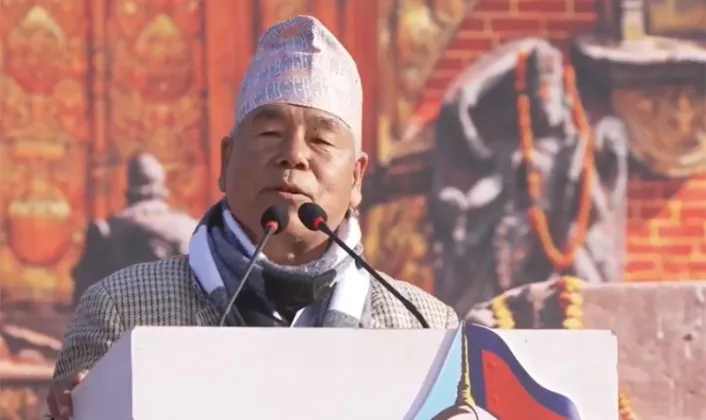
Nepali Communist Party leader Dev Gurung said on Tuesday at a programme in Kathmandu that Nepal’s original identity, national dignity and very existence had been pushed into a serious crisis by the expanding neoliberal economic system. He warned that the system endangered not only the country’s economic direction but also its language, culture and civilisation, placing the debate over Nepal’s development model in a wider national context.
Warning over national identity
Gurung’s central argument was that the effects of neoliberalism should be considered beyond economic policy. He linked the expansion of the system to what he described as threats to Nepal’s existence and identity, as well as to the country’s national dignity. His remarks framed the issue as one with consequences for the character and continuity of the nation, not simply a disagreement over economic choices.
The leader also singled out language, culture and civilisation as areas at risk. By placing these alongside national existence, Gurung presented them as connected parts of Nepal’s identity. His warning was that the pressures he associated with the expanding economic system could reach across several dimensions of national life. He did not, in the remarks reported, separate these concerns into distinct policy areas; instead, he described them as part of a broader crisis.
The comments came amid debate over Nepal’s economic direction. That wider discussion gives added weight to Gurung’s intervention: he argued that choices about the economic system should also be assessed for their implications for national identity and dignity. His remarks therefore connected economic debate with questions about how Nepal’s language, cultural life and civilisation might be protected.
Economic direction and wider concerns
Gurung’s use of the term “neoliberal” was central to his criticism. He described the system as expanding and said it had put the country’s original identity, dignity and existence under serious pressure. The warning was broad in scope, encompassing national and cultural concerns, rather than being limited to a single economic measure or sector.
The statement placed the consequences of economic change at the centre of a discussion about Nepal’s future. Gurung’s argument, as reported, was that the country’s economic direction cannot be viewed separately from its national character. In that framing, language, culture and civilisation are not peripheral to the debate: they are among the elements he said the system has endangered.
His remarks also underscored the difference between debating economic policy in terms of its immediate effects and examining its wider implications for society and the nation. Gurung’s warning focused on the latter, describing the issue as one that touches Nepal’s continuing existence and its ability to retain an original identity. He did not, in the account of the programme, set out a specific alternative economic model or detailed policy proposals.
Debate over Nepal’s path
The intervention adds a national-identity dimension to ongoing debate over Nepal’s economic direction. Gurung’s position was that the expanding neoliberal system poses a serious threat, with risks extending to national dignity and to the language, culture and civilisation he identified as part of the country’s heritage. The remarks place those concerns alongside economic questions rather than treating them as separate subjects.
Gurung spoke at a programme in Kathmandu on Tuesday, but the available details do not specify the programme’s title, its organisers or other participants. The reported remarks likewise do not provide further detail on the policies or developments he associated with neoliberalism. His main message, however, was explicit: he believes the system’s expansion has placed Nepal’s identity and existence in danger, and he urged attention to the wider national consequences of the country’s economic direction.