
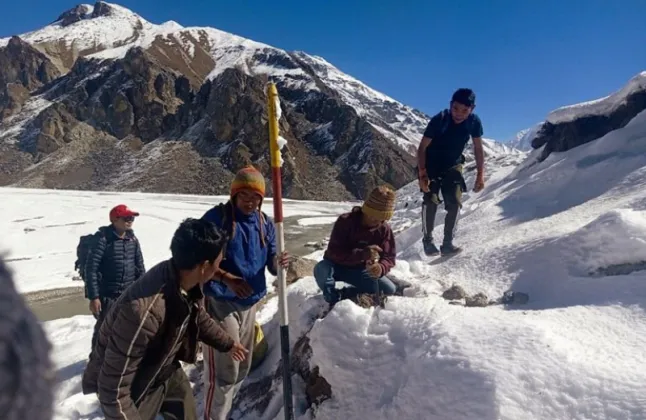
About 250 domestic and foreign tourists have been stranded midway along the Kanchenjunga trekking route in Taplejung district after adverse weather triggered by Cyclone Arnab disrupted travel in the region, Nepali news outlets reported on Friday, October 30. The cyclone, which developed in the Bay of Bengal, brought heavy snowfall to the upper reaches of the trail and light rain with rising cold to the lower areas, preventing trekkers heading to the base camp as well as those returning from it from reaching their destinations. With movement halted in both directions, the stranded visitors have taken shelter in hotels and settlements scattered along the route as they wait for conditions to improve.
Cyclone Arnab's reach extends to the high Himalaya
Cyclone Arnab formed over the Bay of Bengal, and its influence has now stretched far inland, worsening weather across Nepal's Himalayan region. When the moisture carried by such a system meets the Himalayan terrain, high elevations receive snow while lower hillsides and valleys see rain. That is precisely the pattern reported from the Kanchenjunga area of Taplejung, where the split in conditions has effectively sealed the route at its upper end while slowing movement everywhere else.
Conditions along the route
- Upper areas: Heavy snowfall has covered the high sections of the trail, halting progress toward the base camp.
- Lower areas: Light rain has continued, and the cold has been rising steadily, making conditions on the trail increasingly difficult.
- Combined effect: Tourists have been unable to continue upward toward the base camp or complete their descent, leaving them stuck midway along the route.
Hundreds of trekkers caught between ascent and descent
The disruption has caught travellers at every stage of their journey. According to RatoPati and Nepal Press, the roughly 250 people affected include both domestic and foreign tourists, divided between two groups: those making their way up toward the Kanchenjunga base camp, and those who had completed the trek and were heading back down.
For both groups, the sudden change in weather has meant an unplanned stop. All of the stranded travellers have been forced to break their journeys midway and remain wherever they can find shelter, staying in hotels and in the settlements that line the route. What would normally be a carefully planned itinerary, with each day's walk ending at a chosen lodge or village, has given way to an open-ended wait, with visitors spread along the trail rather than concentrated in one place.
Because the trekkers are scattered across multiple settlements, several villages along the route are hosting stranded guests at the same time, each absorbing part of the crowd with whatever accommodation it has available.
A remote trail at the height of the season
The Kanchenjunga region occupies the far eastern corner of Nepal in Taplejung district, where the world's third-highest peak, the 8,586-metre Kanchenjunga, rises along the border with India. The base camp trek here is among the country's longer and more isolated routes, passing through remote villages and high terrain far from the busier Everest and Annapurna networks. Because the trail is served by small hotels and settlements rather than large towns, trekkers depend heavily on the capacity of local hosts when plans fall apart.
The timing of the disruption is particularly sensitive. Late October falls within the post-monsoon autumn window, when clear skies and stable conditions draw large numbers of visitors to Nepal's high trails. It is also a season when cyclones over the Bay of Bengal are common, and when the moisture from such systems can push toward the Himalaya, producing sudden snowfall at altitude. As the current stranding shows, even a carefully planned autumn trek can be brought to a halt by a storm forming far away over the sea.
Waiting for the skies to clear
For now, the stranded tourists' plans rest on the weather. Travel in the Kanchenjunga area will remain difficult until the snowfall and rain subside, and until then the visitors are expected to stay in the hotels and settlements where they have taken shelter before resuming their journeys to or from the base camp.
The reports did not indicate any casualties or injuries, and details on when the route might reopen were not immediately clear. Gorkhapatra Online documented the same core picture as other outlets: a powerful Bay of Bengal cyclone, a Himalayan trail buried in snow at the top and drenched by rain at the bottom, and some 250 trekkers waiting it out in villages along the way.
The episode underlines a familiar lesson of Himalayan travel. Weather systems that develop over the Bay of Bengal can reshape conditions across Nepal's mountains within a short span, and treks that depend on high, exposed trails are often the first to feel the effects. For the tourists currently sitting out Cyclone Arnab in the settlements of Taplejung, the immediate priority is simply to wait for clearer skies before continuing their journey in one of the world's most storied trekking regions.


