
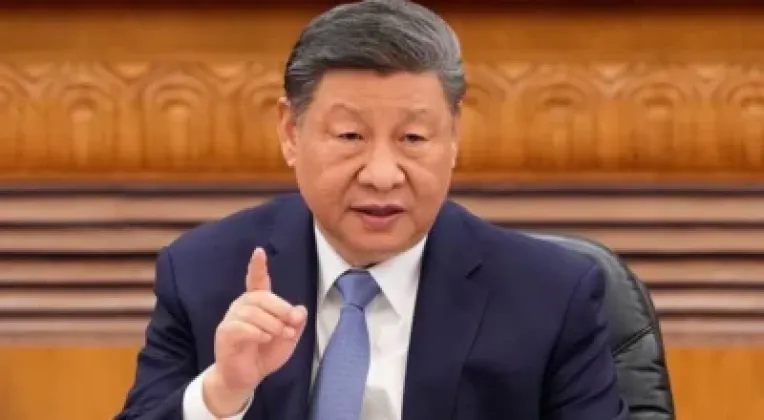
The Communist Party of China on Thursday concluded the fifth plenary session of its 20th Central Committee in Beijing with the adoption of a resolution to strengthen full and rigorous party self-governance and to intensify the fight against corruption and indiscipline within its ranks. The four-day meeting, held from October 26 to 29, was chaired by the Political Bureau of the CPC Central Committee, with General Secretary Xi Jinping playing a decisive role in the draft resolution, according to China's state-run Xinhua news agency.
Four days of deliberation in Beijing
The session brought the 20th Central Committee to the Chinese capital for its fifth plenum, which opened on October 26 and wrapped up on Thursday after four days of deliberation. Chairing responsibilities rested with the Political Bureau of the CPC Central Committee, the party's senior leadership body, and the gathering closed with the adoption of a resolution centred on internal discipline. For a plenum of this kind, the final document is the headline outcome, and on this occasion the message focused squarely on tighter self-governance.
Plenary sessions are among the most consequential items on the party's political calendar. They are the occasions on which the leadership sets out its priorities between national congresses and signals the direction of policy and party building. By devoting its resolution to discipline and anti-corruption, the fifth plenum has placed internal rigour at the centre of that signal, presenting clean governance as a continuing priority for the organisation.
Tighter discipline, few details
According to Xinhua, the session decided on measures to tighten discipline within party ranks, although the detailed provisions of the resolution were not made public. The reported emphasis falls on two fronts: strengthening what the party terms full and rigorous self-governance, and intensifying the fight against corruption and indiscipline. In effect, the resolution commits the party to holding its own members to stricter standards of conduct and to sustaining pressure on graft across the organisation.
The key points reported from the plenum are:
- Adoption of a resolution on strengthening full and rigorous party self-governance.
- A decision to intensify the fight against corruption and indiscipline.
- Measures to tighten discipline within the party's ranks.
- Withholding of the resolution's detailed provisions from the public.
The absence of detailed provisions means that the specific mechanisms, timelines and accountability tools envisaged by the party are not yet known. What the readout does make clear is the political intent. The leadership has chosen a plenum resolution, one of the most authoritative formats at its disposal, to state that discipline enforcement will remain a priority throughout the party.
Xi Jinping's decisive hand
While the Political Bureau chaired the session, the reporting underlined that General Secretary Xi Jinping played a decisive role in the draft resolution. That framing ties the discipline agenda closely to the top leader and presents the plenum's outcome as an expression of the governance priorities associated with his tenure. It also signals that the anti-corruption and self-governance drive carries his personal weight behind it.
Xi's centrality to the document matters for what comes next. With the party's national congress scheduled for next year, the resolution reads as a statement of continuity. The standards of self-governance and anti-graft enforcement emphasised under his leadership are set to guide the party's work into the congress period, framing discipline as the foundation on which the next phase will be built.
On the road to the national congress
The plenum comes ahead of the party's national congress next year, a landmark gathering at which the party's leadership line-up is decided. According to the reporting, Xi Jinping is expected to be reappointed general secretary for a fourth five-year term at that congress, extending his stewardship of the party.
The timing of the discipline resolution against that backdrop is notable. A four-day session devoted in significant part to self-governance and anti-corruption, held in the run-up to the congress, gives the leadership a platform to project unity and rigour before the party convenes its most important meeting. It also reinforces the expectation that the enforcement of party discipline will remain a defining theme as the leadership line-up is finalised.
For observers, the sequence is straightforward. The Central Committee met for four days in Beijing, adopted its resolution under the Political Bureau's chairmanship and with Xi's decisive input, and the party now moves toward its national congress with discipline elevated as a guiding theme. Whether the detailed provisions of the resolution are released later, the direction set at the plenum is unambiguous.
The story was widely carried in Nepal's media. Khabarhub reported the adoption of the resolution and the four-day session in Beijing, while Ratopati focused on the party's initiative to tighten discipline. Gorkhapatra Online also covered the plenum's outcome, drawing on Xinhua's reporting from the Chinese capital.


