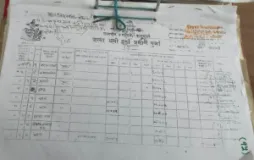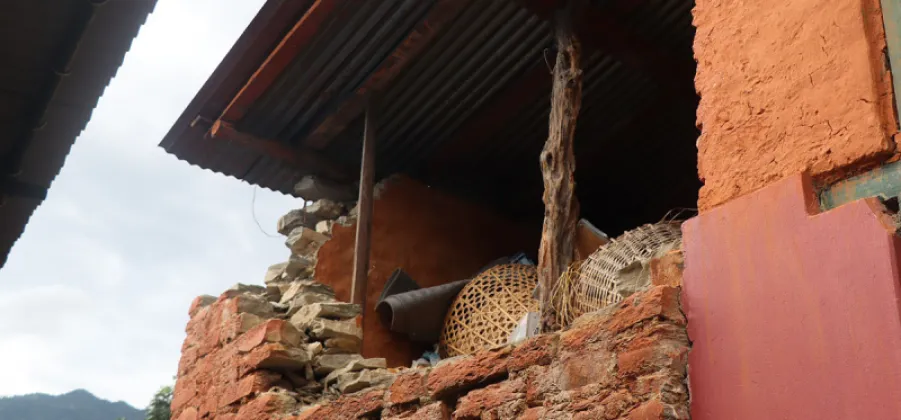
The process of distributing compensation to families whose houses were damaged during the construction of the Rahughat Hydropower Project's tunnel has formally begun in Myagdi district. The 40-megawatt project, being developed by Raghu Ganga Hydropower, a subsidiary company of the Nepal Electricity Authority (NEA), relied on heavy blasting to excavate its tunnel through the hills of Raghu Ganga Rural Municipality, and the force of the explosives cracked and damaged the homes of residents living along the alignment. With the distribution process now under way, the tunnel-affected households of the project area are set to receive redress for the losses they have carried through the construction period, as reported by Nagarik News and Ratopati.
A 40-megawatt scheme in the hills of Myagdi
The Rahughat Hydropower Project is being built by Raghu Ganga Hydropower, a subsidiary company of the Nepal Electricity Authority, the state-owned power utility responsible for a large share of the country's electricity infrastructure. The project has an installed capacity of 40 megawatts and is located in Myagdi district, in Gandaki Province.
The defining feature of the project is its tunnel, which measures six kilometres and 270 metres in length. The tunnel runs from a dam constructed at Dagna in Raghu Ganga Rural Municipality-4 and at Jhi Fedi in ward 5, stretching all the way to a powerhouse built at Tilkenichaur. The project's key details are as follows:
- Installed capacity: 40 megawatts
- Developer: Raghu Ganga Hydropower, a subsidiary of the Nepal Electricity Authority
- Tunnel length: 6 kilometres 270 metres
- Tunnel route: from the dam at Dagna (Raghu Ganga Rural Municipality-4) and Jhi Fedi (ward 5) to the powerhouse at Tilkenichaur
- Location: Myagdi district, Gandaki Province
Infrastructure on this scale places construction activity in close proximity to human settlements. In the case of Rahughat, the villages that sit near the tunnel alignment found themselves directly exposed to the day-to-day impacts of excavation, particularly the blasting required to break through the rock beneath their settlements.
Why the damage occurred
Excavating a tunnel stretching more than six kilometres through hilly terrain is not possible without the sustained use of explosives, and it was this blasting that proved damaging for local residents. According to the project, the explosives used during tunnel excavation damaged and cracked the houses of the affected people.
For the households concerned, the damage was far from trivial. Cracks running through the walls of a house raise legitimate questions about structural safety, and families whose homes have been compromised by construction activity face repair costs they had not planned for. It is precisely this category of damage, caused directly by the project's excavation work, that the compensation process now under way is designed to address.
Compensation distribution gets under way
The commencement of compensation distribution marks a significant moment for the affected families, who have been living with cracked and damaged houses while the tunnel work progressed. By beginning the distribution, the project developer has moved from acknowledging the damage to acting on it, translating the impact of construction into a formal redress mechanism for the people of Raghu Ganga Rural Municipality.
The process is significant for more than the individual payments involved. Where large infrastructure projects pass close to villages, the relationship between the developer and the affected communities often shapes how smoothly construction proceeds. Damage to homes left unaddressed can harden local opinion against a project; timely compensation, by contrast, demonstrates that the developer recognizes its obligations to the people who host its infrastructure. For the NEA and its subsidiary, the distribution of compensation to tunnel-affected families in Myagdi is therefore both a remedial step and a measure of the project's commitment to responsible implementation.
Hydropower growth and the cost to communities
The Rahughat case sits within a much larger picture. Hydropower is the backbone of Nepal's energy ambitions, and the Nepal Electricity Authority has pushed forward a portfolio of projects both directly and through subsidiary companies such as Raghu Ganga Hydropower. As tunnels, dams and powerhouses multiply across the country's hill districts, the question of how communities affected by construction are treated has become increasingly prominent.
Tunnelling in particular is an intrusive form of construction. Blasting deep underground sends vibrations through the ground, and houses standing above or beside the alignment are often the first to show the effects. Compensation mechanisms like the one now operating in Myagdi exist to ensure that the gains of national energy development are not purchased at the expense of the communities hosting the infrastructure.
Relief for the affected
For the families of Raghu Ganga Rural Municipality, the start of compensation distribution converts a long-standing grievance into a concrete remedy. Their houses were cracked by the explosives that carved the Rahughat tunnel, and the payments now being distributed represent the project's formal acknowledgment of that damage.
The affected households connected with the dam site at Dagna, the settlement of Jhi Fedi and the areas around the powerhouse at Tilkenichaur are the direct beneficiaries of the process. For the project itself, carrying the distribution through fairly and promptly will be an important step in sustaining the local goodwill on which the construction and operation of the 40-megawatt Rahughat Hydropower Project ultimately depends.