
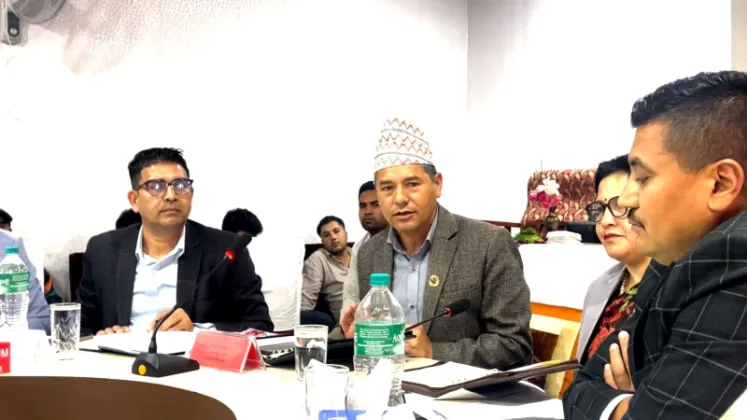
Chief Minister Shahi has said that the deadlines of 19 stalled development projects will be extended only if contractors present a clear basis for carrying out the work. Speaking during discussions on the stalled projects, he stressed that the government's intention is not to cancel contracts but to ensure that construction entrepreneurs complete the work they have undertaken. He also assured that the government will provide the necessary facilitation to help the projects move forward, signalling a combination of firmness on deadlines and support for completion.
Deadline Extensions Only With a Clear Basis of Work
The central condition laid out by the Chief Minister is that time extensions for the 19 stalled projects cannot be expected as a matter of routine. As Nagarik News reports, he said the deadlines will be extended only where the contractors can show a clear basis for carrying out the work ahead. In practical terms, the burden of justification falls on the entrepreneurs: those seeking more time will have to demonstrate that their projects have a realistic path to completion within an extended deadline.
The position ties any relief on deadlines directly to demonstrated intent and capacity. Rather than allowing extensions to be renewed repeatedly while projects remain physically stalled, the Chief Minister's remarks indicate that each claim for additional time will be measured against the work basis presented by the contractor. That the discussions covered 19 projects at once also suggests the government is approaching the stalled works as a group that needs to be sorted out, with extensions decided on the strength of the justification offered rather than granted automatically.
The emphasis on a "clear basis" also sets a test that is straightforward to apply in review: whether the contractor can show that work can actually proceed. It frames the decisions ahead in concrete terms and gives the entrepreneurs a defined bar to meet when they present their cases for more time.
The Aim Is Completion, Not Cancellation
While the condition was firm, the Chief Minister paired it with a reassurance to the construction sector. He stated that the government's aim is not to cancel the contracts of the stalled projects. The priority, according to his remarks as carried by Nepal Samaya, is to ensure that the construction entrepreneurs who took on the work actually complete it. The distinction is significant: the government is signalling strictness over deadlines and justifications, not preparing a wholesale termination of agreements.
To support that outcome, he said the necessary facilitation will be provided. As Nepal Views reports, the remarks position the government as a partner in completion rather than only an enforcer of consequences. The specific form of the facilitation was not spelled out, but the commitment indicates that the state intends to help remove the hurdles that have kept the projects from progressing, even as it holds the contractors to a clear standard of performance.
What the Remarks Signal for the Stalled Projects
Taken together, the statements amount to a clear message to construction entrepreneurs: deadlines on the stalled projects will be taken seriously, and extensions will follow evidence, not habit. Contractors who can present a convincing basis for their work can expect the government to engage and facilitate. Those who cannot will find that an extension is no longer the default outcome. The approach seeks to balance accountability with assistance, pressing contractors to deliver while keeping the state's focus on getting the projects finished.
Key Points From the Chief Minister's Remarks
- The deadlines of the 19 stalled projects will be extended only if contractors show a clear basis for carrying out the work.
- The government's aim is not to cancel contracts but to ensure that construction entrepreneurs complete the work.
- The government will provide the necessary facilitation to support the completion of the projects.
The remarks were made in the course of discussions convened on the stalled projects, underlining that the matter is under active consideration rather than being left to drift. For the entrepreneurs involved, the discussions mark out the route to an extension: come forward with a credible, workable basis for the remaining work, and the government has indicated it will respond with facilitation aimed at completion.
With that direction now set, attention turns to how the contractors of the 19 projects respond. If the discussions translate into decisions grounded in the work basis presented, the stalled projects could see credible timelines for completion, or, where no basis exists, a clear accounting of why they have not moved. Either way, the Chief Minister has placed the responsibility for progress squarely with the entrepreneurs, backed by a promise of support from the government's side.


