The Commission for the Investigation of Abuse of Authority (CIAA) has filed a corruption case at the Special Court in Kathmandu against Hira Babu Bhattarai, an investigation officer at the National Investigation Department, on charges that he submitted fake academic certificates to enter government service and to obtain promotions. The filing, reported on November 4, 2026, places a serving investigation official at the centre of a credential fraud case brought by Nepal's top anti-corruption body, an allegation that goes to the heart of the educational qualifications on which public employment and career advancement in the country formally depend.
The case at a glance
The key elements of the case, as disclosed in the initial reports, are:
- Accused: Hira Babu Bhattarai, an investigation officer at the National Investigation Department
- Allegation: submission of fake academic certificates, both at the time of joining government service and while seeking promotions
- Filed by: the Commission for the Investigation of Abuse of Authority (CIAA)
- Venue: the Special Court, Kathmandu
- Reported: November 4, 2026
What the CIAA alleges
According to reports by Onlinekhabar and Rato Pati, the CIAA's case rests on the claim that Bhattarai presented forged academic credentials when he joined government service. The case further alleges that fake certificates were submitted when he sought promotions, meaning the alleged fraud was tied not only to his entry into public employment but also to his rise through its ranks. Rato Pati's report described him as a chief investigating officer at the agency.
That dual framing is central to how the allegations are understood. In Nepal's civil and security services, minimum educational qualifications operate as formal eligibility conditions for recruitment and for promotion. Submitting forged documents to satisfy those conditions is treated as corruption because it secures public office and career benefits through deception rather than merit. By filing the case at the Special Court, the CIAA has moved its findings from the investigation stage into formal judicial proceedings.
The CIAA and the Special Court
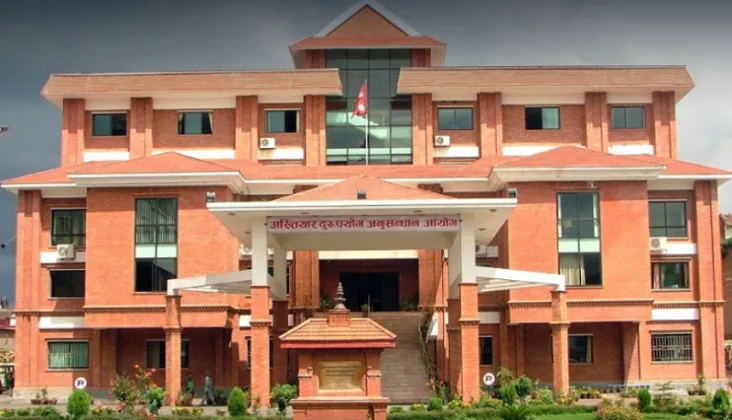
The CIAA is Nepal's constitutional anti-corruption body, mandated to investigate and prosecute corruption and abuse of authority by public officials. Its jurisdiction extends across the public sector, including officials serving in government investigation and security agencies. When its investigators conclude that there is sufficient evidence, the commission files cases at the Special Court in Kathmandu, the specialized court that adjudicates corruption cases.
With the case now filed, the judicial process takes over. The charges will be formally examined, Bhattarai will have the opportunity to respond to the allegations and present his defence, and the court will weigh the evidence before reaching a verdict. Until the court decides, the allegations remain claims advanced by the prosecution rather than established findings. Details such as the specific certificates cited in the chargesheet and the precise timeline of the alleged submissions were not spelled out in the initial reports.
A familiar concern in public service
Certificate fraud has been a recurring concern in Nepal's public administration, where academic credentials frequently determine who can be recruited, retained and promoted. When forged certificates go undetected, the consequences extend beyond a single personnel file: they disadvantage candidates who hold genuine qualifications, distort merit-based progression, and erode public confidence in the institutions involved.
The sensitivity is heightened by Bhattarai's position. The National Investigation Department is a government body whose personnel are entrusted with investigation work on behalf of the state, and the case underscores the importance of rigorous credential verification at both the recruitment and promotion stages of public service. It is precisely at these checkpoints, the filing suggests, that the alleged reliance on fake documents occurred.
What happens next
The case now rests with the Special Court, which will determine whether the CIAA's allegations are proven. If the court convicts, consequences will follow under the prevailing anti-corruption framework; if it acquits, the proceedings end there. Either way, the filing itself carries weight: it signals that the anti-corruption watchdog considers the alleged use of fake certificates by a serving investigation officer a matter serious enough to pursue through formal litigation.
For now, what is established is the fact of the filing: a corruption case against Hira Babu Bhattarai, lodged at the Special Court in Kathmandu, over academic certificates the CIAA says were fake at two decisive moments, his entry into government service and his promotion within it. Further details are expected to emerge as the case proceeds before the court.