
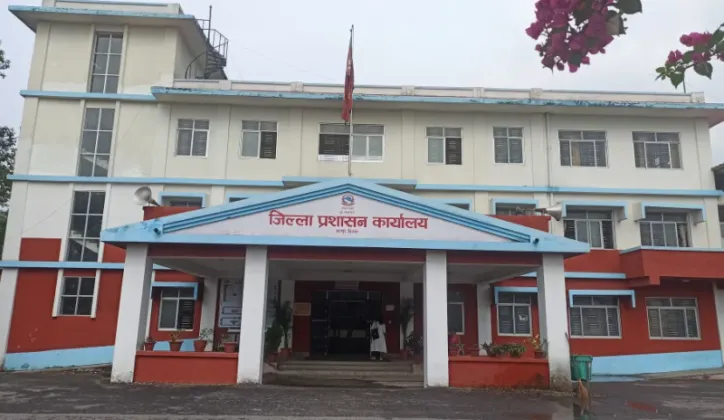
The District Administration Office in Chitwan has ordered operators of farms raising banned maur fish to destroy their stock immediately, following inspections in Bharatpur and other parts of the district that found the prohibited farming and sale continuing. A monitoring team led by Chief District Officer Ganesh Aryal also found rotten meat and foul-smelling eggs being used as feed for the fish.
Inspections uncover banned farming
The order came after the administration’s team visited fish farms in Bharatpur and other areas of Chitwan. The inspections found that maur fish farming and sales were taking place despite the activity being banned. The administration has directed the operators involved to destroy the fish without delay.
The reported findings indicate that the issue extends beyond the presence of the fish in farm ponds. Inspectors also found that rotten meat and eggs with a foul smell were being used to feed them. The summary of the inspections does not identify the farms involved, state how many operators received the order or provide a total quantity of fish found.
The team was led by Aryal, the district’s chief administrative official. The visits brought together the administration’s enforcement role and on-the-ground monitoring of farms in the district. The immediate direction to destroy the fish followed the team’s findings of ongoing banned farming and sale.
Administration directs operators to act
The order puts responsibility on the farm operators to remove and destroy the banned fish. It is not merely a warning against starting new farms: the administration has called for the existing stock to be destroyed immediately. The action is intended to address the fish already being raised at farms where the prohibited activity was found.
The findings about feed were also part of the inspection report. Rotten meat and foul-smelling eggs were reportedly being used as fish feed, a detail that underscores the conditions observed by the monitoring team. The administration’s directive followed the inspection findings, though the information available does not specify any separate action concerning the feed or describe how the fish were being sold.
The reports do not provide a precise date for the inspections or the order, nor do they state whether the operators were given a specific deadline beyond the instruction to act immediately. They also do not detail penalties, follow-up checks or whether any fish had already been destroyed when the order was issued. The central action reported by the administration is the direction to destroy the banned stock.
The inspections in Bharatpur and other parts of Chitwan have brought attention to the continued presence of maur fish farming and sales in the district. With the administration’s instruction now directed at the operators, the next step is for those running the farms to destroy the fish as ordered. The district office’s findings also place the use of rotten meat and foul-smelling eggs among the practices identified during the monitoring visits.


