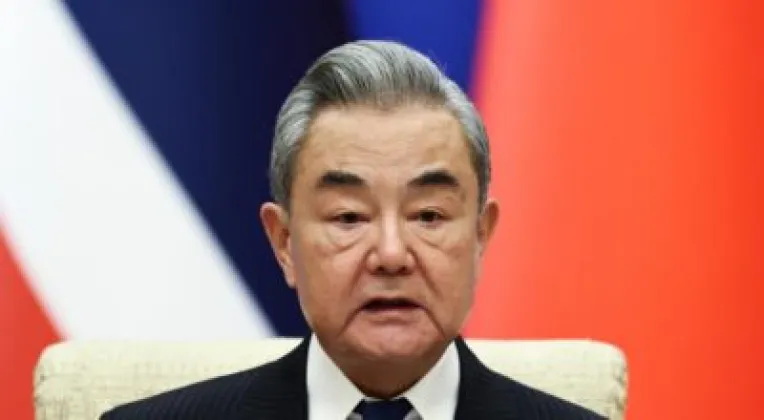
Chinese Foreign Minister Wang Yi has urged the Philippines to exercise caution in the South China Sea dispute and to restrain individuals interfering in the country's relations with China. The message was conveyed during a telephone conversation with Philippine Foreign Minister Theresa Lazaro on Tuesday night, in which the two top diplomats discussed the state of bilateral ties as well as regional disputes. According to reports by Khabarhub and Gorkhapatra Online, the call ended with both sides agreeing to continue diplomatic dialogue and to address their differences on the basis of mutual respect.
A cautionary message from Beijing
Wang Yi's remarks carried two distinct messages for Manila. The first was a call for caution in the handling of the South China Sea dispute, the most persistent point of friction between the two countries. The second was a request that the Philippine side restrain individuals described as interfering in the country's relations with China, an indication that Beijing is concerned about voices it believes are working against smoother bilateral ties.
That both messages were delivered directly by China's foreign minister, rather than through lower-level channels, underlines the importance Beijing attaches to the direction of the relationship. Telephone diplomacy between the two capitals has repeatedly served as a tool for managing tensions, and Tuesday night's conversation followed that established pattern of engagement at the highest diplomatic level.
The conversation at a glance
- Who: Chinese Foreign Minister Wang Yi and Philippine Foreign Minister Theresa Lazaro
- When: Tuesday night, by telephone
- What was discussed: Bilateral ties and regional disputes, including the South China Sea
- Beijing's message: Caution in the maritime dispute and restraint from individuals interfering in relations with China
- Outcome: An agreement to continue diplomatic dialogue and address differences on the basis of mutual respect
Keeping the diplomatic door open
Despite the pointed nature of Wang Yi's warning, the overall tenor of the conversation was one of engagement rather than confrontation. Both sides agreed to keep talking, and to do so on the stated basis of mutual respect. For two neighbors whose relationship is regularly tested by the maritime dispute, the commitment to sustained dialogue represents a deliberate effort to prevent individual disagreements from defining the entire relationship.
The decision to discuss bilateral ties alongside regional disputes also signaled that the two governments view these issues as interconnected. By pairing a frank warning with a promise to continue dialogue, the conversation reflected the way China and the Philippines have sought to balance criticism and cooperation in their diplomatic exchanges. The phrase "on the basis of mutual respect" carries practical weight in this context, suggesting that each side expects its core concerns to be acknowledged even where they cannot be immediately resolved.
The dispute that colors the relationship
The South China Sea has long been the most sensitive issue between China and the Philippines. Competing claims over waters and maritime features in one of the world's busiest sea routes have kept the dispute at the center of bilateral relations, and it is the issue over which Wang Yi chose to deliver his call for caution during the Tuesday night call.
Against that backdrop, the latest exchange is best understood as part of an ongoing effort by both governments to keep the dispute within manageable bounds. Wang Yi's urging of caution can be read as Beijing's attempt to discourage actions it views as unhelpful to stability, while his appeal to restrain certain individuals points to Chinese concern about influences on Philippine policy that it regards as hostile to better ties.
The Philippine side, for its part, joined the agreement to continue dialogue, indicating that Manila also sees value in maintaining direct contact with Beijing despite their disagreements. The willingness of both foreign ministers to speak by phone, exchange views on disputed matters and still converge on the language of dialogue suggests that neither capital wishes to see communication breakdown at this stage.
What comes next
With both governments publicly committing to further diplomatic engagement, attention will now turn to how that commitment is carried out in practice. The South China Sea dispute is not a matter that can be settled in a single phone call, and the differences between the two sides remain substantial. Still, the latest exchange between Wang Yi and Lazaro indicates that Beijing and Manila would prefer, for the moment, to manage their differences through conversation rather than escalation.
The agreement reached on Tuesday night to continue dialogue and address differences with mutual respect now forms the framework within which both countries say they will handle future frictions. Whether that framework holds in the face of recurring tensions in the disputed waters will shape not only bilateral ties but also the broader regional picture that both ministers discussed during their call.