
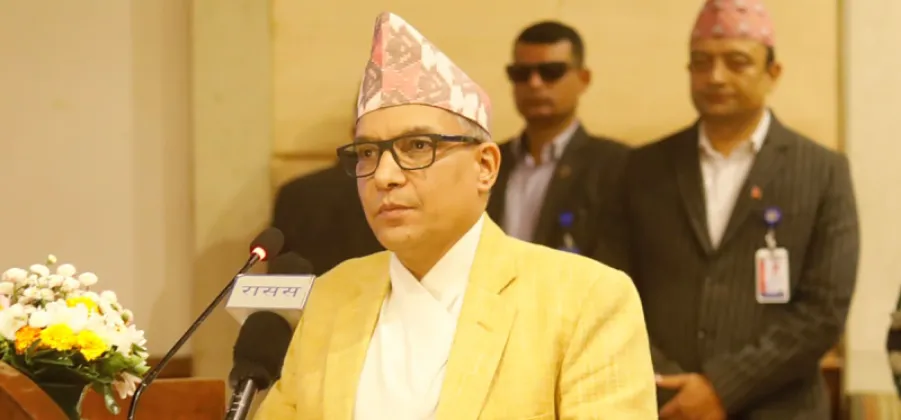
Chief Justice Dr. Manoj Kumar Sharma said public faith in Nepal’s judiciary will grow only if access to justice becomes easier and more effective, speaking at a Supreme Court dialogue programme in Kathmandu on Friday, October 30, 2026. He stressed that citizens must be able to obtain justice conveniently, linking the public’s confidence in the judiciary to how readily people can seek and receive justice.
Access to justice and public confidence
Sharma’s central message was that trust in the judiciary depends on people’s experience of access to justice. Public confidence, he said, will increase only when citizens are able to approach the justice system and obtain justice without undue difficulty. His remarks placed accessibility and effectiveness at the heart of the relationship between the judiciary and the public.
The Chief Justice’s emphasis on convenience underscored that access is not simply a matter of whether a justice system exists. Citizens also need to be able to use it in practice, he said. Making that possible, and ensuring the process is effective, would help strengthen people’s faith in judicial institutions.
The comments were made during a dialogue programme focused on access to justice. Organised by the Supreme Court in Kathmandu, the event brought the issue into discussion at the country’s highest court. The programme’s stated subject and Sharma’s remarks both centred on how people can obtain justice and how that experience relates to public trust.
Supreme Court dialogue focuses on citizens
Sharma’s message framed access to justice from the perspective of citizens. For the public to have confidence in the judiciary, he said, people must be able to obtain justice conveniently. The point connects the institution’s credibility with the practical ability of citizens to seek a remedy, rather than treating confidence as separate from the way justice is accessed.
He also stressed effectiveness alongside ease of access. In his remarks, making access easier on its own was not the only concern: access must also enable people to obtain justice effectively. The combination of convenience and effectiveness was presented as essential to building public faith in the judiciary.
The programme offered a platform for discussion of access to justice, with Sharma’s comments highlighting its significance for public confidence. No further specific measures or proposals are included in the information about the event. His remarks, however, set out a clear principle: people’s trust in the judiciary is tied to whether they can conveniently and effectively obtain justice.
Trust tied to the experience of justice
The Chief Justice’s comments put the citizen’s experience at the centre of the question of judicial trust. When people can access justice conveniently and effectively, public faith in the judiciary can grow, he said. Conversely, his remarks indicate that confidence cannot be strengthened without attention to whether citizens are able to obtain justice in practice.
The dialogue, held by the Supreme Court in Kathmandu on October 30, 2026, therefore focused on an issue Sharma described as fundamental to the relationship between the public and the judiciary. His message was direct: improving access to justice is key to strengthening public trust.


