
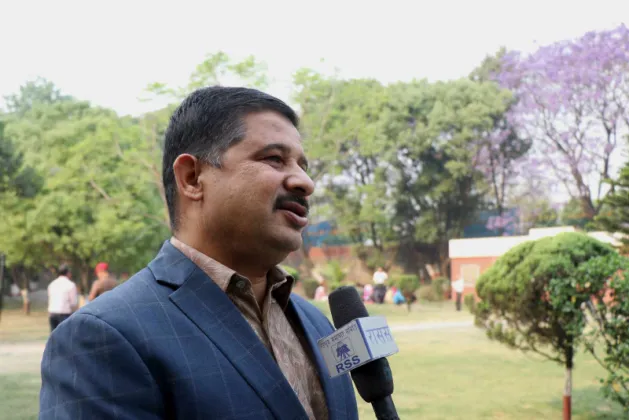
Former central chair of the Federation of Nepali Journalists (FNJ), Bipul Pokharel, has condemned the police arrest of Nepal Press journalist Bishwamani Suvedi, describing it as a panchayat-era practice that should be unimaginable in a democratic system. According to reports, plainclothes officers entered Suvedi’s office and took him into custody. Pokharel criticised the manner of the arrest, saying it recalled an approach associated with the panchayat era rather than democratic governance.
Pokharel criticises the arrest
Pokharel’s condemnation focused on both Suvedi’s arrest and the circumstances in which it reportedly took place. The journalist was taken into custody by plainclothes officers who entered his office, according to the reports. The available accounts do not provide further details about the officers’ actions or the immediate events leading up to the arrest.
By invoking the panchayat era, Pokharel framed the incident as a matter of democratic practice, not simply as an individual journalist’s detention. He said such an incident should be unimaginable under a democratic system. His comments put the reported entry of plainclothes officers into a newsroom at the centre of the criticism.
The description of the arrest as a panchayat-era practice was a pointed rebuke. Pokharel’s statement linked the conduct reported in Suvedi’s case to a style of action he said should have no place in a democracy. The remarks, reported by multiple Nepali news outlets, were directed at the circumstances surrounding the journalist’s custody.
What is known about Suvedi’s detention
The reports identify Suvedi as a journalist with Nepal Press and say that police took him into custody after plainclothes officers entered his office. The summary of the incident does not specify when the arrest occurred, what prompted it, whether a warrant was presented, or what legal grounds police cited. It also does not provide details about Suvedi’s status after being taken into custody.
Those unanswered questions mean the publicly available account here is limited to the reported arrest and Pokharel’s response. The reports do not include a police explanation or a response from Suvedi. No additional account of the circumstances should be assumed from the information provided.
A dispute framed around democratic practice
Pokharel’s criticism gave the incident broader significance by presenting the manner of the arrest as inconsistent with democratic norms. His comparison to the panchayat era conveyed his view that taking a journalist from an office through the reported actions of plainclothes officers was an unacceptable practice. He described it as something that should not occur in a democratic system.
The case has therefore drawn attention to two connected issues: the detention of a journalist and the way authorities reportedly carried it out. Pokharel’s response did not, in the available reports, supply further details about the legal process or the reason for Suvedi’s arrest. Instead, it centred on the arrest’s reported circumstances and what they represented to him.
The reports identify Pokharel as a former central chair of the FNJ and Suvedi as a journalist at Nepal Press. Beyond those details and Pokharel’s condemnation, the information available does not establish what will happen next in the case. His remarks make clear, however, that he views the arrest as a practice at odds with democratic governance.


