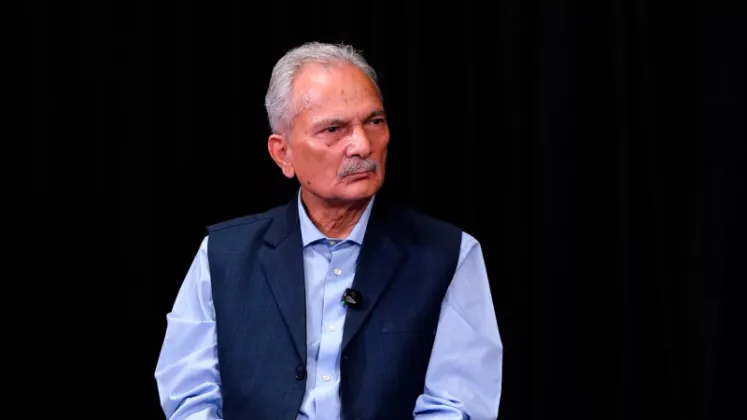
Former Prime Minister Dr. Baburam Bhattarai has warned that growing discord between Nepal’s government and the ruling party is a troubling sign for the country and its democracy, saying publicly airing disagreements could harm both democratic institutions and the people. In a statement posted on social media, he recalled that similar developments in the past had brought losses to the country, democracy and the public.
Bhattarai warns against public discord
Bhattarai’s central concern was the visible disagreement between the government and the party that supports it. He described the situation as “not a good sign” for the country and democracy, according to reports by Ratopati and Nagarik News.
His warning focused not only on disagreement itself, but also on its public airing. When tensions between a governing party and the government become visible to the public, Bhattarai cautioned, the consequences may extend beyond the parties involved. In his assessment, such discord can affect the country’s democratic system and the people who depend on it.
The statement did not, in the available reports, identify specific disputes or set out a detailed account of the disagreement. Bhattarai’s message was instead a broader caution: political actors should take the potential consequences of publicly displayed divisions seriously, particularly when the country’s democratic interests are at stake.
A warning drawn from past experience
Bhattarai invoked history to underline the risks. He said similar events in the past had resulted in losses for the country, democracy and the people. His appeal framed the current tensions as more than an internal political matter, linking them to the wider consequences that political discord can have for public life.
The former prime minister’s reference to earlier episodes did not, in the reported statement, name particular events. Rather, it served as a reminder that divisions among political forces can carry costs beyond the immediate contest between parties and government. His warning was that the country and its democratic process could again bear the consequences if such patterns are repeated.
The reports also describe the ruling party and government as youth-dominated and formed on the foundation of the Gen Z rebellion. That context gives added weight to Bhattarai’s appeal not to repeat past mistakes. His message was directed at a political formation associated with a movement for change, urging it to be mindful of the risks that discord can pose to democracy and the public.
Democracy and public interest at stake
Bhattarai’s statement places the interests of citizens alongside the stability of democratic institutions. By warning that public disagreements could harm both, he presented the issue as one with implications beyond political leadership. The concern, as expressed in his message, is that discord within the ruling side may affect the country and its people if it is allowed to reproduce damaging patterns from the past.
The intervention is a caution rather than a detailed proposal for resolving the tensions. Bhattarai’s appeal, as reported, is that the government and ruling party should recognize the risks of their growing discord and avoid repeating mistakes that have previously cost the country, democracy and the public. He did not provide further details of a proposed remedy in the reported statement.