
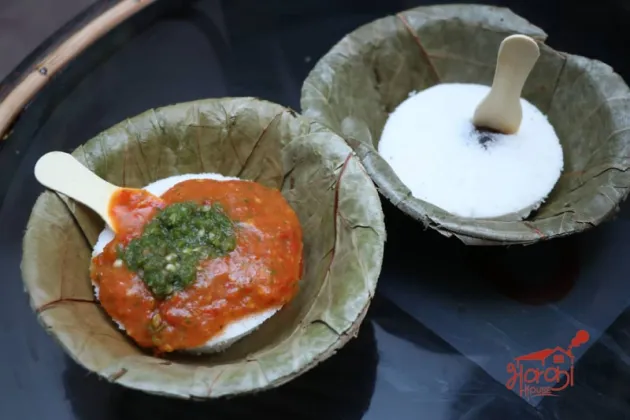
As the winter chill begins to settle over the plains of eastern Nepal, the trade of bhakka, a traditional snack of the Rajbanshi and other indigenous communities, has gathered remarkable momentum in the eastern Terai districts of Jhapa, Morang and Sunsari. With the onset of the cold season, the market for this much-loved local delicacy has picked up sharply, with consumers of all communities and age groups driving demand across the region, according to reports by RatoPati and Ajako Artha.
What was once a snack closely tied to the kitchens and customs of the Rajbanshi people has, over time, outgrown its origins. Today, bhakka is embraced by eaters from every walk of life, and its swelling popularity has turned it into one of the most recognisable food traditions of the eastern Terai. The seasonal surge now underway across Jhapa, Morang and Sunsari reflects not just a change in the weather, but the steady rise of a snack that has become woven into the identity of eastern Nepal itself.
Winter arrives and the bhakka business heats up
The timing of the boom is no coincidence. As with many traditional foods across Nepal, demand for bhakka rises hand in hand with the falling temperature. The arrival of the cold season has acted as a trigger for the trade, with business activity picking up noticeably in the three eastern Terai districts as soon as winter set in.
The breadth of the snack's appeal is central to the story. Bhakka is no longer consumed only within the community that created it. As Pradesh Khabar highlights, the snack has found favour among consumers of all communities and all age groups, giving the trade a customer base that stretches far beyond its traditional circle. That widening appeal is precisely what makes the current boom more than a passing seasonal spike: it signals a food item that has secured a firm place in the everyday culture of the region.
The districts at the heart of this growing trade are:
- Jhapa, where the annual Bhakka Day celebration has helped anchor the snack's public profile
- Morang, where the trade has picked up alongside the onset of cold weather
- Sunsari, where demand from consumers of all backgrounds has boosted business
Together, these three districts form the core of a trade that has turned a humble indigenous snack into a seasonal economic driver for the eastern Terai.
From community staple to a cultural emblem of the east
Beyond the marketplace, bhakka's rise carries a deeper significance. The snack is now regarded as a distinct cultural identity of eastern Nepal, a status that few local food items achieve. Its journey from a traditional food of the Rajbanshi and indigenous communities to a region-wide symbol illustrates how culinary heritage can travel, adapt and flourish when it is embraced by a wider public.
This transformation matters for cultural preservation as much as for commerce. Traditional snacks often fade as food habits change, yet bhakka has moved in the opposite direction. Its growing visibility among younger and older consumers alike, and across community lines, suggests that the tradition is not merely surviving but strengthening. Each season of robust trade reinforces the snack's place in the region's collective identity, ensuring that the knowledge and customs attached to it continue to be passed on rather than lost.
The story of bhakka, in other words, is now three stories at once: a seasonal trade riding the winter demand, a cultural symbol uniting the eastern Terai, and a source of livelihood for the communities that created it.
Bhakka Day and the promotion of a local taste
Institutional recognition has played a part in sustaining this momentum. Jhapa celebrates a Bhakka Day every year, an occasion dedicated specifically to promoting the local taste of the traditional snack. The existence of an annual day devoted to a single indigenous food item is telling: it shows a deliberate effort to keep the delicacy in the public eye and to celebrate it as a point of regional pride rather than letting it remain a private, community-bound custom.
Such promotional efforts feed directly into the trade now booming across the Terai. By framing bhakka as a local specialty worth celebrating, Bhakka Day helps sustain consumer interest that translates into business once the cold season arrives. It also signals to the wider public that the snack is not just food, but heritage, something with a story and a community behind it. The combination of cultural celebration and seasonal demand has created a mutually reinforcing cycle: the festival promotes the taste, the taste drives the trade, and the trade keeps the tradition alive.
A route to self-employment for indigenous women
Perhaps the most consequential dimension of the booming trade is its impact on indigenous women. The bhakka business has become a means of self-employment for women of the indigenous communities, allowing them to earn an income through a skill rooted in their own tradition. For women who often face limited pathways into the formal economy, the trade offers something genuinely valuable: a livelihood built on knowledge they already hold and a product their communities have made for generations.
This economic empowerment adds a self-sustaining quality to the entire story. The same tradition that preserves the cultural identity of the Rajbanshi and indigenous communities is simultaneously funding the households that keep it alive. Women earning through bhakka have a direct stake in the snack's continued popularity, and their participation ensures that the knowledge behind it remains active rather than archival.
With the cold season only beginning, the trade is well placed to sustain its momentum across Jhapa, Morang and Sunsari in the weeks ahead. Whatever the winter brings, the trajectory is already clear: a snack once confined to indigenous kitchens has become a winter fixture, a regional identity and a livelihood, all at once.


