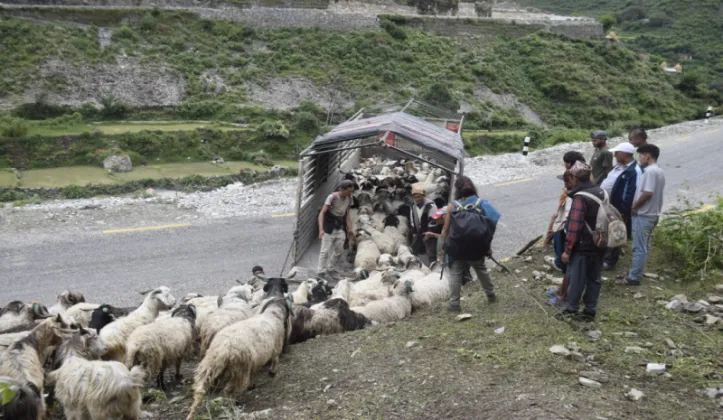
Ghuran Bahadur Bohora, a herder from Saipal Rural Municipality in Bajhang, leaves his family behind during Dashain and Tihar to take his flock of sheep and goats to Pokhara and Kathmandu for trade. While his mother and relatives celebrate the festivals at home, Bohara spends the season in the cities, seeking a livelihood through the sale of his animals. Reports on his experience describe how the appeal of city life keeps him away from the mountains during a time when many families gather to celebrate.
A festival season spent away from home
For Bohara, Dashain and Tihar do not mean returning to his family for the celebrations. Instead, the festive period takes him and his flock from Saipal, in the hills of Bajhang, to urban markets in Pokhara and Kathmandu. His work puts him on a different path from the relatives who remain at home, including his mother, as they mark the holidays together.
The contrast is central to Bohara’s story: his family observes the festivals at home, while he spends them away, focused on trade. The reports describe this as a recurring choice tied to his effort to earn a living. The festive calendar, rather than bringing him back to the mountains, coincides with the period when he takes his animals to the cities.
Taking sheep and goats to urban markets
Bohara’s flock includes sheep and goats, which he takes to Pokhara and Kathmandu for trade. The journey links his herding work in Bajhang with customers and markets in the cities. The reports do not provide further details about the number of animals he takes, the length of each trip or the income he earns, but they depict the trade as the reason he remains away from home during the major festivals.
The movement from the mountains to the cities also gives the account its distinctive setting. Bohara’s work is rooted in animal herding, yet his seasonal routine brings him into urban centres. Rather than celebrating Dashain and Tihar alongside his family, he spends that period with the flock as he pursues trade in Pokhara and Kathmandu.
The pull of the city and the cost of separation
The reports say the taste of the city keeps Bohara from the mountains during the festive season. That appeal sits alongside the practical purpose of his journeys: taking sheep and goats to the cities to earn a living. The account presents both as part of his reason for being away, without suggesting that his family has stopped celebrating or that he has abandoned his home in Bajhang.
His mother and relatives remain at home for the festivals, while Bohara’s work separates him from those gatherings. The reports do not describe how the family responds to his absence or give details about when he returns. What they establish is a clear seasonal contrast: as his family celebrates Dashain and Tihar in Saipal, he travels with his flock to Pokhara and Kathmandu.
Bohara’s experience highlights how earning a livelihood can shape the way one family spends the festive season. For him, the period is associated with travel and trade rather than a reunion at home. His story connects the mountains of Bajhang with the cities where he takes his animals, and underscores the distance between his work and the celebrations shared by his mother and relatives.