
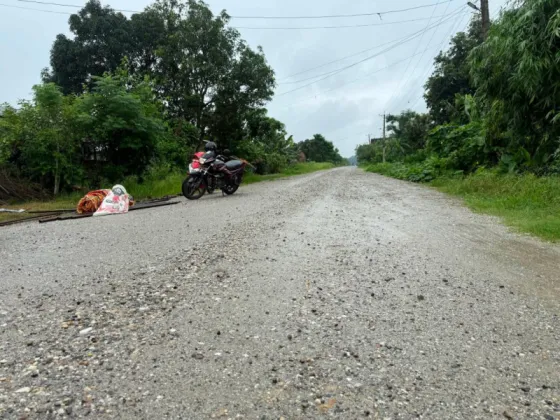
Baijnath Rural Municipality in Banke district constructed nine kilometres of road during the last fiscal year, according to figures released by the local government. The completed work combined three kilometres of blacktopping, four kilometres of gravel surfacing and the opening of a two-kilometre track for an entirely new road. Municipal chair Prakash Bahadur Shahi said the main roads of the municipality have been blacktopped while the inner roads have also been upgraded, a summary of the year's construction effort that was reported by NepalPress and Khabarhub.
The announcement offers a snapshot of how one rural municipality in the Tarai plains of Lumbini Province is allocating its infrastructure effort across different kinds of road work, from sealed highways through neighbourhood tracks to brand-new alignments that did not previously exist.
How the Nine Kilometres Break Down
The nine-kilometre total reported by the municipality was not a single project but a combination of three distinct types of construction carried out over the fiscal year:
- Three kilometres of blacktopping, converting existing roads into sealed, paved surfaces with an asphalt layer.
- Four kilometres of gravel surfacing, improving roads so that they can be used more reliably through the year.
- Two kilometres of new track, opened for a road that previously had no formal alignment.
Taken together, the figures show that the bulk of the municipality's road-building, four kilometres, went into gravel surfacing, which is generally the standard intermediate step for rural roads in Nepal, providing a stronger and more dependable driving surface than an earthen track while remaining far cheaper than asphalt. The three kilometres of blacktopping represent the higher-end investment in the municipality's network, since paved roads are more durable, generate less dust and remain usable during monsoon conditions that can quickly degrade unpaved surfaces.
The decision to open two kilometres of new track also stands out. Cutting a fresh alignment means extending the road network into areas it did not previously serve, rather than merely improving what already exists. In most rural municipalities, such tracks are opened first as rough earthen roads with the expectation that they will be widened, graded and eventually surfaced in later budget cycles.
Shahi Highlights Main Roads and Inner Roads
According to the municipality, chair Prakash Bahadur Shahi presented the year's results with a particular emphasis on the two tiers of the local road network. He said the main roads of Baijnath Rural Municipality have been blacktopped, and that the inner roads have also been upgraded.
That framing suggests a deliberate two-track strategy. The blacktopped main roads form the backbone of the municipality's transport system, the routes that carry the heaviest traffic and connect its key settlements. The upgraded inner roads, meanwhile, address the smaller routes that link individual neighbourhoods and settlements to that backbone. Upgrading inner roads is often the more visible form of road investment for ordinary households, since these are the paths residents use daily to reach the main network.
Shahi's remarks, as carried in the published reports, did not detail the cost of the works or name the specific roads involved, but they positioned the fiscal year's output as covering both layers of the municipality's network rather than concentrating on a single showcase route.
Road Building as a Core Municipal Mandate
Road construction and maintenance remain among the most prominent responsibilities of rural municipalities across Nepal, and spending decisions of this kind are closely watched by local residents. Since the country's federal restructuring transferred a wide range of service responsibilities to local governments, rural municipalities have been expected to plan, fund and execute their own infrastructure programmes, with road networks usually at the top of local agendas.
For a municipality like Baijnath, the composition of the nine kilometres matters as much as the total length. Blacktopping brings permanent routes into the network. Gravel surfacing extends the reach of usable roads at moderate cost. Opening new tracks brings settlements without road access into the grid for the first time. A year that includes all three types of work indicates an effort to improve the quality of existing roads and expand coverage at the same time.
The reported results also reflect the practical constraints under which rural municipalities work. Road budgets are typically spread across many small schemes rather than concentrated in one large contract, and progress is measured in kilometres of each kind of surface delivered. On that measure, Baijnath Rural Municipality's fiscal year produced nine kilometres of new or improved road, split between three kilometres of blacktop, four kilometres of gravel and two kilometres of fresh track.
What the municipality plans for the coming year, including whether the newly opened two-kilometre track will be upgraded further, has not been outlined in the published reports. For now, the municipality's stated record for the last fiscal year stands at nine kilometres of road built, with the main roads blacktopped and the inner roads upgraded, in the words of its own chairperson.


