
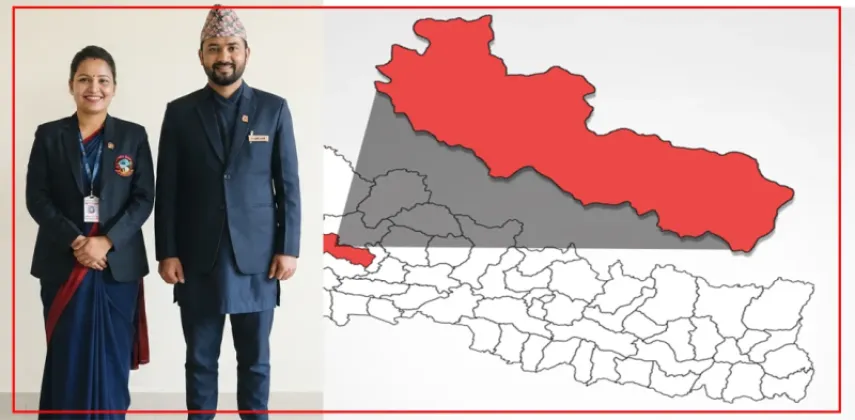
The Bagmati Province government has issued a new set of criteria for the transfer and posting of provincial civil servants, making it compulsory to move any employee who has served in the same office for three years. The provincial government said the new rules are intended to make the transfer and posting process fair, transparent, objective, cyclical and predictable. The criteria apply to civil servants working under the Bagmati provincial administration and set a fixed time limit on how long any employee may remain at a single station, replacing open-ended tenures with a clear, rules-based trigger for movement across the province's offices.
Mandatory Transfer After Three Years
The central provision of the new criteria is the three-year rule. Under the rules, employees who have completed three years of service in the same office must be transferred. This removes the possibility of an employee remaining at one workplace indefinitely and anchors the process in a uniform standard that applies equally to all staff, regardless of their position or office.
The three-year benchmark also introduces a predictable rhythm into the province's staffing. Offices can anticipate when their employees will become due for movement, and employees can plan their professional and personal lives around a known schedule rather than waiting for uncertain, case-by-case decisions. The province's use of the word "cyclical" in describing its objectives points to this intention: transfers are to occur as a matter of routine rotation, not as exceptional events negotiated individually after the fact.
Stated Aims: Fair, Transparent and Objective
In issuing the criteria, the Bagmati Province government framed the move as an effort to bring consistency to one of the most sensitive functions of public administration. The province said the criteria aim to make the transfer and posting process fair, transparent, objective, cyclical and predictable. Each of these terms carries a distinct implication for how the system is expected to operate:
- Fair: All employees are to be governed by the same rules, with the mandatory three-year transfer applying across offices rather than being applied selectively.
- Transparent: The basis for transfers rests on stated criteria, so employees know in advance what governs a posting or transfer decision.
- Objective: Decisions are tied to measurable service records, such as the length of an employee's stay in a particular office, rather than individual discretion.
- Cyclical: The movement of staff is built into the routine of administration, creating continuous, regular rotation across offices in the province.
- Predictable: Employees and offices alike can foresee when transfers will take place, reducing the uncertainty that has often surrounded posting decisions.
Taken together, these objectives signal an attempt to shift transfers from a discretionary administrative act to a rules-driven process. Predictability, in particular, addresses a familiar concern among civil servants: that posting decisions arrive without warning and without a clear explanation. A criteria-based system gives employees a reference point for understanding where they stand and when a change in their station should be expected.
Context: Managing a Provincial Workforce
Bagmati Province is one of the seven provinces created under Nepal's federal structure, and it administers its own civil servants across government offices throughout the province. Transfer and posting decisions touch nearly every aspect of a government employee's working life, from career progression to family and schooling arrangements, which is why such decisions are closely watched by employees. By codifying the grounds on which employees are moved, the province is seeking to institutionalise its approach to human resource management, narrowing the scope for case-by-case negotiation and making staffing decisions easier to examine and evaluate.
The timing and structure of the criteria also reflect the practical realities of running a provincial administration. Regular rotation of staff affects how institutional knowledge accumulates within individual offices, how vacancies are anticipated, and how workloads are balanced across locations. A fixed three-year ceiling on tenure in one office gives the administration a dependable planning horizon: it knows when movement will occur and can organise postings around that cycle, rather than responding to transfer demands as they arise.
What the Rules Mean for Employees
For employees, the immediate practical effect of the new criteria is straightforward. Anyone approaching the three-year mark in their current office should expect a transfer once that threshold is reached, and continued service at the same station beyond that point is no longer contemplated under the rules. For the offices themselves, the criteria point to a more regular inflow and outflow of personnel, with staff experience circulating across different workstations in the province on a recurring basis.
The provincial government has presented the criteria as a comprehensive framework for handling these movements, and its emphasis on fairness, transparency and objectivity reflects the weight that transfer decisions carry within the civil service. If applied consistently, the province argues, the system will make the management of its workforce more orderly and more defensible, with every transfer traceable to a published standard rather than to an individual decision.
The issuance of the new transfer and posting criteria was reported by RatoPati, which highlighted the mandatory transfer provision for employees who remain in the same office for three years, and by Gorkhapatra Online. Both reports note that the Bagmati Province government has framed the criteria as a means of making the transfer and posting of provincial civil servants fair, transparent, objective, cyclical and predictable.


