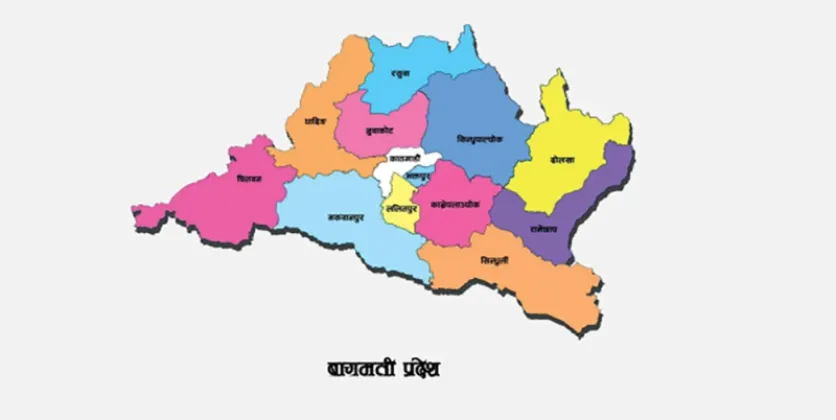
Bagmati Province is projected to record economic growth of 5.40 percent in the current fiscal year 2082/83, despite floods and landslides, according to Nepal Rastra Bank’s annual study of the province’s economic activity. The projection is higher than the 3.85 percent growth estimated for the previous fiscal year. The report expects services to remain the largest contributor to the provincial economy, while also recording a 7.8 percent decline in agricultural production.
Growth projection and comparison
The 5.40 percent figure is the central projection in the Nepal Rastra Bank Economic Research Department’s annual study report on Bagmati Province. It describes expected growth for fiscal year 2082/83, rather than a final measurement of economic activity for the year. The report’s estimate places projected growth 1.55 percentage points above the 3.85 percent projected for the previous fiscal year.
The forecast comes despite floods and landslides affecting the province. The report’s headline projection indicates that overall growth is expected to remain positive, even as the study separately identifies a fall in agricultural production. The figures provide a province-wide view of expected economic activity; the summary of the report does not specify how much the disasters changed the growth estimate or quantify their effects on individual sectors.
Services account for most of the economy
The study assigns 76.53 percent of Bagmati Province’s gross domestic product to the service sector. Industry is projected to account for 12.24 percent, while agriculture is expected to contribute 11.23 percent. Together, the three shares make up the province’s gross domestic product, with services accounting for more than three-quarters of the total.
The sector breakdown shows the relative weight of services in the provincial economy compared with industry and agriculture. It is a measure of each sector’s contribution to gross domestic product, not a growth rate for that sector. The report’s figures therefore distinguish the composition of the economy from its overall projected growth of 5.40 percent.
Agricultural production falls
Alongside the positive province-wide growth forecast, the report records a 7.8 percent decline in agricultural production. That decline is a separate finding from agriculture’s projected 11.23 percent share of provincial GDP: one figure concerns a change in production, while the other describes the sector’s contribution to the economy.
The figures highlight different aspects of Bagmati’s economic outlook. The overall projection indicates expected growth across the province, while the agricultural result points to a contraction in production in that sector. The available summary does not provide further details on the causes of the decline, the crops or activities affected, or the scale of the effects of floods and landslides on agricultural output.
Nepal Rastra Bank’s annual study thus presents a mixed picture for fiscal year 2082/83: projected provincial growth is higher than the previous year’s estimate, and services remain the dominant contributor, but agricultural production has declined. The 5.40 percent figure remains a forecast for the current fiscal year, while the report’s sector shares and production finding offer additional context for understanding the province’s economic activity.