
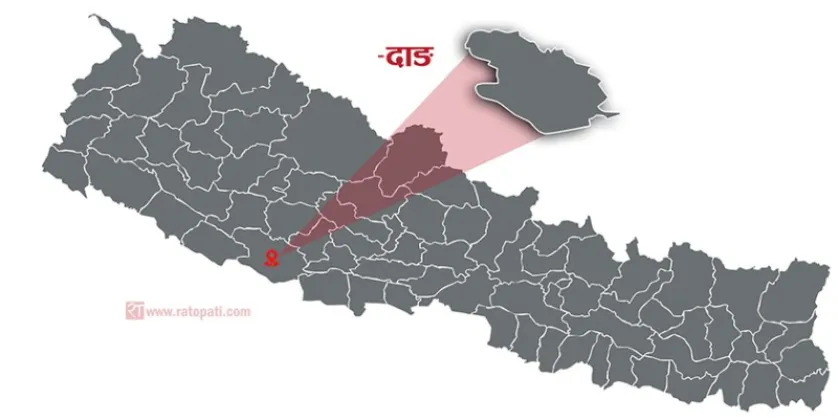
The Badkapath Irrigation Project, a major agricultural infrastructure initiative taking shape in Gadhawa Rural Municipality of Dang district, has reached 70 percent completion, with the goal of providing irrigation facilities to 4,000 hectares of farmland. The project, which draws water from the Rapti River, has so far delivered irrigation to 610 hectares, according to project information officer Khumananda Wali. As reported by RatoPati, the scheme combines a river intake, an extensive canal network and dozens of supporting structures into a single system designed to move water from the Rapti to the fields, and its current progress indicates that farmers in the project area are already beginning to benefit long before the final works are in place.
A Side Intake, a 17-Kilometre Canal and 54 Structures
At the heart of the Badkapath Irrigation Project is a side intake structure built on the Rapti River. The intake is the point at which river water is diverted into the project's canal system, making it the starting point for the entire irrigation network. From there, water travels through a main canal stretching 17 kilometres, which serves as the central artery carrying supplies toward the farmland the project is meant to serve.
Supporting this main channel are 54 small and large structures that together regulate how water is divided, delivered and drained across the irrigated area. According to Khabarhub, these components make up the engineering scope of the scheme as described by the project's information office. The key elements are:
- A side intake structure on the Rapti River, which draws river water into the irrigation system
- A 17-kilometre main canal, which conveys water from the intake toward the project's command area
- 54 small and large structures, which manage the distribution, control and drainage of water across the network
Why the Supporting Structures Matter
In an irrigation scheme of this scale, headline structures such as the intake and the main canal tend to draw the most attention, but the dozens of smaller works are what determine how evenly water actually reaches individual fields. The 54 structures included in the Badkapath project are designed to serve that function, ensuring that the water entering through the intake is managed carefully as it moves through the system rather than being left to find its own path across farmland.
610 Hectares Already Under Irrigation
Although construction is still ongoing, the project is not waiting until completion to deliver results. It has so far provided irrigation facilities to 610 hectares of farmland, according to figures shared by Wali. That area represents just over 15 percent of the 4,000-hectare target, meaning the bulk of the project's intended service area is still waiting for the remaining construction to be finished.
For farmers within those 610 hectares, however, the arrival of irrigation water marks a practical change. Irrigated land can be cultivated with far greater confidence than rain-fed farming, where a delayed or uneven monsoon can put an entire season's harvest at risk. With water now flowing through a portion of the network, those farmers are the first to experience what the completed project is intended to offer across its full command area.
Oversight Under a National Irrigation Programme
The Badkapath Irrigation Project is currently being overseen by the Irrigation and Water Resources Management Project. That arrangement places the scheme's monitoring within a wider institutional structure, with its progress tracked beyond the boundaries of Gadhawa Rural Municipality itself. The oversight also links the project to broader efforts to expand and manage irrigation infrastructure across the country, an area where Nepal's agricultural sector has long sought improvements.
The presence of a dedicated information officer, meanwhile, reflects an effort to keep the public informed as the work advances. Wali has been the source of the progress figures reported so far, including the 70 percent completion rate and the 610 hectares currently receiving water.
The Road to 4,000 Hectares
With 70 percent of the physical work completed, attention now turns to finishing the remaining 30 percent of the project. Completing the canal network and the outstanding structures will determine when the full 4,000-hectare target can be brought under irrigation. Each additional stretch of canal and each new structure brought into operation expands the area over which water from the Rapti can be delivered.
The gap between the current figure and the final target is substantial. Bringing the remaining roughly 3,390 hectares under irrigation would multiply the project's present reach more than six times over, extending reliable water supplies to a far wider circle of farming households within the project's command area.
For a district such as Dang, where agriculture remains central to rural livelihoods, the steady expansion of irrigated land carries considerable weight. Irrigated farming generally supports higher and more predictable yields, allows greater flexibility in crop choice and reduces the vulnerability that comes with dependence on rainfall alone. Those are the broader outcomes the Badkapath project is intended to deliver once its intake, canal and structures are operating at full capacity.
Further details of the project's progress are available in the original reporting from RatoPati and Khabarhub.


