
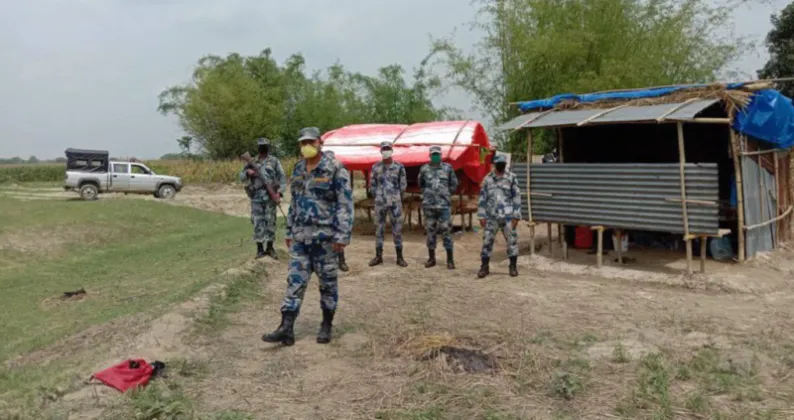
The Armed Police Force (APF) has recovered illegal goods and materials worth more than Rs 1.332 billion from Nepal's border areas between March 27 and October 29, 2026, according to details made public by the Prime Minister's Office. The seven-month tally, reported by Onlinekhabar, also includes the seizure of 17 illegal firearms and the arrest of eight people, along with 421 individuals held for their involvement in other offences. The operations were carried out as part of an intensified drive against smuggling, drug trafficking and arms smuggling since the government led by Prime Minister Balendra Shah took office.
A seven-month tally of seizures
The total of Rs 1.332 billion covers a window of just over seven months, stretching from late March through the end of October. Spread across that period, the seizures amount to an average of roughly Rs 6 million in illegal goods and materials taken off the market every day, an indication of both the scale of the contraband moving through border areas and the frequency with which APF units have been intercepting it.
Key figures at a glance
- Period covered: March 27 to October 29, 2026
- Value of illegal goods and materials recovered: more than Rs 1.332 billion
- Illegal firearms seized: 17
- People arrested in arms-related cases: 8
- People held for involvement in other offences: 421
Arms seizures featured prominently in the announcement. The APF recovered 17 illegal firearms during the period and arrested eight people in connection with the recoveries, a sign that the enforcement drive has extended beyond contraband goods to the weapons that frequently accompany cross-border crime. In addition, 421 people were held for their involvement in other offences, bringing the total number of individuals caught up in the operations to 429.
The consolidated figures offer one of the clearest pictures yet of the volume of enforcement activity along the border in a single reporting period. They also underline the variety of cases the force handles, ranging from large consignments of smuggled goods to individual offenders picked up for lesser violations.
Part of a broader crackdown
The seizures and arrests come as the government led by Prime Minister Balendra Shah has intensified action against smuggling, drug trafficking and arms smuggling since taking office. The decision to release consolidated details through the Prime Minister's Office is itself significant: by publishing the numbers at the centre of government, the administration has placed border enforcement among its stated priorities and opened the results of the campaign to public scrutiny.
The three areas highlighted in the announcement, smuggling of goods, drug trafficking and arms smuggling, are precisely the categories of cross-border crime that security agencies have long struggled to contain. Border points serve as conduits for contraband moving in both directions, and interception depends on the vigilance of personnel stationed at outposts and checkpoints along the frontier. Results on this scale suggest that the intensified posture adopted since the change of government has translated into sustained operational tempo on the ground.
The APF's mandate along the border
The APF is the force deployed in Nepal's border areas to detect and prevent cross-border crime, and its personnel are the ones who physically intercept illegal goods before they can move further inland. The figures released by the Prime Minister's Office represent the cumulative output of that work across numerous border locations during the reporting period, covering everything from high-value consignments to firearms and the individuals carrying them.
For the force, the disclosure also serves as a form of public accounting. Publishing a single, headline number for seizures, alongside specific counts of firearms and arrests, allows observers to track whether enforcement is intensifying over time and gives the government a benchmark against which future performance can be measured. It also signals that the campaign launched under the Balen Shah-led government is being documented at the highest level rather than left to scattered, piecemeal reporting.
What happens next will depend largely on whether the momentum is sustained. The sheer value of the recoveries, more than Rs 1.33 billion in seven months, points to the continued pull of the illegal trade across Nepal's borders, even as it demonstrates the capacity of enforcement agencies to disrupt it. With the crackdown on smuggling, drug trafficking and arms smuggling now a declared priority of the government, the figures published for this period are likely to become the reference point for judging the campaign's progress in the months ahead.
For now, the message from the Prime Minister's Office is straightforward: enforcement along the border has been stepped up, the results are being tallied and shared publicly, and the operations that produced Rs 1.332 billion in seizures, 17 firearms and 429 arrests are expected to continue.


