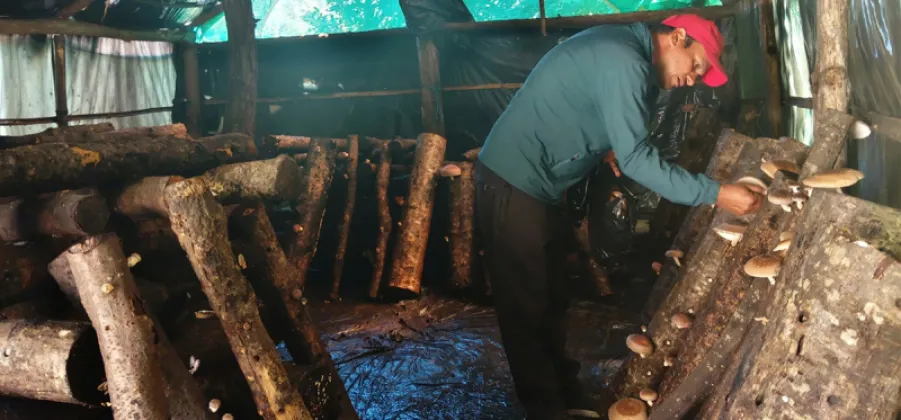
Antaram, a farmer from Dadeldhura, has become self-reliant through commercial mushroom farming after returning home from foreign employment, and his mushrooms are now selling at Rs 800 per kilogram. As reported by Nagarik News and Pradesh Khabar, he used the skills he acquired while preparing to go overseas to build a business on his own soil, offering a compelling example for the many young Nepalis who return from abroad each year and struggle to find work at home.
From Preparing to Leave to Deciding to Grow
Like thousands of youths from Nepal's far-western hills, Antaram once prepared to build his future outside the country. In the course of that preparation, he picked up skills that would ultimately change the direction of his life. After returning from abroad, rather than letting that training go to waste or waiting for another opportunity overseas, he put it to work in his own village and launched commercial mushroom farming in Dadeldhura.
The decision has transformed his circumstances. Today, Antaram is self-reliant, earning from a crop that commands Rs 800 per kilogram in the market. For a farmer in a hill district where traditional agriculture often delivers modest returns, that price point represents a meaningful shift in what local farming can achieve. His story demonstrates that the pathway to foreign employment, including the training and preparation that come with it, can unexpectedly become the foundation of a domestic enterprise.
Why Mushrooms Are a Smart Bet for Hill Farmers
Mushroom farming has emerged as one of the more accessible forms of commercial agriculture in Nepal's hilly districts, and Antaram's experience in Dadeldhura reflects why the sector attracts returnee migrants and smallholders alike.
- Low land requirement: Mushrooms can be cultivated in sheds and small structures rather than large open fields, which matters in hill districts where flat, arable land is scarce.
- Faster returns: Production cycles for mushrooms are short compared with many traditional crops, allowing farmers to bring produce to market quickly and generate income on a regular basis.
- High market value: With Antaram selling at Rs 800 per kilogram, mushrooms sit among the better-priced agricultural products reaching local markets, making the crop attractive relative to grains and vegetables.
- Fit for returnee skills: Farmers who have prepared for foreign employment often bring discipline, training and some capital home, all of which can be channelled into an enterprise of this kind.
For farmers in Antaram's position, the combination of modest space needs and strong per-kilogram prices makes mushroom farming a realistic route to self-employment, particularly for those returning from overseas with new skills in hand.
A Message for Nepal's Returnee Migrants
Antaram's success carries significance well beyond his own farm. Large numbers of Nepalis seek work abroad, and many who come back face a familiar dilemma: the experience and savings gained overseas do not always translate into employment in villages and districts where job openings are limited. Returning can feel like arriving at a dead end.
His case points to a different outcome. By applying the skills he learned while preparing to go abroad, Antaram built an enterprise that sustains him without requiring him to leave home again. For young people in Dadeldhura and across the far-west, a region that has seen many of its working-age residents head overseas, the example suggests that self-employment in agriculture can be a viable landing point after foreign employment rather than a last resort.
The broader lesson is one of preparation meeting opportunity. The abilities migrants acquire on the road to going abroad, whether through vocational training or hands-on work, do not have to stay dormant once they return. As Antaram's mushroom farm shows, those same skills can become the seed of a business that keeps families together and money circulating in the local economy.
Self-Reliance Without a Plane Ticket
For returnee migrants wondering what comes next, Antaram's journey offers a simple answer rooted in the soil of Dadeldhura. With mushrooms fetching Rs 800 per kilogram, he has proven that a farmer who once looked abroad for his future can find self-reliance at home, and that the skills picked up while preparing to leave can become the most valuable asset a migrant brings back.
His success is unlikely to remain an isolated case. As word spreads of a Dadeldhura farmer who turned preparation for foreign employment into a thriving mushroom business, other returnees weighing their options may see in his example that the best investment is sometimes the one made in the village they left behind.