
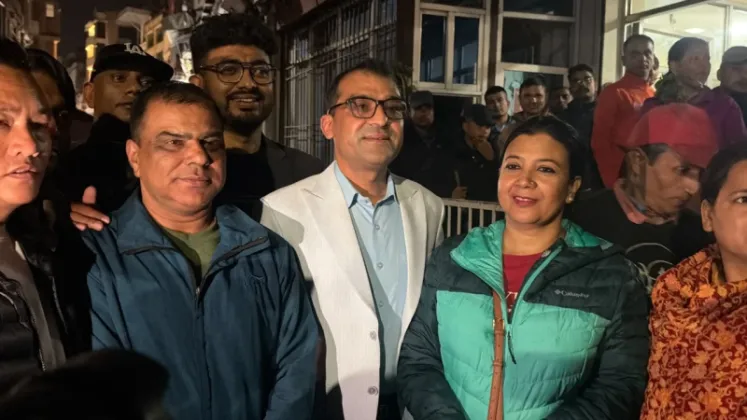
All of the journalists who had been arrested have been released, Nepal's Communications Minister confirmed in an announcement reported by multiple Nepali news outlets on Friday, October 30, 2026. The statement established that no members of the press who had been taken into custody remain in detention. The development was reported the same day by Nepal Views and Thahakhabar, each of which cited the minister's confirmation of the releases.
Minister Confirms Every Detained Journalist Has Been Freed
The core of the announcement was unambiguous: the Communications Minister stated that all of the journalists who had been arrested have been released. The formulation covered the entire group of detained journalists rather than a portion of them, and it came directly from the minister who heads the government's communication apparatus. As such, the statement stands as the clearest official word on the situation as of October 30, 2026.
Both Nepal Views and Thahakhabar reported the confirmation on October 30, 2026, framing the news around the minister's own words. The parallel coverage underscores that the release of the journalists was treated as a significant development across Nepali media, with each outlet attributing the news to the minister's statement itself.
Arrests Preceded the Official Release
The sequence described in the reporting is straightforward: the journalists had been taken into custody, and their release was subsequently confirmed by the minister. The confirmation therefore closes a sequence that began with arrests and ended, according to the government's own communication, with every arrested journalist free.
What the available reporting does not provide is detail about the detentions themselves. Neither the number of journalists involved nor their identities, their news organizations, or the circumstances of the arrests were specified in the accounts of the minister's statement. Nor did the reported confirmation address how long the journalists had been held or what, if any, legal processes accompanied the detentions. As a result, the public record as of October 30, 2026 centers on the outcome, the release of all arrested journalists, while the underlying circumstances of the detentions remain outside the confirmed account.
Why Journalist Detentions Draw Scrutiny in Nepal
The arrest of journalists carries particular weight in Nepal, where the constitution promulgated in 2015 guarantees freedom of opinion and expression, along with press and publication rights. When members of the press are taken into custody, attention naturally turns to whether those guarantees are being upheld and to the conditions under which reporters are doing their work. The identities of detained journalists and the reasons for their arrests are typically central to such scrutiny, which is why official statements addressing the status of detained journalists are followed closely by the media and the public.
Against that backdrop, the minister's confirmation that all arrested journalists have been released speaks directly to the principal concern that arises whenever journalists are detained: whether members of the press remain free to report. By stating that the entire group has been released, the minister provided public assurance on that point. Because the Communications Ministry functions as the government's communication arm, statements from the minister on matters of this kind are generally treated as authoritative, and the confirmation of the releases was reported in exactly those terms by the outlets covering the story.
Coverage Continues Around the Releases
The reporting published on October 30, 2026 focused on conveying the minister's confirmation rather than on additional detail. Nepal Views carried the announcement of the releases, while Thahakhabar likewise reported the confirmation through its own coverage. The two outlets' same-day publication of the news illustrates how quickly the announcement moved through Nepal's media landscape once the minister spoke.
For now, the confirmed picture is the one the minister described: journalists were arrested, and all of them have been released. Questions that remain open in the public record include when the arrests took place, how long the journalists were in custody, and whether any charges or proceedings were involved in their cases. Until further details are made public, the minister's statement of October 30, 2026 remains the authoritative account of the releases, one that confirms the journalists are free while leaving the fuller story of their detention to be told.


