
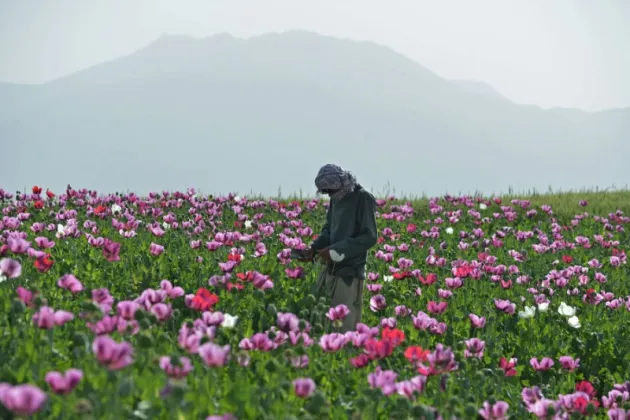
Afghanistan's opium poppy cultivation has surged more than fourfold in 2026 despite a ban imposed by the Taliban government, according to a report by the United Nations Office on Drugs and Crime (UNODC) released on October 30, 2026. The area under poppy cultivation reached an estimated 43,000 hectares, or around 106,200 acres, up from just 10,000 hectares a year earlier, while estimated opium production jumped fivefold, climbing from 300 tonnes to 1,500 tonnes. The findings represent one of the sharpest year-on-year reversals since the Taliban authorities moved to outlaw poppy farming, and they raise immediate questions about how effectively the prohibition is being enforced on the ground.
The numbers behind the surge
The scale of the expansion is stark. In a single year, the land devoted to opium poppy grew by 33,000 hectares, an increase of 330 percent, while output rose by 1,200 tonnes, a 400 percent jump. Cultivation did not merely edge upward; it more than quadrupled, and production multiplied five times over.
Key figures from the UNODC report include:
- Cultivated area: 43,000 hectares (around 106,200 acres) in 2026, compared with 10,000 hectares in 2025
- Opium production: an estimated 1,500 tonnes in 2026, against 300 tonnes in 2025
- Overall trend: cultivation up more than fourfold and output up fivefold in one year
The arithmetic also points to a modest improvement in productivity. The 2025 figures imply an average harvest of roughly 30 kilograms of opium per hectare, while the 2026 data work out to approximately 35 kilograms per hectare. In other words, the surge reflects both a dramatic expansion in the amount of land planted with poppy and a somewhat more productive crop.
A ban under strain
The Taliban government has imposed a ban on poppy cultivation, yet the 2026 figures suggest that, in practice, the prohibition has not stopped farmers from returning to the crop in large numbers. The contrast with the 2025 season is telling: cultivation at 10,000 hectares and production of 300 tonnes stood at dramatically low levels, and the subsequent explosion in planted area indicates that the ban has not held back a widespread revival of poppy farming across the country.
The speed of the rebound is as significant as its size. Poppy is an annual crop, and planting decisions are made within a single growing season. A jump from 10,000 to 43,000 hectares in one year implies that a substantial number of farmers made the choice to sow poppy again, a shift that points to the practical limits of enforcement in rural Afghanistan, where the authorities' reach and the economic pressures facing farming households shape what is actually grown.
Reading the rebound
Afghanistan has for decades been a central source of the world's opium, the raw material from which heroin is refined, and poppy has long been among the most lucrative crops available to growers in the country's rural economy. Against that backdrop, a harvest of 1,500 tonnes is a significant volume by any measure, and the fivefold increase in output will draw close attention from governments and analysts who track the global drug trade.
For the Taliban authorities, the data present an awkward picture. A policy presented as a major public commitment now coincides with the largest cultivation and production figures recorded in the two years covered by the report, undercutting the narrative of a successful prohibition. The gap between the decree and the reality in the fields is likely to feature prominently in international assessments of the government's governance and of counternarcotics efforts more broadly.
For the international community, the UNODC survey serves as the key independent measure of the scale of Afghan poppy farming, and the figures published on October 30, 2026 give policymakers their clearest snapshot yet of the reversal. As reported by My Republica, the report documents a cultivation area that has grown to more than four times its previous-year level and a harvest that has grown fivefold.
Whether 2026 proves to be an anomaly or the beginning of a sustained rebound is the question the next survey will have to answer. For now, the numbers speak plainly: despite the ban, Afghanistan's opium economy has roared back to life, and the challenge for the Taliban government is to explain how a crop it has outlawed has expanded so quickly under its watch.


