
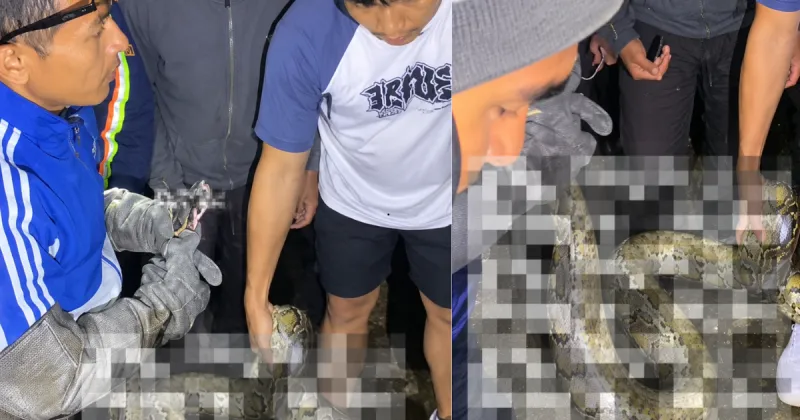
An 18-kilogram python was rescued from the roof beam of a mud house at Sundari village in Shuklagandaki Municipality-2 of Tanahun district on Monday evening. The snake had taken shelter in the house of local resident Netra Bahadur Rana, and its removal was carried out by a joint team from the Area Police Office Belchautara and the Division Forest Office Tanahun, according to Nagarik News and Rato Pati.
Joint police and forest team removes the snake
According to Nagarik News, the python was found on the roof beam of the traditional mud house in Sundari village on Monday evening. The discovery of such a large reptile inside an occupied dwelling called for a coordinated response, and the operation followed the standard practice for wildlife rescues in Nepal, with the local police unit and the district forest office deploying personnel together.
The police team was commanded by Assistant Sub-Inspector Ramchandra Poudel, Rato Pati reported. Armed forest guards from the Division Forest Office Tanahun accompanied the police party during the operation, an arrangement typically made when wildlife has to be secured and handled safely.
Details of how long the snake had been inside the house and the exact method used to bring it down were not immediately available in the reports. What both accounts confirm is that the python was removed from the roof beam, bringing the unusual episode for the residents of Sundari village to an end.
A heavyweight among Nepal's snakes
Pythons, known locally as ajingar, are the largest snakes found in Nepal, and an 18-kilogram specimen represents a genuinely heavyweight animal. A few points help put the find in context:
- Non-venomous constrictors: Pythons do not use venom. They subdue their prey by coiling around it, relying on sheer muscle power.
- Impressive size: Adult pythons can grow well beyond three metres in length and weigh tens of kilograms, which makes even a moderate-sized individual an imposing sight in a domestic setting.
- Wide range: The species recorded in Nepal, the Indian rock python, which many researchers now classify as the Burmese python, ranges across the lowland Terai and into the mid-hill districts.
- Legal protection: The python is protected under Nepal's wildlife conservation law, and killing, capturing or trading the species is a punishable offence.
For a hilly district such as Tanahun in Gandaki Province, the presence of a python in a village home is a reminder of how these reptiles move through the landscape in search of food and shelter. Traditional mud houses, with their wooden roof beams, gaps in the structure and nearby rodent populations, can offer precisely the kind of dark and quiet refuge that a snake of this kind seeks out.
When snakes enter homes: the usual response
Encounters between people and snakes tend to rise during the warmer months across Nepal, when the reptiles become more active and range further in pursuit of prey and water. In village areas, the usual course of action is to alert the nearest police post or the Division Forest Office rather than confront the animal directly. Monday's operation in Shuklagandaki followed exactly that pattern, with the Area Police Office Belchautara and the Division Forest Office Tanahun working in tandem to secure the snake from the roof beam.
Wildlife rescuers in Nepal routinely caution that large snakes should never be handled by untrained residents. Although pythons are not venomous and pose little danger to people if left undisturbed, a startled python can deliver a painful bite, and an 18-kilogram animal is more than capable of overpowering an unprepared handler. The legal dimension matters as well: because pythons are a protected species, harming one can invite penalties, which is why the involvement of forest officials is considered essential in every such case.
With the python removed from Rana's house on Monday evening, the episode in Sundari village ended the way such encounters ideally should, with the snake in the hands of trained personnel rather than being killed in panic. The joint action also underscored the working relationship between Nepal's police and forest offices, which regularly cooperate when wildlife strays into human settlements. Neither report indicated immediately where or when the rescued python would be released.


