
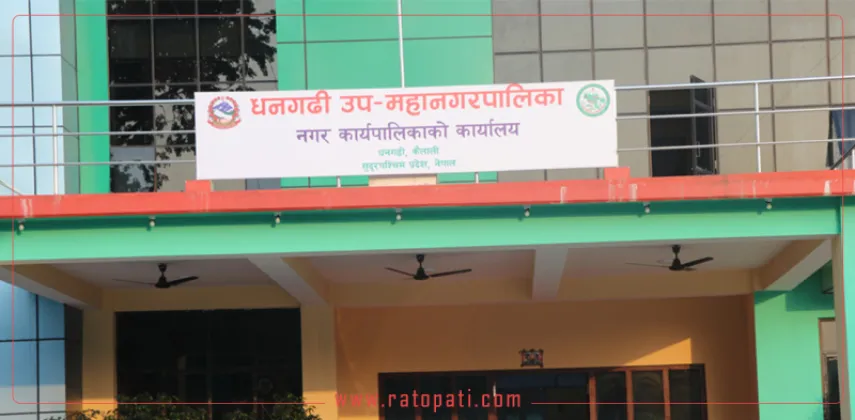
A 15-bed basic hospital has been brought into operation at Phulbari in Dhangadhi Sub-Metropolitan City-18, Kailali, in a move intended to take essential health services closer to residents who until now had to travel to Dhangadhi bazaar even for basic treatment. The facility was formally inaugurated on Monday at a ceremony attended by Dhangadhi Sub-Metropolitan City Mayor Gopal Hamal and local ward chairs, including Ward 18 Chair Bhuban Rijal. Rather than a completely new build, the hospital is an upgrade of the existing basic health centre at Phulbari, expanded with additional infrastructure so that it can now function as a basic municipal hospital. News of the opening was reported by RatoPati and Rajdhani Daily.
An upgrade of an existing facility
The hospital has not appeared overnight. It stands on the foundation of the basic health centre that has been serving Phulbari, with the sub-metropolitan city adding infrastructure and capacity to raise it to a 15-bed basic hospital. The distinction matters in Nepal's primary health care structure, where a basic hospital sits a level above a health centre and is positioned to handle a wider range of patients, keep them under observation and stabilise more serious cases before any referral becomes necessary.
The inaugural ceremony on Monday also served as a public display of local political commitment. Mayor Gopal Hamal, the highest elected official of Dhangadhi Sub-Metropolitan City, attended the programme alongside the chairs of the local wards, most notably Bhuban Rijal of Ward 18, where the facility is located. The presence of the mayor and multiple ward chairs signalled that the hospital is being treated as a city-level priority rather than the concern of a single ward.
Phulbari lies away from the busy commercial core of Dhangadhi bazaar, and people in the area have traditionally relied either on small local health outlets or on facilities in the city centre. The upgraded hospital is expected to change that dependence by giving the ward a health institution of its own with inpatient beds for the first time at this scale.
Ending the long journey to Dhangadhi bazaar
The central aim behind the project, as stated by those behind it, is to end the compulsion of rural residents travelling to Dhangadhi bazaar for health treatment. For households in Phulbari and the surrounding settlements, even a minor illness has meant arranging transport, spending money on fares and losing hours of a working day to reach care in the city. For the elderly, for pregnant women and for emergencies, that distance has carried consequences well beyond inconvenience.
A 15-bed facility within the ward is designed to alter that equation. Patients can now be examined, observed and treated for everyday ailments close to home, with journeys to larger hospitals in Dhangadhi reserved for cases that genuinely require them. Facilities of this kind are often the difference between a timely diagnosis and a delayed one, particularly for families without easy access to vehicles.
The opening also fits into the broader picture of health service delivery in Nepal after federalism, under which local governments such as sub-metropolitan cities are directly responsible for providing basic health services to their populations. By operating this hospital, Dhangadhi Sub-Metropolitan City is exercising that mandate in a ward that sits on the rural edge of the city's jurisdiction, extending services outward instead of concentrating them in the bazaar area.
What the new hospital represents
For residents of Ward 18, the hospital is being presented as a long-sought answer to a persistent gap in local services. The key facts of the new facility can be summarised as follows:
- Location: Phulbari, Dhangadhi Sub-Metropolitan City-18, Kailali district
- Capacity: 15 beds
- Basis: an upgrade of the existing basic health centre, supported by additional infrastructure
- Inauguration: Monday, at a formal ceremony
- Key attendees: Mayor Gopal Hamal and ward chairs, including Ward 18 Chair Bhuban Rijal
- Core objective: to end the compulsion of rural residents travelling to Dhangadhi bazaar for treatment
Like any newly opened institution, the hospital's real test will lie in the routine details of its operation: consistent staffing, the steady availability of medicines and supplies, functioning equipment and reliable service hours. Those elements will determine whether the 15 beds translate into sustained care for the community rather than a capacity that exists only on paper.
For the sub-metropolitan city, the facility strengthens its network of health institutions and its stated commitment to distributing services across all wards. For now, the people of Phulbari have what they had long travelled for: a hospital of their own, opened with the endorsement of the city's top leadership and tasked with ensuring that seeking treatment no longer begins with a journey to Dhangadhi bazaar.


