
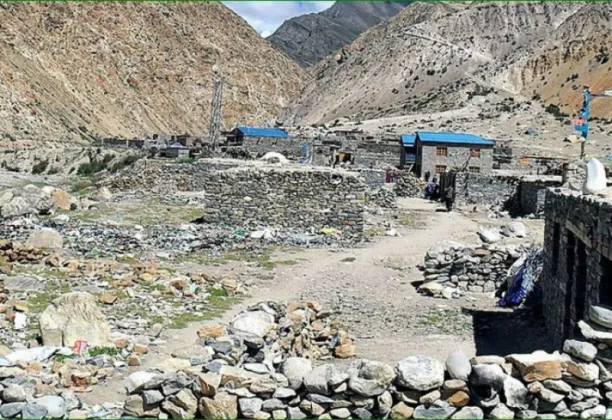
The Yari Customs Office at Hilsa, a border crossing on Nepal's northern frontier with China in Humla district, collected Rs 1.96 million in fiscal year 2082/83, more than three times the Rs 602,000 revenue target it had set, according to reports by Khabarhub and Ratopati. The office reached that figure while operating through staff shortages, weak internet and communication services, problems on the roads and adverse weather in one of the country's most remote high-altitude corners.
More Than Triple the Target in Fiscal Year 2082/83
The office had fixed a revenue target of Rs 602,000 for the fiscal year. Collections reached Rs 1.96 million, which means the border unit brought in roughly Rs 1.36 million more than it had planned for, or about 3.3 times its original goal. Put another way, the office delivered more than 225 percent of the revenue it had committed to the state.
That margin is a wide one for any customs office, and wider still for one stationed at a remote Himalayan crossing. Hilsa sits on the northern border with China, and the Yari Customs Office is the revenue collection point serving that crossing. Work at such a point rises and falls with the movement of people and goods through the border, which makes the scale of the over-performance notable given the conditions reported during the year.
Humla, a remote mountain district in Nepal's north, is a place where transport and communications links are thin, and the year's conditions at the customs office reflect that reality. Shortages of staff, unreliable internet and communication, disrupted roads and bad weather were all part of the working environment in which the collection was made.
The Figures at a Glance
- Revenue target, fiscal year 2082/83: Rs 602,000
- Revenue collected: Rs 1.96 million
- Excess over target: roughly Rs 1.36 million
- Performance: more than three times, or over 225 percent, of the target
Collected Against the Odds
The reports list four obstacles the office worked through on the way to its collection. None of them is unusual for customs units in Nepal's mountain districts, but together they describe a working environment that would test any government office.
The first is the shortage of staff. Customs work at a border point is continuous, covering documentation, inspection and the recording of revenue, and a unit that is under-strength must spread that workload across fewer hands. At Hilsa, the office met its obligations for the year even while short of personnel.
The second is weak internet and communication services. Customs administration depends on connectivity at nearly every step, from filing and verification to coordination with other government bodies, and unreliable service slows each of those steps. That the office still recorded collections far beyond its target suggests the paperwork kept moving despite the disruptions.
The remaining obstacles are road problems and adverse weather. Humla's high mountain terrain leaves its surface links vulnerable to disruption, and when roads are damaged or blocked, the flow of goods and travellers through the crossing slows with them. Weather in the district interrupts movement for long stretches of the year, compounding the effect. For a customs office whose revenue tracks that flow, both factors cut directly into working days.
The Obstacles Reported
- Staff shortages at the customs office
- Weak internet and communication services
- Road problems affecting the movement of goods and people
- Adverse weather in the high-altitude border region
What the Numbers Say About the Northern Border
Read together, the figures point in two directions. They show that a small border office can return far more than the target written for it, even in a difficult working year. They also underline the infrastructure deficits that offices in districts like Humla continue to work against, from staffing and connectivity to roads and weather.
Whether the over-performance reflects conservative target-setting, stronger than expected activity at the crossing, or a mix of both, the published reports do not say. What they do establish is the arithmetic: a target of Rs 602,000, a collection of Rs 1.96 million, and a fiscal year in which the gap between the two exceeded Rs 1.3 million.
Ratopati's English service carried the same report for international readers, noting that the Yari Customs Office had exceeded its target by three times.
For a customs office perched on Nepal's northern border with China, the year's result is a clear over-performance, achieved in conditions that many offices never have to face. The Yari Customs Office at Hilsa closed fiscal year 2082/83 with more than three times the revenue it promised, a figure that speaks both to the crossing's contribution to state revenue and to the hard margins within which it operates.


