
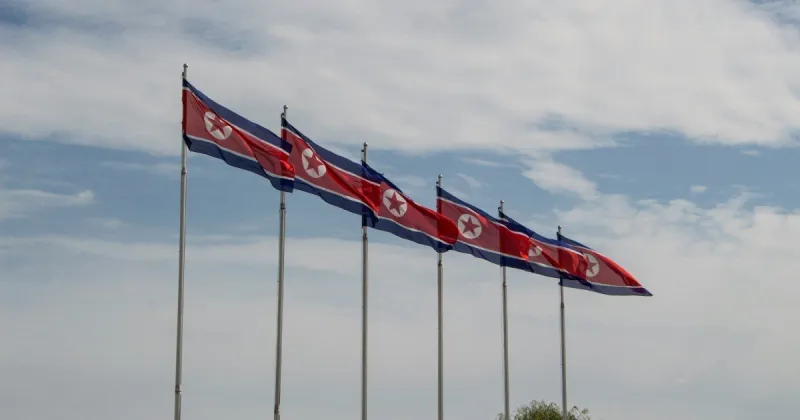
The United States, South Korea and Japan on Saturday reiterated their joint commitment to the complete denuclearization of North Korea, presenting a coordinated front among the three allies at a moment when Pyongyang is refusing to give up its nuclear weapons ahead of possible talks with Washington. The reiteration, reported by RatoPati, underlines both the durability of trilateral cooperation on the North Korea issue and the wide gap that separates the allies' stated goal from the North's current position.
The statement carries weight because it came just as the possibility of engagement between Washington and Pyongyang has been raised. Rather than adjusting their demand to entice North Korea into negotiations, the three governments chose to restate their core objective, signaling that they intend to approach any future diplomacy from a shared position rather than risk diverging paths. For a region where alliance cohesion is often tested by differing national priorities, the public reaffirmation served as a message aimed as much at Pyongyang as at the wider international community.
A Unified Message from Three Allies
The coordinated reiteration by Washington, Seoul and Tokyo reflects the importance each government attaches to keeping its North Korea policy aligned. Complete denuclearization of North Korea has stood as the declared common goal of the three countries, and Saturday's statement made clear that this position has not changed despite the uncertainty surrounding possible talks between Pyongyang and Washington.
The significance of the joint message lies in what it signals on three fronts:
- It reaffirms that the complete denuclearization of North Korea remains the shared objective of the United States, South Korea and Japan.
- It demonstrates that the allies intend to keep their policies coordinated as the prospect of talks with Washington emerges.
- It restates their demand at a time when Pyongyang is refusing to denuclearize, leaving no ambiguity about where the three governments stand.
Maintaining such unity matters in practice. Coordination among allies is widely seen as limiting Pyongyang's ability to negotiate separate terms with individual capitals. By acting together, the United States, South Korea and Japan present a single set of expectations that is harder for the North to divide or to work around.
Pyongyang's Refusal Complicates the Path
The immediate obstacle remains stark. According to the reports, North Korea is refusing denuclearization ahead of possible talks with Washington, meaning the allies are publicly demanding precisely what Pyongyang says it will not accept. That contradiction defines the current impasse: the three governments insist the North must give up its nuclear weapons, while the North signals it will not enter any process built on surrendering them.
North Korea has long framed its nuclear arsenal as the cornerstone of its national security and a guarantee of its regime's survival. As long as that view holds in Pyongyang, the demand for complete denuclearization and the North's refusal will continue to pull in opposite directions, and any talks that do take place will face the same fundamental disagreement at their core.
Trump and Kim Remain Central Figures
The reports also place US President Donald Trump and North Korean leader Kim Jong Un at the center of the picture, a reminder that any movement between Washington and Pyongyang ultimately rests with the two leaders. Their decisions, and the tone they set, will shape whether the possible talks materialize and what such negotiations could realistically achieve.
For the three allies, the prospect of direct engagement between Trump and Kim carries a familiar tension. Diplomacy between Washington and Pyongyang moves at the leader level, while Seoul and Tokyo watch closely for any outcome that might affect their own security interests. Saturday's joint reaffirmation can be read as an effort to anchor such diplomacy in a clearly stated common goal before talks begin, ensuring that denuclearization remains the reference point for any negotiation that follows.
The Road Ahead
The statement leaves the strategic picture largely unchanged: the allies' goal is complete denuclearization, and North Korea's position is refusal. Closing that gap is the task any future talks with Washington would have to confront, and Saturday's message suggests the three governments intend to confront it together rather than separately.
For now, the reaffirmation serves as a benchmark against which future diplomacy can be measured. Whether Pyongyang's refusal hardens into a lasting deadlock or gives way to negotiation, the allies have made clear where they stand, and they have done so in unison. Further details of the reports are available in रातोपाटी.


