
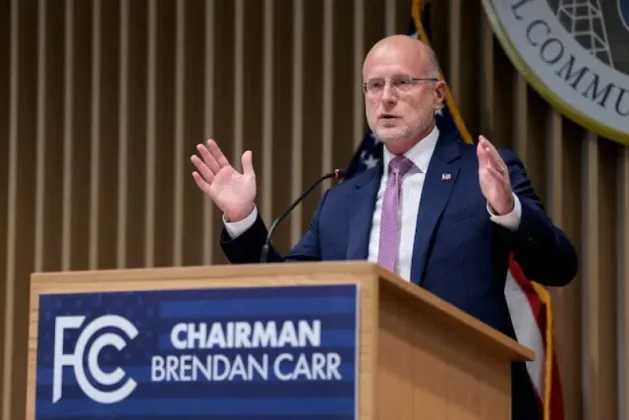
The United States is moving to cut Chinese telecommunications firms off from direct access to American phone numbers, with the Federal Communications Commission set to vote on the proposal on November 19. The FCC announced on Thursday that it will decide on a measure barring China Mobile, China Telecom and China Unicom, along with other IP-enabled service providers, from obtaining direct access to US phone numbers, according to a Reuters report. The initiative is being advanced explicitly on national security grounds, but it is also designed with a very practical consumer protection goal in mind: stemming the tide of scam-related robocalls that plague phone users across the United States.
FCC Sets November 19 Vote
The announcement from the Federal Communications Commission, the agency that regulates interstate and international communications in the United States, lays out a clear timeline for the decision. Commissioners are scheduled to cast their votes on November 19, giving the proposal a formal procedural milestone after what the agency has framed as a national security review of foreign telecom access to the American phone network.
The core of the plan is straightforward: companies with ties to China that provide IP-enabled voice services would no longer be permitted to connect directly to US phone numbers. While the agency's announcement was brief, the scope of the measure makes clear that it goes beyond the three named giants and reaches the wider ecosystem of internet-based calling services.
Key elements of the proposal:
- A ban on direct access to US phone numbers for China Mobile, China Telecom and China Unicom
- Extension of the restrictions to other IP-enabled service providers with Chinese links
- Justification based on national security considerations
- A stated aim of preventing scam-related robocalls from reaching American consumers
- A commission vote scheduled for November 19
If the commissioners approve the proposal, the FCC would gain a powerful new instrument to control which foreign carriers can route traffic into the US telephone network, and under what conditions.
The Carriers in the Crosshairs
The three companies singled out by name, China Mobile, China Telecom and China Unicom, are the major pillars of China's telecommunications sector, operating vast networks that serve hundreds of millions of customers. Their presence in the US market has long been a flashpoint in the broader technological and strategic rivalry between Washington and Beijing, and the FCC's latest move signals that direct access to American numbering resources is now firmly in the regulator's sights.
Crucially, the proposal does not stop at the three state-affiliated giants. By extending the ban to other IP-enabled service providers, the FCC is targeting the broader category of companies that carry voice calls over internet protocol networks rather than traditional telephone lines. These internet-based services are increasingly the backbone of international calling, which also makes them a common pathway for traffic flowing into the United States from abroad.
Why Direct Access Matters
Direct access to US phone numbers is a valuable and sensitive asset for any foreign carrier. It allows a provider to obtain and operate American numbers and to route calls directly into the US network, rather than passing through intermediaries. That capability is what makes legitimate international calling efficient, but it is also what makes the system attractive to abuse, since traffic that enters through a direct connection can appear on American phones in ways that are difficult for recipients to distinguish from domestic calls.
By shutting off direct access for the named Chinese carriers and similar providers, the FCC aims to remove that pathway entirely, forcing any legitimate traffic to travel through channels where it can be more closely monitored and controlled.
A Weapon Against Scam Robocalls
While the national security rationale has grabbed headlines, the measure's most tangible impact for ordinary Americans may come in the form of fewer unwanted calls. Robocalls remain one of the most persistent complaints voiced by US phone users, and scam operations frequently rely on spoofed or foreign-originated calls to reach their targets. Callers behind such schemes often impersonate government agencies, banks or well-known companies in an effort to extract money or personal information from unsuspecting victims.
Foreign-based operators, in particular, have relied on the ability to push large volumes of calls into the American network, where they ring through to consumers who have little way of verifying where the call truly originated. The FCC's proposal is designed to break that chain by ensuring that providers barred from direct access can no longer insert their traffic straight into US numbers, cutting off a key artery used by scam-related robocall networks.
National Security at the Center
Even as the robocall problem gives the proposal a consumer-friendly edge, the driving force behind the move is national security. Telecommunications infrastructure sits at the heart of modern critical systems, and US officials have grown increasingly wary of foreign adversaries' access to American networks. The decision to target China Mobile, China Telecom and China Unicom by name reflects the heightened scrutiny that Chinese telecom firms have faced in Washington, where concerns over surveillance and data exposure have shaped policy for years.
The FCC's framing of the ban as a national security measure places it squarely within that wider effort to insulate US communications infrastructure from foreign control or influence, while offering the added benefit of disrupting fraudulent calling operations.
What Comes Next
Attention now turns to November 19, when the commission is expected to vote on the proposal. Approval would set the ban in motion, formally severing China Mobile, China Telecom, China Unicom and other affected IP-enabled providers from direct access to US phone numbers. For American consumers, the hope is a quieter phone line and fewer scam calls; for the telecommunications industry, it marks another significant step in the tightening of US restrictions on Chinese carriers operating within reach of the American network.


