
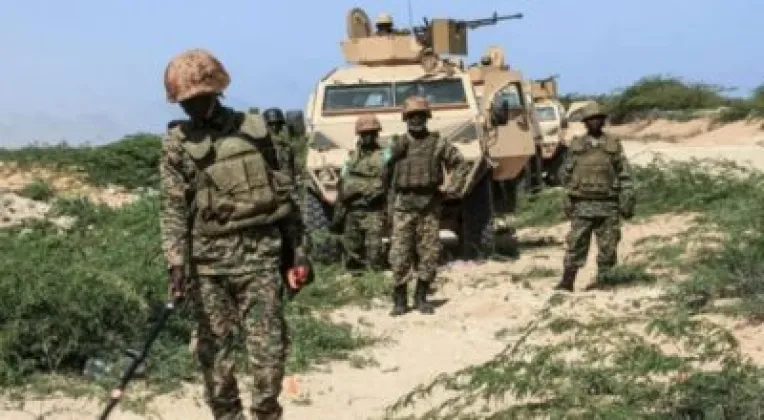
Uganda has begun withdrawing its troops from Somalia, the Ugandan army said, opening the final chapter of a deployment that has made the East African nation one of the leading contributors to the international military mission against Islamist insurgents since the African Union launched the operation in 2007. The drawdown was confirmed in a statement from the Ugandan army, and under a bilateral agreement with Somalia's federal government, Kampala plans to complete the withdrawal of all its soldiers by the end of 2027. The move brings an end, in stages, to nearly two decades of Ugandan involvement in a campaign that has been central to the survival of Somalia's government and its fight against the al-Shabab insurgency.
As Khabarhub reported, the Ugandan army announced that the withdrawal process has formally commenced, while RatoPati noted that the operation marks the start of a managed exit from one of Africa's longest-running foreign military deployments.
Two Decades at the Forefront of Somalia's Campaign
Uganda's involvement in Somalia began in 2007, when the African Union launched its military mission in support of Somalia's fragile federal government. Ugandan soldiers were among the first to deploy under the operation, and Kampala remained a leading contributor to the international effort throughout its existence. The mission was created to confront Islamist insurgents seeking to overthrow Somalia's government, most prominently the al-Shabab movement, which has waged a violent insurgency for years and remains one of the deadliest armed groups on the continent.
Over the years, the African Union operation evolved through several phases. What began as the African Union Mission in Somalia was later restructured and renamed as the mission transitioned, but Uganda's role as a leading troop contributor remained constant. Working alongside Somali forces and troops from other contributing countries, Ugandan contingents took part in operations that blunted al-Shabab's momentum and helped create the space in which Somalia's federal institutions could re-establish themselves.
The deployment carried significant weight for Uganda as well. Its military presence in Somalia made Kampala a key partner in regional security efforts and gave the Ugandan army a central role in one of the most demanding peace-support operations the African Union has ever mounted.
A Phased Exit Under a Bilateral Agreement
The withdrawal now underway is not an abrupt departure but a staged process governed by an understanding between Kampala and Mogadishu. Under the bilateral agreement with Somalia's federal government, Uganda plans to complete the withdrawal of all its soldiers by the end of 2027, giving both sides a fixed timeline through which the drawdown can proceed in an orderly manner.
Key elements of the arrangement include:
- The Ugandan army has officially confirmed that the withdrawal has begun.
- Uganda has been a leading contributor to the African Union-led military mission in Somalia since 2007.
- The exit is governed by a bilateral agreement between Uganda and Somalia's federal government.
- All Ugandan soldiers are scheduled to have left Somalia by the end of 2027.
The end-2027 deadline effectively sets the clock for the final transfer of security responsibilities. It allows Somali forces time to consolidate their hold on areas previously held or contested by the international mission, while giving Uganda's military a structured path out of a deployment that has spanned nearly twenty years. The phased nature of the drawdown is designed to ensure that the departure of Ugandan troops proceeds in step with the ability of Somali security forces to assume the responsibilities being handed over.
What the Withdrawal Means in Practice
For Somalia, the departure of one of the mission's leading troop contributors marks a significant shift in the country's security landscape. Ugandan soldiers have long been embedded in the day-to-day operations of the international mission, and their gradual exit will reduce the international military footprint at a moment when Somalia is being asked to take on greater responsibility for its own defense.
For Uganda, the withdrawal represents the conclusion of a defining chapter in its military history. The army statement confirming the start of the drawdown signals that Kampala intends to honor the agreed timeline rather than extend its presence beyond the 2027 deadline.
High Stakes as Somali Forces Take Charge
The pullout comes at a delicate time. Al-Shabab has demonstrated continued capacity to strike across Somalia despite years of pressure from the international mission and Somali forces, and the group remains the central security challenge facing the federal government. The successful completion of the Ugandan withdrawal will therefore depend heavily on the progress of Somalia's own security forces as they assume the front line of the fight.
The African Union operation has been the backbone of international military support to Somalia since 2007, and Uganda's contribution to that effort has been among its most important pillars. As the drawdown advances, attention in Mogadishu, Kampala and beyond will focus on whether the transition to Somali-led security can hold. By the end of 2027, under the terms of the bilateral agreement, the last Ugandan soldier is due to leave Somalia, closing the book on a deployment that has shaped both the fight against al-Shabab and the broader security architecture of the Horn of Africa.


