
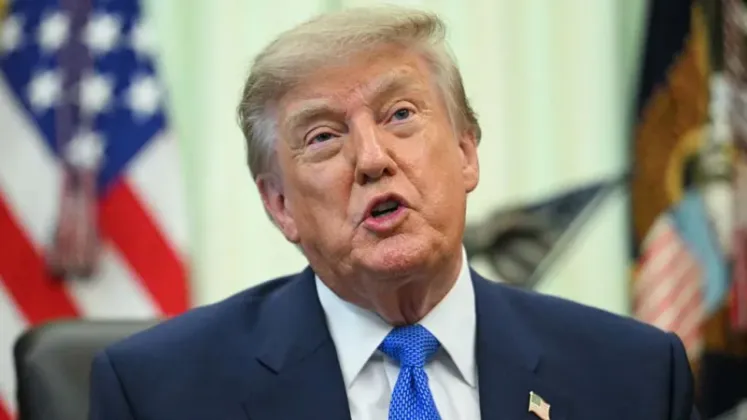
US President Donald Trump has accused China and Russia of spying on the United States, while insisting that Washington is also monitoring both countries and doing so more capably than they are. Trump made the remarks on Sunday while addressing an election rally of Republican candidates in Iowa, according to reports from Rato Pati's English service and Khabarhub. The comments amount to an unusually blunt public acknowledgement that the United States and its two chief geopolitical rivals are running intelligence operations against one another, with the president framing American spying power as the superior one.
Trump's Message to the Iowa Crowd
Speaking to supporters at the rally, Trump said that China and Russia spy on America, but the United States also keeps a close watch on them. The statement carried a double edge: it was at once an accusation aimed at two foreign powers and a boast about American capability. Rather than treating espionage as a hidden or denied activity, the president presented it as an open contest in which the United States holds the advantage.
The setting gave the remarks particular weight. Intelligence matters are usually discussed in classified briefings or filtered through cautious official statements, but Trump delivered this assessment from a campaign stage in front of a partisan audience. In doing so, he turned a normally secretive subject into direct political messaging, telling voters that their country is both targeted by rivals and better equipped than those rivals to gather intelligence in return.
The framing also served a clear domestic purpose. Assertions of American strength play a central role in campaign appearances, and telling a rally crowd that the United States outperforms its adversaries in the intelligence arena reinforces the image of a confident, capable country. At the same time, the warning element of the message reminds voters that foreign threats remain a live concern heading into the elections.
A Long History of Mutual Suspicion
The remarks land on familiar ground. Espionage has been a defining feature of relations between the United States and Russia since the Cold War, when Washington and the Soviet Union built vast intelligence apparatuses to track each other's movements and intentions. That rivalry did not end with the Soviet collapse, and in the modern era cyber capabilities have added a new and far-reaching dimension to the competition.
With China, US intelligence agencies have for years identified Beijing as one of the most capable and consequential foreign intelligence threats, alongside Moscow. Concerns in Washington have spanned traditional human spying, cyber intrusions and the acquisition of sensitive technology and data. Trump's comments, in essence, acknowledge that such surveillance runs in both directions - a reality intelligence professionals have long taken for granted, even if it is rarely stated so plainly and publicly by a sitting president.
What distinguishes this instance is the candor of the delivery. Governments routinely decline to confirm intelligence operations, and formal accusations between states are usually channeled through diplomatic statements or official reports. A president openly declaring that his country spies on rivals and does it better compresses what would normally be quiet, guarded policy language into a single campaign-trail sound bite.
The Political Stage and What Comes Next
The venue was as significant as the message. Iowa occupies an outsized place in American electoral politics, and events in the state draw intense attention from voters and media alike. Trump appeared at the rally in support of Republican candidates, using the platform to energize the party's base ahead of upcoming elections. Remarks that pair tough language toward China and Russia with confidence in American capabilities fit squarely within the atmosphere of such campaign events.
As of the latest reports, there was no indication of an immediate response from Beijing or Moscow to Trump's claims. It also remains to be seen whether the comments prompt any wider debate in Washington about the public discussion of intelligence matters, given how seldom such topics are addressed so directly from a political stage.
Here are the key points from the reports:
- Trump accused China and Russia of spying on the United States.
- He claimed the US is also monitoring both countries and is more capable at it.
- The remarks were made on Sunday at an election rally of Republican candidates in Iowa.
- No immediate reaction from Beijing or Moscow was reported.
For readers seeking further detail, the original coverage is available from Rato Pati's English service, Khabarhub and Rato Pati's Nepali report. Attention will now turn to whether the remarks draw any formal reaction from the governments he named.


