
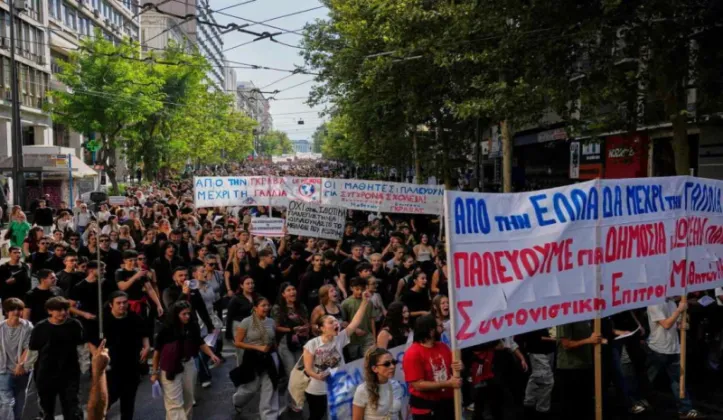
Thousands of students took to the streets in Rome and other cities across Italy on Friday, demanding a bigger education budget, housing facilities for students and concrete measures to rein in the rising cost of living. The demonstrations, reported from multiple Italian cities, were among the most recent signs of growing student discontent over education funding and the economic pressures bearing down on young people's daily lives.
A Nationwide Day of Protest
The protests were not limited to the capital. According to reports by Gorkhapatra Online, thousands of students marched in various Italian cities on the same day, while Nagarik News noted that the actions were aimed squarely at education spending and inflation.
Rome, as the seat of national government, served as a natural stage for the demonstrations, but the spread of the protests to other urban centers underlined that the grievances are not the concern of a single campus or student body. Students in different cities rallied around the same three-point agenda: more money for education, better housing provision and relief from the cost-of-living squeeze.
Holding the demonstrations on a single Friday gave the movement a unified, national character. Rather than isolated campus actions, the events presented a coordinated picture of student frustration, one that policymakers in Rome and regional authorities alike could not easily overlook.
What the Students Are Demanding
At the heart of the protests were three interlinked demands, each pointing to a different pressure point in student life.
Three Pressures on Student Life
-
An increase in the education budget. Students are calling for greater public investment in education. Higher budgets, they argue, are essential to maintaining the quality and accessibility of schools and universities, and to ensuring that the education system can serve the generations moving through it.
-
Provision of housing facilities. The demand for housing reflects the difficulty many students face in securing affordable accommodation while they study. For young people who must move cities to attend university, the availability and price of housing can determine whether further education is a realistic option at all.
-
Measures to control the rising cost of living. Like households across Italy, students are feeling the pinch of higher prices. The demonstrators are pressing the government to act on inflation, which erodes purchasing power and makes everyday expenses, from food to transport, harder to manage on limited student budgets.
Taken together, the three demands sketch a picture of student life under strain: underfunded institutions, scarce and costly housing, and daily expenses that keep climbing.
Growing Discontent Over Funding and Prices
Thahakhabar reported that the demonstrations reflect growing student discontent over education funding and economic pressures. That framing matters, because the grievances on display in Rome and beyond go beyond a single budget line. They speak to a broader anxiety among young people about whether the systems meant to support them, from universities to housing markets, are keeping pace with their needs.
Education funding is a particularly sensitive issue for students, since the level of public investment shapes everything from teaching quality to the opportunities available inside the classroom. When budgets are perceived to fall short, students often see the effects directly, in the resources and facilities open to them. The demand for a larger education budget is therefore not an abstract policy preference but a call for tangible improvements in day-to-day academic life.
The housing demand carries a similar weight. Access to suitable accommodation is a precondition for studying away from home, and where housing is scarce or expensive, the burden falls heavily on those with the least income. By putting housing facilities at the center of their platform, the protesting students have highlighted a barrier that shapes who can pursue higher education and on what terms.
The cost-of-living demand ties the protests to a concern that extends well beyond campuses. Inflation affects all consumers, but it weighs disproportionately on those with fixed or limited incomes, a category in which many students find themselves. The call for measures to control rising prices places the student movement in step with wider public concern about the cost of living.
A Message Aimed at Policymakers
Friday's marches, in Rome and in cities across Italy, delivered a clear message to the government: students want more investment in education, workable housing options and relief from inflation. The scale of the turnout, with thousands participating across multiple cities, underlined the breadth of the discontent.
For now, the demonstrations stand as a public statement of student priorities. Whether they translate into policy change will depend on how the government responds to the three demands carried through the streets of Rome and beyond. What is already clear is that education funding, student housing and the cost of living have moved to the foreground of Italy's public debate, pushed there by the students who marched on Friday.


