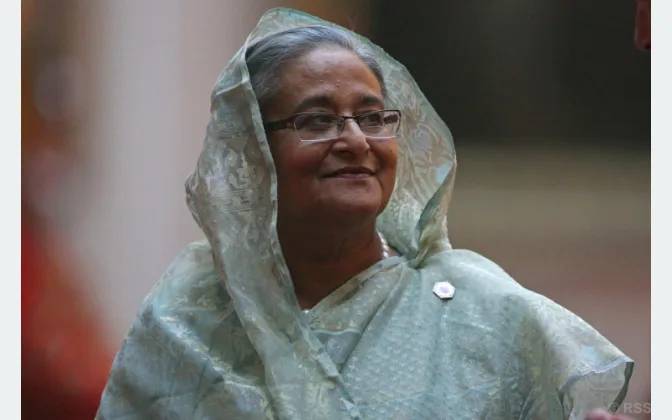
Former Bangladeshi Prime Minister Sheikh Hasina has reiterated that she intends to return to Bangladesh in December, despite being sentenced to death over the deadly crackdown on protesters. Now in exile in India, Hasina said she would not change her decision even if returning meant facing arrest, imprisonment or torture. She made the remarks in an email reply to the Associated Press, as the prospect of her return remains tied to the 2024 student movement that removed her from power and the special tribunal ruling handed down in 2025.
Hasina says the risk will not change her decision
Hasina’s latest statement presents her return as a firm intention, not a plan she is willing to abandon because of the possible consequences. She said she would come back to Bangladesh in December even with the possibility of arrest, jail and torture. Her email response did not soften that position in light of the death sentence against her.
The statement is significant because Hasina is currently outside Bangladesh, living in exile in India. A return would bring her back to the country where she was ousted during the 2024 student movement and where a special tribunal later held her responsible for crimes against humanity. Her remarks make clear that, at least publicly, the sentence has not changed her stated intention to return.
From the 2024 movement to the tribunal ruling
Hasina’s departure from power came during the student movement in 2024. The tribunal’s case against her concerned the deadly crackdown on protesters. In 2025, the special tribunal found her responsible for crimes against humanity and sentenced her to death, according to the information provided about the ruling.
The sequence places the proposed December return against two major events in Bangladesh’s recent political history: the movement that ended Hasina’s time in office and the legal judgment that followed. The sentence gives the prospect of her return a serious legal dimension, while her statement emphasizes that she is not withdrawing from the decision because of the risks she says she could face.
The information available about her remarks does not specify an exact date in December or describe arrangements for a journey back to Bangladesh. It does establish that she has repeated her intention and acknowledged the possibility of arrest, imprisonment and torture. Those points are central to her position: she says the potential consequences will not make her change course.
A return under the shadow of the sentence
Hasina’s words do not change the tribunal’s ruling, nor do they establish what would happen if she returned. They set out her stated intention in the face of the sentence and the possibility of being detained. The difference between declaring a return and carrying it out remains important: her statement gives no further detail about how or when she would travel, while the December timeframe is the commitment she has publicly repeated.
Her email reply to the Associated Press is the basis for the renewed attention to that pledge. For now, the clearest points are that Hasina remains in India, says she plans to return to Bangladesh in December, and insists she will not be deterred by the prospect of arrest, jail or torture. The statement also keeps the tribunal’s 2025 judgment and the deadly crackdown on protesters at the centre of the debate over what a return could mean.
Hasina’s declaration therefore leaves two facts in sharp contrast: she has announced that she intends to come back, while the death sentence and the possibility of detention remain part of the circumstances surrounding that decision. Whether she will make the journey is not established by the email reply. What it does show is that she is continuing to present December as her intended return despite the legal and personal risks she has acknowledged.