
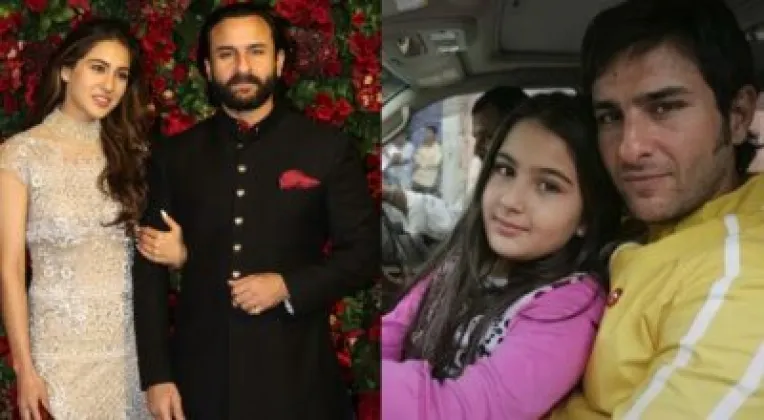
Sara Ali Khan has said her father, actor Saif Ali Khan, never lobbied for her film career, asking producers to cast her, discussing her contracts or personally seeking opportunities on her behalf. The actress made the remarks in an interview with Filmfare, according to reports from Kathmandu, and also acknowledged that being born into a well-known film family gave her an advantage in Bollywood.
What Sara said about her father's role
Sara said her father did not use his position in the film industry to secure work for her. She described the support she received in her career as distinct from the kind of direct intervention that would involve approaching producers, helping obtain roles or negotiating professional agreements. She said Saif did not ask filmmakers to give her opportunities, take part in discussions about her contracts or lobby for her personally.
The remarks address a specific question at the centre of the debate about family connections in Bollywood: whether a star's relatives actively use their influence to arrange work. Sara's account, as reported, is that her father did not do those things for her. It does not erase her connection to a prominent film family, which she recognised as an advantage, but distinguishes that background from direct career assistance by her father.
Sara also spoke about her family background. A Nepal Press report described her as saying that she lives with a single mother and does not receive her father's support in her career. Her comments about family circumstances and professional backing form part of the same discussion, while her central point was that Saif did not personally lobby filmmakers or handle career negotiations for her.
Family background and the nepotism debate
The interview comes amid continuing discussion of nepotism in Bollywood, where the opportunities available to actors from film families are often compared with those available to performers without industry connections. Sara's comments recognise the starting advantage associated with a well-known family while disputing the claim that her father actively secured roles or negotiated her career on her behalf.
That distinction is central to how she framed her experience. Access to a recognised surname and a family with film-industry links can shape how an aspiring actor is perceived, but Sara's account focuses on whether Saif personally intervened with producers or in business discussions. She said he did not. Her remarks therefore acknowledge privilege without describing it as direct lobbying by her father.
Sara also spoke about her career and family background in the Filmfare interview, although the reports available here do not provide further detail about particular projects, contracts or conversations with producers. Her comments do not set out a broader defence of the film industry or claim that family connections have no effect. Instead, she addressed her own father's role and said he did not seek opportunities for her in the ways she specified.
The remarks have renewed attention on how actors from film families describe the relationship between inherited visibility and individual career support. Sara's position is that she benefited from being born into a prominent family, but that Saif did not ask producers to cast her, manage contract discussions or personally lobby on her behalf. The interview was reported by Khabarhub and Nepal Press.


