
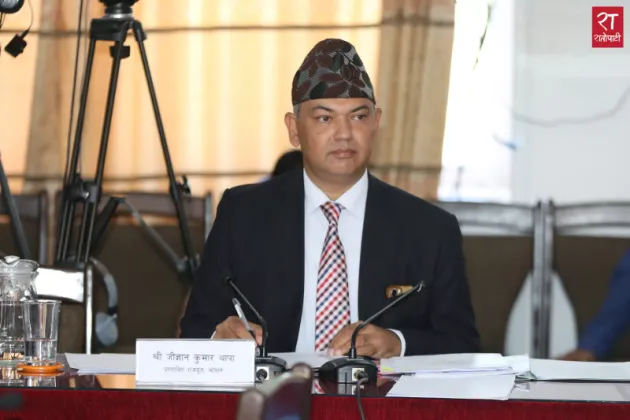
Jigyan Kumar Thapa, who had been proposed as Nepal's ambassador to Japan, has withdrawn his name from consideration for the post after a conflict of interest was raised in connection with the appointment. The withdrawal was confirmed at a meeting of the Parliamentary Hearing Committee held at Singha Durbar on Monday, where committee chair Bodh Narayan Shrestha informed members that Thapa had taken his name back. News of the decision was carried the same day by multiple Nepali news outlets, including Rato Patti and Thaha Khabar, bringing an abrupt end to the nominee's passage through the parliamentary hearing stage that every ambassador-designate in Nepal must clear before an appointment can be finalised.
Withdrawal confirmed at Singha Durbar
The confirmation came when the Parliamentary Hearing Committee, the parliamentary body that scrutinises nominations for senior public positions, met at Singha Durbar, the historic complex in the heart of Kathmandu that houses many of Nepal's chief government offices. Addressing members at the meeting, chair Shrestha announced that Thapa, whose name had been placed before the committee for the Tokyo posting, had withdrawn from the process.
According to reports published on Monday, the decision followed the raising of a conflict of interest in connection with the proposed appointment. Once Thapa conveyed his decision, the chair relayed it to the full committee, formalising the nominee's exit from the hearing process.
The key facts of the development are these:
- Jigyan Kumar Thapa had been proposed as Nepal's ambassador to Japan.
- A conflict of interest was raised in connection with the proposed appointment.
- Thapa subsequently withdrew his name from the hearing process.
- Committee chair Bodh Narayan Shrestha conveyed the withdrawal at Monday's meeting at Singha Durbar.
The objection behind the exit
While the chair's announcement established that Thapa had stepped aside after a conflict of interest was raised, neither the announcement nor Monday's reports spelled out the specifics of the objection or detailed the nominee's background. In Nepal's hearing process, objections raised against a nominee can place a candidacy under intense scrutiny, and a nominee who withdraws at this stage removes the need for the committee to continue examining the name. The candidature effectively ends without a vote, which is the route Monday's development followed: Thapa chose to step back rather than proceed to a contested hearing before the committee.
How ambassadorial hearings work in Nepal
The episode highlights the role of the Parliamentary Hearing Committee in Nepal's appointment process. Nominations for ambassadors, as well as for senior positions in constitutional bodies and other state organs, are required to pass through a parliamentary hearing before they can be finalised. In the course of the hearing, the committee examines the nominee's eligibility, takes up any objections and decides whether the name should be endorsed.
A hearing can conclude with endorsement, but it can also end in other ways. A nominee may withdraw, as happened on Monday, or the committee may decline to clear the name. Until a name clears the hearing, an ambassadorial appointment remains incomplete and the person concerned cannot take up the post. Once a name is endorsed, the appointment can move ahead through the remaining formal steps and the envoy-designate can eventually be accredited to the host country. The withdrawal of a proposed envoy therefore does more than stall a nomination; it removes that name from consideration altogether and returns the decision to the appointing side.
Why the Tokyo post draws attention
The embassy in Tokyo is widely counted among Nepal's more significant diplomatic missions. Nepal and Japan established diplomatic relations in 1956, and over the decades Japan has emerged as one of Nepal's major development partners as well as a leading destination for Nepali migrant workers and students. A large community of Nepali nationals lives, studies and works in Japan, and questions ranging from labour migration and the welfare of the diaspora to Japanese development assistance and bilateral trade all fall within the remit of Kathmandu's mission there.
Because of these ties, vacancies at the head of the Tokyo embassy tend to attract public and parliamentary attention, and the scrutiny applied to nominees for the post is correspondingly close. Monday's development, unfolding inside the hearing committee itself, offered a visible demonstration of that scrutiny at work.
What comes next for the Japan posting
With Thapa out of the running, the question of who will represent Nepal in Tokyo returns to the government. Any new proposal for the post would itself have to be placed before the Parliamentary Hearing Committee and clear the same process, including the scrutiny that ended Thapa's candidacy. The committee's announcement, as reported on Monday, was limited to confirming the withdrawal itself, leaving the government's next step unstated.
For now, the immediate effect is straightforward. The name of Jigyan Kumar Thapa will no longer be before the committee for the Japan posting, and the process of filling the position in Tokyo effectively returns to the starting point. Any further movement will depend on the government settling on a fresh proposal and sending it forward for hearing.


