
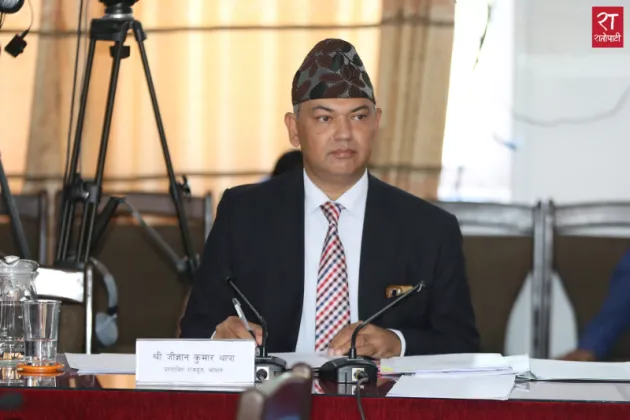
KATHMANDU - The Parliamentary Hearing Committee has yet to receive replies to the two letters it sent seeking clarification on Jigyan Kumar Thapa, who has been proposed as Nepal's ambassador to Japan, leaving the finalisation of his nomination on hold. Committee chairperson Bodhanarayan Shrestha said the first letter was sent before Thapa's hearing and the second after the hearing had concluded, but responses to both are still pending.
Two letters, two unanswered requests
Shrestha said the committee had written twice on the matter of Thapa's proposed appointment. The first letter was dispatched before the nominee faced the hearing, while the second followed once the hearing was over. Despite this two-stage correspondence, no written response has reached the committee so far.
As reported by RatoPati, Shrestha confirmed that the replies to both letters are still awaited. The same update was carried by Nepal Lead, which likewise noted that the committee has received nothing in writing so far.
The committee's decision to send a second letter after the hearing indicates that it still required clarifications even after Thapa appeared before it. That the follow-up request has also gone unanswered means the committee's consideration of the nomination cannot be concluded until the written replies come in.
Where the process stands now
The situation, as described by the committee chair, can be summarised as follows:
- First letter: sent before Thapa's hearing, seeking clarification connected to his proposed appointment
- Second letter: sent after the hearing had concluded
- Current status: no reply received to either letter
- Effect: the committee's deliberations on the nomination remain incomplete
The committee's role in vetting ambassadors
The Parliamentary Hearing Committee is the parliamentary mechanism through which nominees for senior public positions, including ambassadors, are examined before they can be formally appointed. Drawn from the federal parliament, the committee conducts hearings in which the nominee appears before members, answers their questions and responds to any concerns raised about his or her candidature.
Hearings of this kind serve as a check on the government's authority to make appointments to high offices. Where the committee is not satisfied with the information available to it, it can seek further clarification in writing before taking a decision. That is the stage at which the process concerning Thapa currently stands: the committee has sought written clarification twice, and the answers have not yet arrived.
Once the replies are received, the committee is expected to evaluate them alongside what emerged during the hearing. Its eventual assessment will determine whether the nomination can proceed towards appointment or whether further questions still need to be resolved first.
The pace of such correspondence often shapes the overall timeline of an ambassadorial appointment. A prompt reply can allow the hearing process to close quickly, while delays at this stage can hold up the entire nomination, which is what has now happened in Thapa's case.
Why the replies matter for the Tokyo posting
The ambassadorship in Tokyo is a senior diplomatic assignment, and the person nominated to fill it represents Nepal's interests in Japan and in the broader relationship between the two countries, which spans trade, development cooperation and the movement of Nepali students and workers to Japan. Until the hearing process is completed, the future occupant of the post cannot take office.
Shrestha's remarks make clear that the delay is not for want of effort on the committee's side. The committee has done what it can by writing twice, once before the hearing and once after it. The bottleneck now lies in the pending replies, which are needed before the committee can bring its work on the nomination to a close.
For Thapa, the wait means his proposed appointment remains in procedural limbo. For the committee, the pending replies are the missing piece without which it cannot finalise its position. Both sides are now waiting for the same thing: a written response that has been sought twice and has yet to arrive.
Until those responses are received, the file on Nepal's proposed ambassador to Japan stays open, and the Parliamentary Hearing Committee's decision on Jigyan Kumar Thapa remains postponed.


