
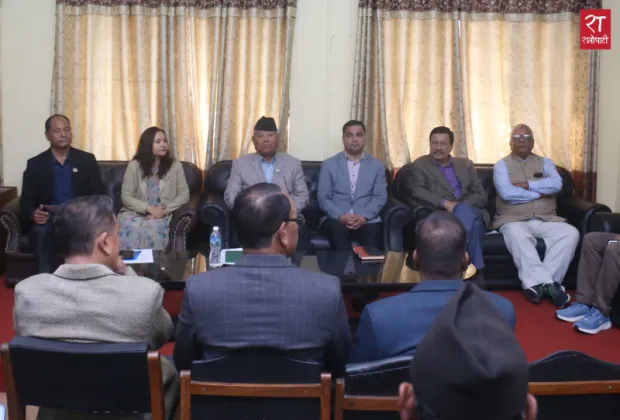
Nepali Congress, Nepal's main opposition party, has decided to take the initiative to form a joint front of opposition parties, a move intended to resist the government should it act against the principles of the rule of law, press freedom and the separation of powers. The decision was reported from Kathmandu on November 2, 2026. According to Ratopati, the party will lead efforts to bring opposition parties together on a common platform, a development also reported by Thahakhabar.
A Common Platform for the Opposition
At the heart of the decision is an effort to change how the opposition engages with the government. Instead of individual parties raising objections separately, Nepali Congress is seeking a single, coordinated front through which opposition forces can respond collectively. According to the reports, the front is not framed around a specific policy dispute. Rather, it is envisioned as a defensive mechanism, one that would come into play to resist the government if it moves against the rule of law, press freedom or the separation of powers.
The reported elements of the initiative are as follows:
- Lead role for Nepali Congress: the main opposition party will take the initiative in assembling the front.
- A united platform: opposition parties would be brought together under a common banner.
- A defensive purpose: the front's stated aim is to resist any government move against three named democratic principles.
Why Unity Matters for the Opposition
In any parliamentary system, the influence of the opposition depends to a large degree on its ability to coordinate. Parties that act separately often find their objections diluted, while a combined front can present a stronger and more consistent challenge to a sitting government. By taking the lead on a joint front, Nepali Congress is positioning itself as the anchor of that coordination, using its standing as the main opposition party to convene forces that share its concerns about the direction of governance.
The timing and framing of the decision suggest that the party sees the moment as demanding a collective response. Rather than issuing a statement from a single party, it has chosen the route of building a broader alliance, a step that typically requires sustained negotiation with other opposition forces.
The Principles the Party Has Named
What distinguishes the reported decision is the specific set of principles to which the party has tied its planned resistance. Nepali Congress has grounded the proposed front in three pillars of democratic governance:
- Rule of law: the principle that all organs of the state, including the government itself, must act within the framework of the law rather than outside it.
- Press freedom: the ability of the media to report and publish without obstruction, a freedom widely regarded as essential to informed public debate.
- Separation of powers: the division of state authority among the legislature, the executive and the judiciary, so that no single institution dominates the others.
By naming these three, the party is framing its opposition not as routine political competition but as a defense of the constitutional order. The message embedded in the decision is that the front would be a response to governance that crosses constitutional lines, rather than a vehicle for day-to-day policy disagreements between the ruling side and the opposition.
The Main Opposition Takes Center Stage
The decision also underlines the role Nepali Congress occupies in the country's politics. As the main opposition party, it carries a central responsibility for holding the government to account, both inside Parliament and in public life. Taking the initiative on a joint front is consistent with that position: rather than waiting for smaller opposition parties to coordinate among themselves, the party has chosen to lead the effort directly.
The move also reflects the practical reality that a single party, however large, has limits in what it can do to check a sitting government. A front that brings multiple opposition parties together extends that capacity, giving the opposition a broader base from which to raise concerns about the rule of law, press freedom and the separation of powers, and making any resistance it mounts harder for the government to dismiss as the complaint of one party.
What Happens Next
The reports published on November 2 centered on the party's decision to take the initiative. They did not include a timetable for the front's formation or a list of parties expected to join, leaving open how quickly the platform might take shape and which forces would ultimately be part of it.
What is clear from the decision is the posture Nepali Congress intends to adopt. The party has signalled that its opposition will be organized, collective and anchored in constitutional principles, and that it is prepared to resist the government if it proceeds against the rule of law, press freedom or the separation of powers. How other opposition parties respond to the push for unity, and whether the front takes shape in the form the party envisions, will determine the weight this initiative carries in the days ahead.


