
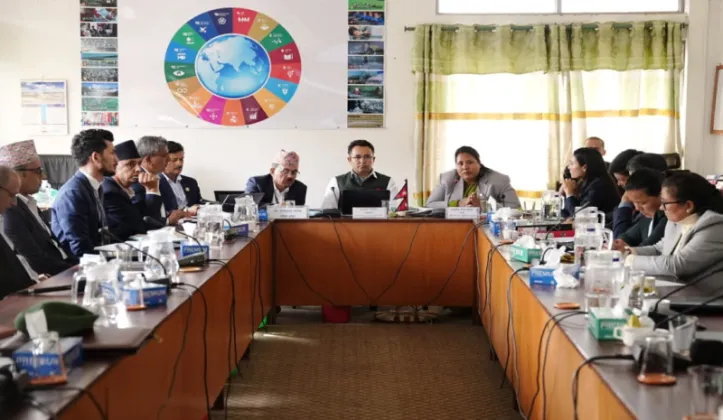
Nepal will place the Himalayan agenda, climate finance and climate justice at the centre of its diplomacy at the 31st UN Climate Change Conference, COP31, which is to be held in Turkey, Foreign Minister Shishir Khanal has said. Addressing the National Climate Summit-2026 in Kathmandu, a national gathering organised ahead of the global climate conference, Khanal said the Himalayan ecosystem is becoming increasingly vulnerable to climate change and that Nepal's engagement in the talks must reflect this reality. His remarks, reported by Gorkhapatra Online, signal the priorities the government intends to carry into one of the most important international forums on climate policy.
Three priorities for the global stage
The foreign minister outlined a clear set of priorities for Nepal's delegation at COP31. According to the Gorkhapatra Online report of his summit address, Nepal will focus on:
- The Himalayan agenda - drawing international attention to the state of the mountain ecosystem and the pressures it faces from a changing climate
- Climate finance - pressing for resources to support countries dealing with climate impacts
- Climate justice - framing the losses and vulnerabilities of affected communities as a matter of fairness in global climate negotiations
The National Climate Summit-2026 was convened in Kathmandu ahead of COP31, giving the government a national platform to articulate its position before the delegation departs for Turkey. Khanal used the occasion to underline that the Himalayan ecosystem, which defines Nepal's geography and sustains millions of people across the region, is under growing threat. By naming climate finance and climate justice alongside the Himalayan agenda, the minister linked the fate of the mountains directly to the question of who pays for climate impacts and how the international community responds.
Parliamentary committee demands results, not rhetoric
At the same summit, Ganesh Parajuli, vice-leader of the Rastriya Swatantra Party parliamentary party and chair of the parliamentary special committee on climate change impacts in the Himalayas, climate justice and the Bhote Koshi-Trishuli disaster, said Nepal's participation in COP31 must be result-oriented. According to reports by Nepal Press and Ratopati, Parajuli directed that the country's engagement in the conference should not remain symbolic but should deliver tangible outcomes.
Parajuli emphasised two messages that Nepal must carry to the negotiating table:
- Mountain protection - the plight of the Himalayas and the need for global action to safeguard mountain ecosystems must be raised prominently
- The interests of affected communities - people living with the consequences of climate change, including those affected by disasters, must be at the heart of Nepal's advocacy
As reported by Nepal Press, the parliamentary committee chair also stressed that issues of climate justice and the national interest should be raised firmly at COP31. His intervention reflects a broader expectation within Nepal's political leadership that the country's diplomatic presence at international climate summits should translate into concrete benefits for mountain communities rather than statements of concern alone.
A Himalayan ecosystem under strain
The summit and the parliamentary committee's involvement point to the growing domestic consensus that climate change has moved from a distant environmental concern to a national priority. Khanal told the gathering that the Himalayan ecosystem is becoming increasingly vulnerable to climate change, a warning that echoes the mandate of the parliamentary special committee Parajuli leads.
The committee itself is notable for the breadth of its mandate: it was constituted to examine climate change impacts in the Himalayas, the question of climate justice, and the Bhote Koshi-Trishuli disaster. That a dedicated parliamentary body carries the name of a specific disaster alongside the broader Himalayan and climate justice agendas underlines how closely climate vulnerability and disaster impacts are now intertwined in Nepal's political discourse. The committee chair's presence at the National Climate Summit-2026, alongside the foreign minister, further demonstrated the alignment between the legislature and the executive on the country's climate diplomacy.
Looking ahead to COP31 in Turkey
With the National Climate Summit-2026 concluded, attention now turns to COP31 in Turkey, where Nepal will join the international community in climate negotiations. The government has signalled that the Himalayan agenda, climate finance and climate justice will anchor its position, while the parliamentary committee has made clear that the measure of success will be results, particularly on mountain protection and the interests of communities already living with climate impacts.
For a country whose identity and economy are bound to the mountains, the stakes at COP31 are high. The statements from Kathmandu suggest Nepal intends to arrive in Turkey with a unified message: that the vulnerability of the Himalayas demands global attention, that climate finance must reach the countries and communities bearing the greatest burdens, and that climate justice is not an abstract principle but an urgent requirement for those facing the consequences of a warming world. Whether that message translates into outcomes at the negotiating table will now depend on the talks in Turkey, and Nepal's delegation has been put on notice at home that its performance will be judged against that standard.
This report is based on coverage by Gorkhapatra Online, Nepal Press and Ratopati.


