
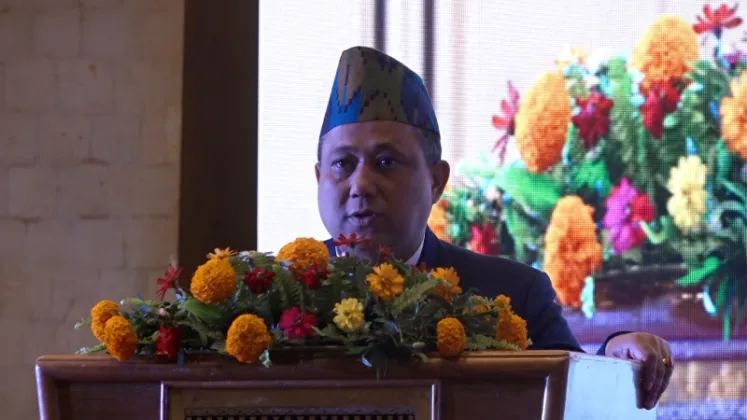
Nepal will push mountain issues, climate finance and climate justice as its core priorities at the 31st Conference of the Parties (COP31) to the United Nations Framework Convention on Climate Change, positioning itself as a strong voice for the world's mountain regions in the next round of global climate negotiations. Foreign Minister Khanal said Nepal will raise the Himalayan agenda at the conference with a clear priority on climate finance, according to reports published on 29 October 2026 by Nepali outlets Nepal Views and Baahrakhari. The announcements make clear that the government intends to weave together environment, politics and the economy in its approach to the climate talks, ensuring that the concerns of a small, mountainous, low-emitting country are heard alongside those of the world's largest economies.
Nepal's Priorities at COP31
According to the reports, Nepal's negotiating position at COP31 will rest on three interlinked pillars, each reflecting the country's particular exposure to climate risks and its continuing diplomatic effort on behalf of mountain nations.
- Mountain issues: Nepal wants the specific challenges facing high-altitude regions, from melting glaciers to increasingly erratic weather, to receive dedicated attention in the negotiations rather than being treated as a peripheral concern.
- Climate finance: The Foreign Minister identified finance as the top priority, reflecting Nepal's push for meaningful international funding to support climate action at home.
- Climate justice: Nepal will argue that fairness must underpin the global response, particularly for countries that contribute little to global emissions yet bear disproportionate consequences.
Foreign Minister Khanal's remarks, as reported by Nepal Views and Baahrakhari, frame the Himalayan agenda not as a narrow national request but as a broader call for the international climate regime to recognise mountain ecosystems as a distinct and urgent category of concern. By grouping the three priorities together, Nepal is signalling that its advocacy for the mountains, its demand for finance and its appeal for justice are parts of a single, coherent negotiating strategy.
Climate Finance at the Centre of Nepal's Agenda
Climate finance sits at the heart of Nepal's preparation for COP31. In the language of the UN climate process, climate finance refers to the funding that developed countries provide to help developing nations reduce emissions and adapt to the impacts of a warming planet. For a country at Nepal's stage of development, the flow of international finance largely determines how quickly vulnerable communities can be protected, how resilient infrastructure can be built, and how national climate plans can be turned into reality.
Why Finance Matters for Nepal
By naming climate finance as the priority element of the Himalayan agenda, Foreign Minister Khanal has indicated that Nepal will judge the success of COP31, at least in part, by the progress made on funding. The emphasis also aligns with a wider demand from developing countries that climate finance be scaled up, made more accessible and directed towards adaptation, not only towards cutting emissions. For Nepal, which contributes minimally to global greenhouse gas emissions while facing outsized climate risks, the finance question is inseparable from the question of fairness, and that is precisely where the climate justice agenda enters the picture.
The Himalayan Agenda on the Global Stage
The mountain focus of Nepal's COP31 strategy reflects the country's geography. Nepal's territory is dominated by the Himalayas, an ecosystem in which rising temperatures, retreating glaciers and shifting precipitation patterns threaten both the fragile landscape and the communities that depend on its snow-fed rivers. Mountain regions around the world share these vulnerabilities, and Nepal has long used international climate forums to argue that their special circumstances deserve dedicated recognition within the negotiating texts, funding mechanisms and scientific assessments that flow from the COP process.
That advocacy acquires added weight when it is presented jointly with demands on finance and justice. Nepal's argument, as reflected in the reports of 29 October 2026, is essentially threefold: mountain countries face distinct and severe climate impacts, they need substantial international resources to respond, and the costs they bear are out of proportion to their contribution to the problem. Framing the three points together allows Nepal to present a complete narrative, one that moves from vulnerability to need to fairness, and it is this narrative that the government plans to carry into the COP31 negotiations.
Government Focus: Environment, Politics and Economy
The reports published on 29 October 2026 in Nepal Views and Baahrakhari highlight that the government's approach to the climate talks deliberately spans three arenas. Environmentally, the aim is to secure recognition and support for mountain ecosystems. Politically, the aim is to raise Nepal's profile among negotiating partners and blocs. Economically, the aim is to channel climate finance towards national needs.
With COP31 approaching, Nepal's diplomatic message is firmly set: the Himalayan agenda, anchored in climate finance and underpinned by climate justice, will be pursued as a matter of national priority when the conference convenes. Whether that message translates into concrete commitments from the international community will be one of the key questions for Nepal's delegation at the negotiating table.


