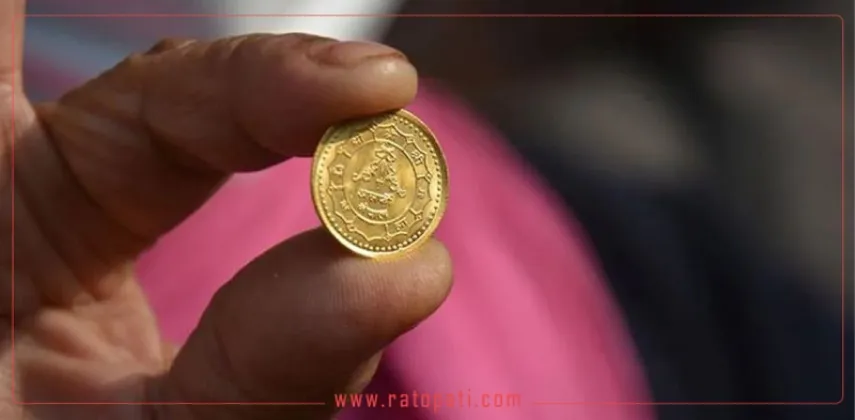
Nepal Rastra Bank has started selling gold Ashrafis and silver medallions to the general public in Kathmandu from today, opening the sales on the occasion of the Tihar festival. The sale is aimed at meeting the festival demand for the precious metals, and the price of the gold asarfi being sold to the public has been announced accordingly. The launch brings centrally issued gold and silver directly to festival shoppers in the capital at a time when households across Nepal traditionally set aside money for precious metal purchases, whether for worship, gifting or savings, as part of their Tihar celebrations.
Sales open as festival demand builds
The sales began today, with Nepal Rastra Bank, the central bank of Nepal, opening the purchase of gold Ashrafis and silver medallions to the general public in Kathmandu. According to a report by RatoPati, the price of the gold asarfi being sold to the public has been announced, allowing buyers to know the applicable rate as purchases begin.
The stated objective behind the initiative is to meet the demand for precious metals that arises during the Tihar festival. Tihar is among the most important festivals in Nepal, and interest in gold and silver customarily climbs during this period as families prepare for the rituals, gifts and celebrations tied to the festival.
Key facts at a glance
- What is on sale: gold Ashrafis, also written as asarfi, and silver medallions
- Who is selling: Nepal Rastra Bank, the central bank of Nepal
- Where: Kathmandu
- Who can buy: the general public
- When: sales started today, on the occasion of Tihar
- Stated aim: to meet festival demand for precious metals
As the sales have opened today rather than being scheduled for a later date, buyers in Kathmandu who wish to purchase the medallions can do so during the festival period. The report did not specify daily purchase limits or the total quantity of gold and silver put up for sale, so interested buyers may wish to confirm availability and the announced price with the central bank before making their purchase.
Tihar and the tradition of buying gold and silver
Tihar, often called the festival of lights, is one of the most widely celebrated festivals in Nepal. Over its several days, homes and streets are decorated with lamps and colourful artwork, and families worship Laxmi, the goddess of wealth, seeking prosperity for the year ahead. It is against this backdrop that the purchase of gold and silver takes on particular significance during the festival.
Buying precious metals during Tihar is widely regarded as auspicious, and many families time their purchases of coins, medallions and jewellery to coincide with the festivities. Gold and silver are also central to the culture of gifting during the festival, with coins and small medallions commonly presented to family members and loved ones. For many households, such purchases double as a store of value, held and passed on within families over time.
This seasonal pattern explains why institutions, including the central bank, align the supply of precious metals with the festival calendar. By starting the sales during Tihar, Nepal Rastra Bank is responding to the annual rise in demand, ensuring that buyers have access to gold and silver at the time of year when interest in the metals is at its highest.
Why the central bank's entry matters for buyers
For buyers, one of the main attractions of purchasing medallions sold through the central bank is trust. Questions of purity and accurate weight are persistent concerns in the market for precious metals, and a sale conducted by Nepal Rastra Bank offers buyers an option backed by the country's monetary authority. This assurance can be particularly valuable during festival seasons, when purchasing activity is high and buyers are often acquiring the metals for religious and sentimental reasons as much as for investment.
Medallions of this kind also serve a dual purpose. They are bought as festive gifts, in keeping with the tradition of presenting gold and silver during Tihar, and they are held as a form of savings. A gold asarfi or a silver medallion is easy to store, easy to carry and easy to hand over as a gift, which is why such items remain popular with festival shoppers year after year.
The entry of the central bank as a direct seller to the public adds a formal supply channel alongside the existing market during a period of peak demand. For buyers in Kathmandu, this means the option of purchasing gold Ashrafis and silver medallions at prices announced by the central bank, with the credibility that comes from an official sale.
What buyers should know
The price of the gold asarfi being sold to the public has been announced as the sales opened, and buyers are expected to pay the notified rate for their purchases. Silver medallions are being sold alongside the gold asarfi as part of the same festival sale, and both are available to the general public in Kathmandu, in line with the central bank's stated aim of meeting festival demand.
Buyers planning to purchase during the festival period should keep the announced price in view, as precious metal rates can change from day to day, and should confirm the details of the sale with the central bank where needed. As with any festival purchase, checking the weight and markings on a medallion at the time of buying is a sensible step.
The start of sales by Nepal Rastra Bank underlines the close association between Tihar and the tradition of buying gold and silver in Nepal. With the gold asarfi and silver medallions now available to the public in Kathmandu, festival shoppers have an additional, officially backed avenue for their purchases as the celebrations continue.