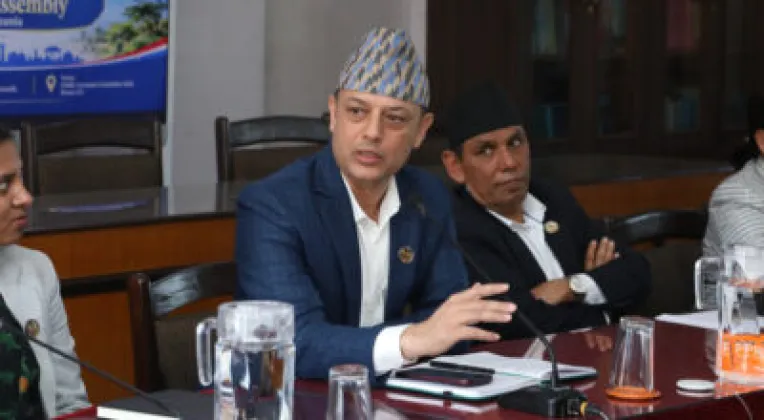
Nepal is stepping up preparations to host the Asia-Pacific Regional Conference of the Inter-Parliamentary Union's (IPU) Standing Committee on Sustainable Development, a major parliamentary gathering proposed to be jointly organised by the Federal Parliament and the IPU. Momentum for the hosting plan built on Tuesday, when a high-level discussion was convened in Kathmandu at the initiative of Speaker Dol Prasad Aryal. The meeting focused on the themes expected to define the regional conference, including sustainable development, climate change and the reduction of methane gas emissions, signalling Nepal's intent to place its legislature at the centre of regional parliamentary diplomacy on environmental issues.
High-Level Discussion in Kathmandu Sets Preparations in Motion
The preparatory discussion was held in the capital on Tuesday at the initiative of Speaker Dol Prasad Aryal, according to reports published by Khabarhub, RatoPati and Nagarik News.
Deliberations at the meeting revolved around three interconnected themes:
- Sustainable development, and the role national parliaments can play in advancing it
- Climate change, and its wide-ranging consequences for countries in the Asia-Pacific
- Reducing methane gas emissions, one of the most powerful greenhouse gases driving global warming
Preparatory consultations of this kind are a normal part of hosting major international parliamentary events. Because the conference is proposed to be jointly organised by the Federal Parliament and the IPU, Nepal's legislature will be expected to coordinate closely with the global parliamentary body on the conference programme, logistics and the participation of member parliaments from across the Asia-Pacific region. The involvement of the Speaker's office at this early stage indicates that the hosting plan carries high-level political backing within Parliament.
Understanding the IPU and Its Sustainable Development Committee
Founded in 1889 and headquartered in Geneva, Switzerland, the Inter-Parliamentary Union is the world organisation of national parliaments. It works to strengthen democracy, promote parliamentary dialogue and facilitate cooperation among legislatures across the globe. Much of the IPU's substantive work is carried out through its standing committees, through which member parliaments deliberate on global issues and develop outcomes that guide the organisation's wider advocacy.
The Standing Committee on Sustainable Development is the IPU's dedicated platform for parliamentary engagement on issues at the intersection of economic growth, environmental protection and social progress. Its agenda typically spans areas such as climate action and the broader sustainable development priorities of member states.
Regional conferences convened under such committees bring together lawmakers from member states in a given geographic area, in this case the Asia-Pacific. Such gatherings allow parliamentarians to exchange national experiences, build common regional positions and feed those perspectives into the IPU's global deliberations. Hosting the Asia-Pacific regional conference would therefore place Nepal's Federal Parliament in direct contact with senior legislators from one of the world's most populous and climate-vulnerable regions.
Climate, Methane and Nepal's Stake in the Agenda
The choice of themes carries particular resonance for Nepal. As a Himalayan country, Nepal is widely recognised as being highly vulnerable to climate change, with impacts ranging from melting glaciers and shifting rainfall patterns to pressures on mountain livelihoods and ecosystems. A conference that turns the spotlight on climate change and sustainable development aligns closely with the challenges Nepal itself faces and with the priorities it has long emphasised in international climate discussions.
Methane reduction, the third theme of Tuesday's discussion, has also been attracting growing global attention. Methane is a potent greenhouse gas, and curbing its emissions from sectors such as agriculture, livestock and waste management is regarded by scientists as one of the fastest available ways to slow the pace of global warming in the near term. For Nepal and many of its Asia-Pacific neighbours, finding balanced and practical approaches to methane reduction carries direct economic and environmental implications, which helps explain why the topic featured prominently in the Kathmandu meeting.
The significance of the themes extends beyond policy. Parliaments hold the legislative and budgetary powers needed to translate international climate commitments into national action, and conferences of this nature give elected representatives a venue to scrutinise those commitments, share legislative practices and strengthen accountability on sustainable development.
The Road Ahead for the Federal Parliament
With Tuesday's discussion concluded, attention now turns to how the Federal Parliament will translate the hosting proposal into concrete arrangements. Joint organisation with the IPU will require coordination on the conference agenda, delegations and other logistical details, which are typically settled through successive rounds of consultation between the host parliament and the IPU. The Federal Parliament's administrative and diplomatic machinery is expected to remain closely engaged as those plans advance.
For Speaker Dol Prasad Aryal, the preparation marks an effort to position the Federal Parliament as an active participant in international parliamentary diplomacy. For Nepal, the conference offers an opportunity to showcase its commitment to sustainable development and climate action before a regional audience of lawmakers, while also drawing attention to the specific vulnerabilities and priorities of mountain countries. Further details on the conference schedule and participation are expected to emerge as preparations move forward.