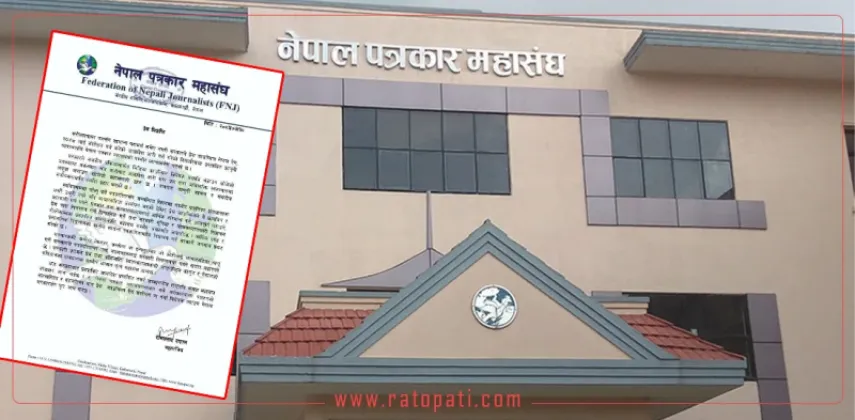
The Federation of Nepali Journalists (FNJ) has urged President Ram Chandra Paudel not to certify a proposed ordinance amending the Press Council Nepal Act, saying the draft was prepared without consultation with stakeholders. In a statement issued on Wednesday, November 4, the association also objected to provisions it said could allow investigations and action without a complaint and impose fines and compensation on journalists and media outlets. The statement was issued by FNJ general secretary Ram Prasad Dahal.
Objection to the drafting process
The association’s first objection concerns how the proposed amendment was prepared. It said stakeholders were not consulted before the ordinance was drafted and asked the president not to certify it. The statement therefore raised both a procedural concern and concerns about the powers described in the proposed provisions.
The FNJ’s request places consultation at the centre of its objection. Its position is that an amendment affecting the Press Council Nepal Act should not proceed without the involvement of relevant stakeholders. The statement, as reported, did not identify which stakeholders had been consulted or set out a proposed consultation process. It focused instead on the association’s claim that consultation had not taken place.
The appeal was directed to President Paudel, with the association asking him not to certify the proposed ordinance. Its statement framed certification as the decision before the president and asked that the measure not be approved in its proposed form. The reported account does not provide further details about the ordinance’s schedule or the next steps in its consideration.
Concerns over investigations and penalties
The association warned that the proposed provisions would allow investigations and action even when no complaint had been filed. It objected to this feature as part of its broader concern about the authority the amendment could give in matters involving journalists and media outlets. The reported statement did not specify how such investigations would be initiated or what procedures would govern them.
The FNJ also objected to provisions that it said would permit fines and compensation to be imposed on journalists and media organisations. Its concern was that the proposed amendment would expose both individual journalists and media outlets to these financial measures. The account of the statement does not specify the possible amounts, the circumstances in which penalties could apply, or the process for determining compensation.
These concerns were presented by the association as reasons not to certify the ordinance. The FNJ linked the absence of a complaint-based trigger for action with the proposed ability to impose financial consequences, arguing against the provisions as drafted. The statement’s reported summary does not provide the full text of the ordinance, so the precise wording and scope of the clauses remain unclear from the information available.
Association calls for the ordinance not to be certified
By issuing its appeal, the FNJ has formally registered opposition to the proposed amendment and asked the president to withhold certification. Its statement, signed by general secretary Dahal, combined its objection to the drafting process with warnings about investigations, action, fines and compensation. It did not, in the reported details, outline an alternative draft or describe specific changes it would accept.
The association’s position is that the proposed amendment should not be certified without addressing the concerns it has raised. Its call focuses on two points: the lack of stakeholder consultation during drafting and the potential reach of the proposed enforcement and penalty provisions. The reported statement provides no further response from the president or from the government on the request.