
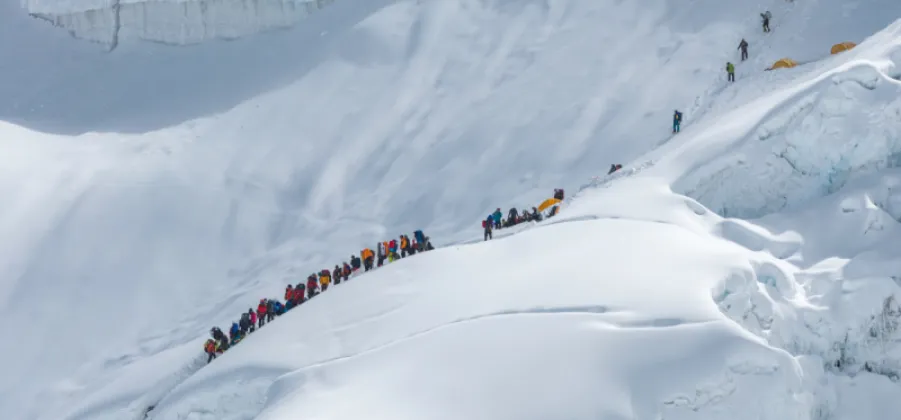
Nepal's Department of Tourism has issued climbing permits for 44 mountains to 1,410 climbers from 76 countries for the autumn expedition season, with the ascents organised into 161 teams. Branch officer Sudha Regmi of the department said the permits cover 1,069 men and 341 women, and confirmed that the department has collected 31.805 million rupees in royalty from the autumn approvals. Mount Manaslu, the world's eighth-highest peak at 8,163 metres, has received the highest number of permits among the peaks opened for the season.
The disclosure, reported by Nagarik News, Nepal Press and Khabarhub, offers a detailed snapshot of the scale of Nepal's post-monsoon climbing season, when expedition teams fan out across the Himalayan range in the months after the summer rains end.
Permit figures at a glance
The department's mountaineering branch, which processes and issues climbing permits for peaks across the country, released the following breakdown for the autumn season:
- Peaks opened: 44 mountains
- Total climbers permitted: 1,410
- Men: 1,069
- Women: 341
- Countries represented: 76
- Expedition teams: 161
- Royalty collected: 31.805 million rupees
The numbers show that male climbers account for roughly three-quarters of all climbers permitted this autumn, with women making up about a quarter of the total. With 1,410 climbers spread across 161 teams, the average expedition size works out to fewer than nine climbers per team, reflecting the mix of large commercially organised groups and smaller independent teams that typically operate in the Nepali Himalayas.
The department issues such permits for both of Nepal's principal climbing seasons each year, and the autumn figures confirm that interest in the country's mountains remains broad, with climbers from 76 countries securing permission to climb across 44 different peaks rather than concentrating on a handful of famous summits.
Manaslu tops the autumn field
Manaslu, which rises to 8,163 metres, received more permits than any other mountain this season, according to Regmi. The peak, located in the Gorkha region, has long been regarded as the centrepiece of Nepal's autumn climbing calendar. While the spring season, which runs from March to May, is traditionally dominated by expeditions to Mount Everest, the post-monsoon window is when Manaslu consistently attracts the largest concentration of high-altitude climbers.
The autumn months are considered a favourable period for climbing peaks above 8,000 metres because weather conditions stabilise after the monsoon, with clearer skies and more manageable winds than during the summer rains. This has helped make Manaslu one of the most frequently climbed of the world's 8,000-metre peaks in the autumn season, drawing a steady stream of expedition teams year after year.
While the reports cited by the department did not include a full peak-by-peak breakdown of this season's permits, the confirmation that Manaslu leads the list is consistent with its established position as the most sought-after autumn objective in the Nepali Himalayas.
Royalty revenue from autumn permits
Alongside the permit figures, the department reported collecting 31.805 million rupees in royalty from the autumn approvals. Climbing royalties are a significant source of revenue for Nepal's tourism administration, with fees calculated according to the height of each mountain, meaning that expeditions to the highest peaks contribute the most to the exchequer.
The autumn collection adds to the revenue the department earns across the full mountaineering calendar. The figures underline the economic importance of mountaineering tourism to Nepal, where permit royalties, along with the spending that expeditions generate for guides, porters, liaison officers and local communities along trekking routes, form a notable component of the broader tourism economy.
Autumn season in the Nepali Himalaya
Nepal's mountaineering calendar is built around two main climbing windows. The spring season, from March to May, precedes the monsoon and sees the heaviest traffic on the highest peaks, including Everest. The autumn season, from September to November, follows the monsoon and provides a second window in which expedition teams can take advantage of improved weather to attempt their objectives.
Permits granted for this autumn cover 44 mountains, a figure that illustrates the range of peaks open to climbers beyond the most celebrated names in the range. The 76 countries represented among the permitted climbers also point to the international reach of Nepal's mountaineering sector, which draws applicants from across the climbing world for each season.
With permits now secured, the 161 teams are set to proceed with their expeditions across the 44 peaks in the coming weeks of the autumn window. For the department, the season's figures confirm both the scale of the post-monsoon climbing community and Manaslu's continuing status as the focal point of Nepal's autumn mountaineering calendar.
Key takeaways
- 1,410 climbers from 76 countries received permits for 44 mountains this autumn
- The climbers are organised into 161 expedition teams, comprising 1,069 men and 341 women
- Manaslu (8,163 metres) received the highest number of permits
- The Department of Tourism collected Rs 31.805 million in royalty from the season's permits


