
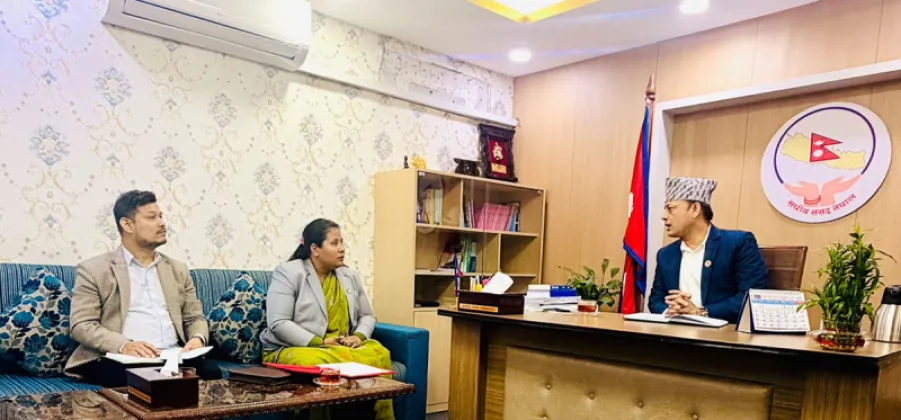
Nepal is preparing for effective participation in the 31st Conference of the Parties (COP31) to the United Nations Framework Convention on Climate Change, which is scheduled to take place in Antalya, Turkey, from November 9 to 20, 2026. As consultations gather pace in Kathmandu, the government has lined up mountain issues and climate justice as the key agenda it intends to push at the global climate summit. Discussions held so far have focused on three broad areas: the country's preparations for the conference, the participation of parliamentarians in the process, and the specific priorities Nepal will raise at the negotiating table.
Mountains and climate justice at the core of Nepal's agenda
At the heart of Nepal's strategy for COP31 is an effort to place the world's mountain regions, and the communities that depend on them, at the centre of global climate negotiations. Nepal plans to make mountain issues and climate justice its key agenda at the summit, according to reports published by Nagarik News, Gorkhapatra Online and Thahakhabar.
The priorities that Nepal intends to highlight at the conference can be summed up as follows:
- Mountain issues: Drawing the attention of the international community to the vulnerability of the Himalayan region and the urgent need to protect mountain ecosystems, which are coming under growing stress from rising temperatures.
- Climate justice: Pressing the case that countries which have contributed the least to global greenhouse gas emissions, including Nepal, should not be left to bear the heaviest burden of climate impacts on their own.
For Nepal, the focus on mountains is not merely symbolic. The country is home to fragile high-altitude ecosystems, including glaciers and snow-fed river systems that sustain millions of people downstream. Warming in mountain regions brings visible consequences such as retreating glaciers, growing risks of glacial lake outburst floods, increasingly erratic rainfall and shifting seasonal patterns that affect agriculture, hydropower and livelihoods. By putting these concerns on the table at COP31, Nepal aims to ensure that mountain nations are not sidelined in a negotiation process that has historically been dominated by larger economies.
The framing of climate justice carries a similar message. Nepal's argument, in essence, is that fairness must guide the global response to climate change: countries with negligible emissions but high vulnerability deserve stronger support for adaptation, resilience-building and recovery from climate-induced losses. Presenting this case collectively at a global summit gives smaller nations a louder voice than they could achieve individually.
Preparations and parliamentary participation
Closer to home, the government has concentrated on how to prepare for the conference in a way that produces tangible outcomes rather than symbolic statements. Discussions have focused on Nepal's preparations, the role of parliament, and the priorities to be raised at the summit, reflecting an attempt to build a well-organised and credible national position well ahead of the November 2026 gathering.
Parliamentary participation has featured prominently in these discussions. Involving lawmakers in the run-up to, and participation in, COP31 is seen as a way of connecting Nepal's international climate commitments with domestic oversight. A parliament that is informed about the country's negotiating position is better placed to scrutinise implementation afterwards, and a delegation that reaches across party lines can present a unified national front on the world stage.
This approach also reflects a broader reality of climate diplomacy. Global summits are often won or lost on preparation: the countries that arrive with clear priorities, coordinated messaging and broad political consensus tend to be more effective in shaping outcomes than those that scramble at the last minute. By starting its preparations early and drawing in multiple stakeholders, Nepal appears to be aiming for exactly that kind of coherence.
What is at stake for Nepal at COP31
COP31 will bring together parties to the UN climate convention in Antalya, continuing a process that most recently produced the COP30 summit in Belem, Brazil. For climate-vulnerable countries, each annual conference is a critical opportunity to push for progress on finance, adaptation and support for loss and damage, the issues that determine whether vulnerable nations can cope with impacts they did little to cause.
For Nepal specifically, the stakes are considerable. The country has long argued that mountain ecosystems deserve dedicated attention in global climate frameworks, and that the loss of glaciers and mountain biodiversity is a global, not merely national, concern. COP31 offers a fresh platform to press that argument, to align with other mountainous and climate-vulnerable countries, and to seek stronger international commitments that can be channelled into protection of the Himalayan environment and resilience for the communities living in its shadow.
The emphasis on climate justice also positions Nepal within a wider grouping of developing countries that have been demanding a fairer distribution of responsibility for climate action. As negotiations unfold in Antalya, the strength of that collective voice, and Nepal's own preparedness, will shape how much the concerns of the mountains resonate in the final outcome.
The road to Antalya
With the summit still ahead, the coming months will show how Nepal's preparations translate into a formal negotiating position. What is already clear is the direction: the government wants Nepal's participation at COP31 to be effective, not ornamental, and it wants the country to arrive in Turkey with a clear message about mountains and justice.
If the consultations now under way succeed in producing a unified, well-prepared and politically inclusive national position, Nepal will have done its part to ensure that the voice of the Himalayas is heard loudly when the world's climate negotiators convene in Antalya in November 2026.


